
Roman Feasts: Not Food Orgies
You picture a Roman feast: wild eyes, mountains of food, guests gorging themselves until they collapse. It’s the ultimate symbol of excess. But the reality was both more subtle and more ritualized.
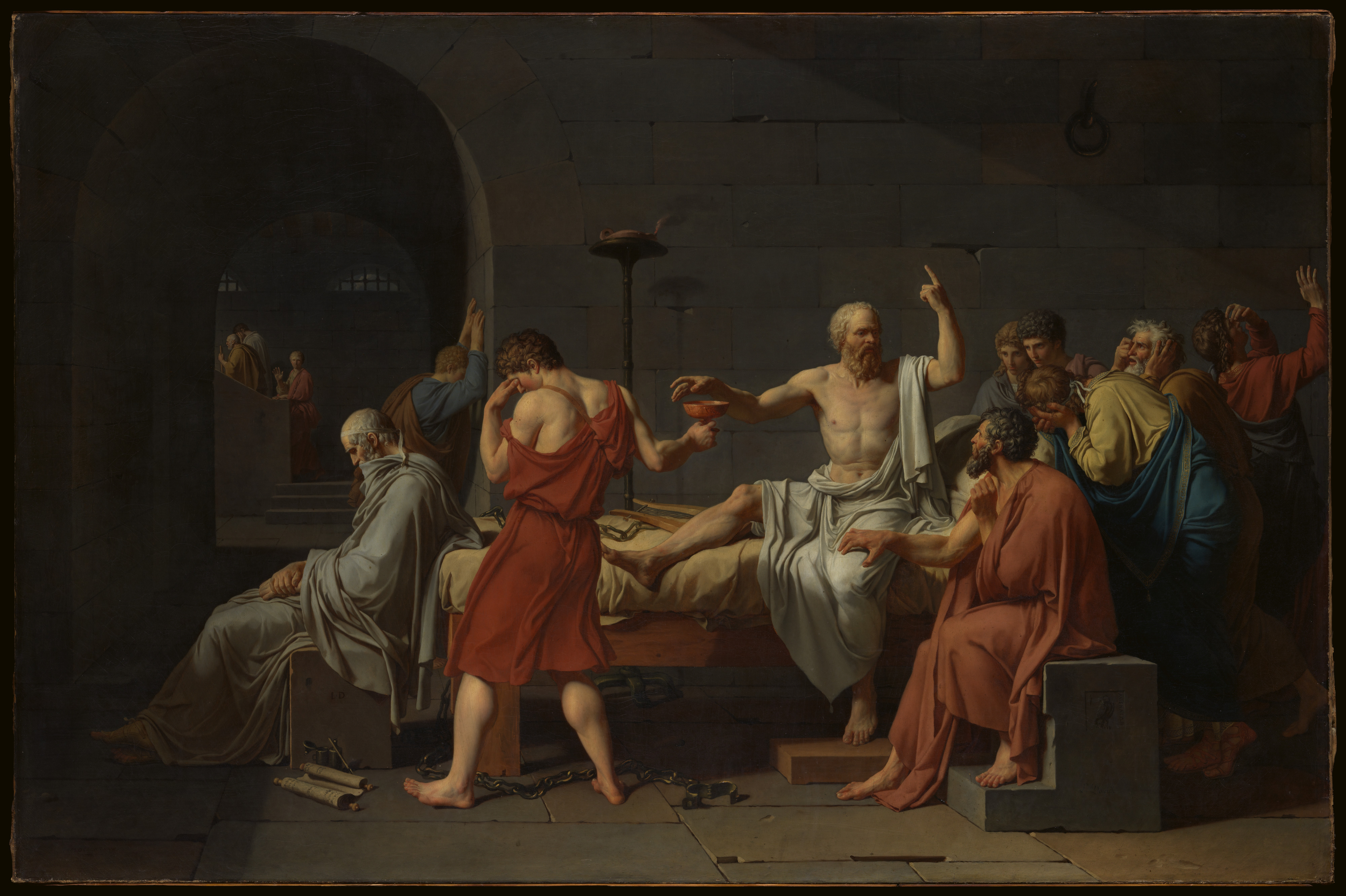
Jacques Louis David — "The Death of Socrates" (1787), public domain
The feast-as-orgy myth.
Movies and novels love it: Romans sprawled on couches, stuffing their faces, slaves hauling in dish after dish. Delicate women retiring to vomit, then returning for more. The ultimate image of decadence.
Banquet reality: politics and performance.
The Roman convivium was about power, not just pleasure. Hosts showed off rare foods—sometimes peacocks, sometimes humble beans—to impress guests, not to binge in private. Ancient sources like Seneca and Juvenal mock the few gluttons; for most, overindulgence was embarrassing, not admired.
How did this myth take hold?
Ancient satirists and moralists exaggerated bad behavior to scold the elite. Add in Renaissance paintings, Victorian prurience, and Hollywood excess, and suddenly every Roman is a party animal. The reputation stuck—while the reality faded.
Roman banquets were displays of status, taste, and social politics. Gluttony happened, but it was a source of satire—mocked by moralists, not the norm. Our image of orgiastic feasts owes more to Roman moral panics and Hollywood than to archaeology.
