
Sappho and the Lost Poems
When Sappho died, her verses filled nine papyrus scrolls. Almost all of them vanished—burned, buried, or simply lost.
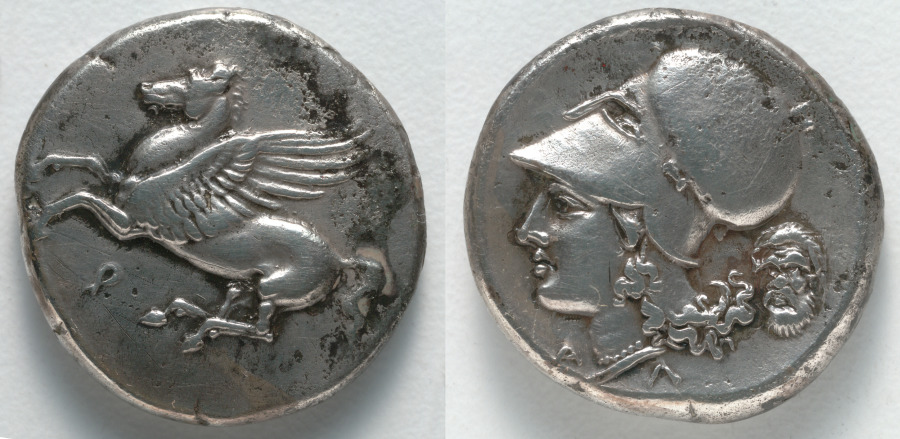
Unknown — "Stater: Pegasos (obverse); Head of Athena (reverse)" (c. 350–338 BCE), CC0
A voice almost silenced.
When Sappho of Lesbos died around 570 BC, her poetry filled entire library shelves. In Alexandria, nine scrolls were devoted just to her verse. Yet today, only fragments survive—lines sung to the sound of a lyre, found on scraps of papyrus or in quotations by later authors.
Fire, censorship, and oblivion.
Ancient Christian clerics called her poems dangerous and pleaded for them to be destroyed. Papyrus rotted, libraries burned, and scholars copied other, safer texts. Most of Sappho’s words slipped away—lost to fire, damp, and the churn of centuries. What we have are mostly accidents—lines scribbled in margins, or dug from the sand of Egypt.
All that remains: a whisper.
What’s left? Phrases—sometimes just a single image or lover’s name. Out of nine scrolls, barely two poems survive entire. Sappho’s world hangs by a thread. She wrote for an audience she could never have imagined—us, straining for scraps of her lost song.
Centuries of censors, fire, and neglect erased most of Sappho’s poetry—leaving only scraps to hint at her voice.
