
Female Gladiators in the Arena
On a humid summer night in Rome, two women step into the arena—swords flashing under torchlight.
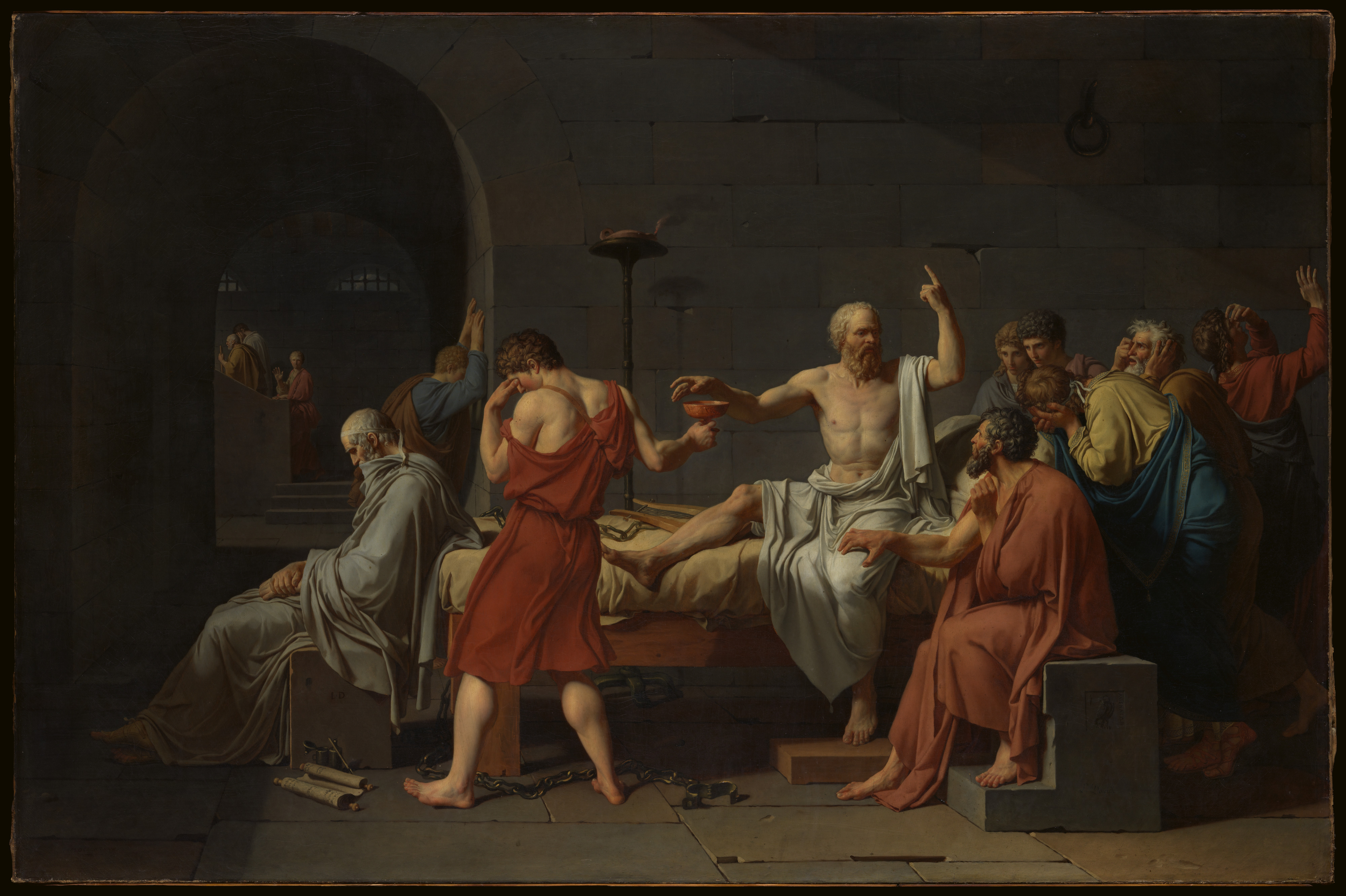
Jacques Louis David — "The Death of Socrates" (1787), public domain
Roman nights, steel and sweat.
In the shadowy heart of the Colosseum, the crowd roared—two women, armed and trained, fought for their lives under the emperor’s gaze. Sometimes the contests were staged by lamplight, drawing out every gasp from the benches. For Romans, even the forbidden had a price.
Shock—then spectacle.
Most Romans found the idea scandalous. Ancient authors like Cassius Dio tell us high-ranking women even entered the ring, sometimes to impress, sometimes for a twisted sense of freedom. By the second century, female gladiators were so notorious that Emperor Severus banned them outright.
Erased, yet unforgettable.
Almost no graves. Few names. Scattered graffiti. But a single carved relief survives—a helmeted woman with a sword, arms raised in victory. For a brief moment, the Colosseum belonged to her.
Female gladiators—'gladiatrices'—were rare, but Roman crowds craved the spectacle. When Emperor Domitian staged women fighting by lamplight, the novelty shocked the elites and thrilled the masses.
