
Musonius Rufus on Enduring Insults
"It is a sign of a great soul to bear with patience one who is in error." Musonius Rufus, the Stoic drillmaster, believed patience was harder than courage.
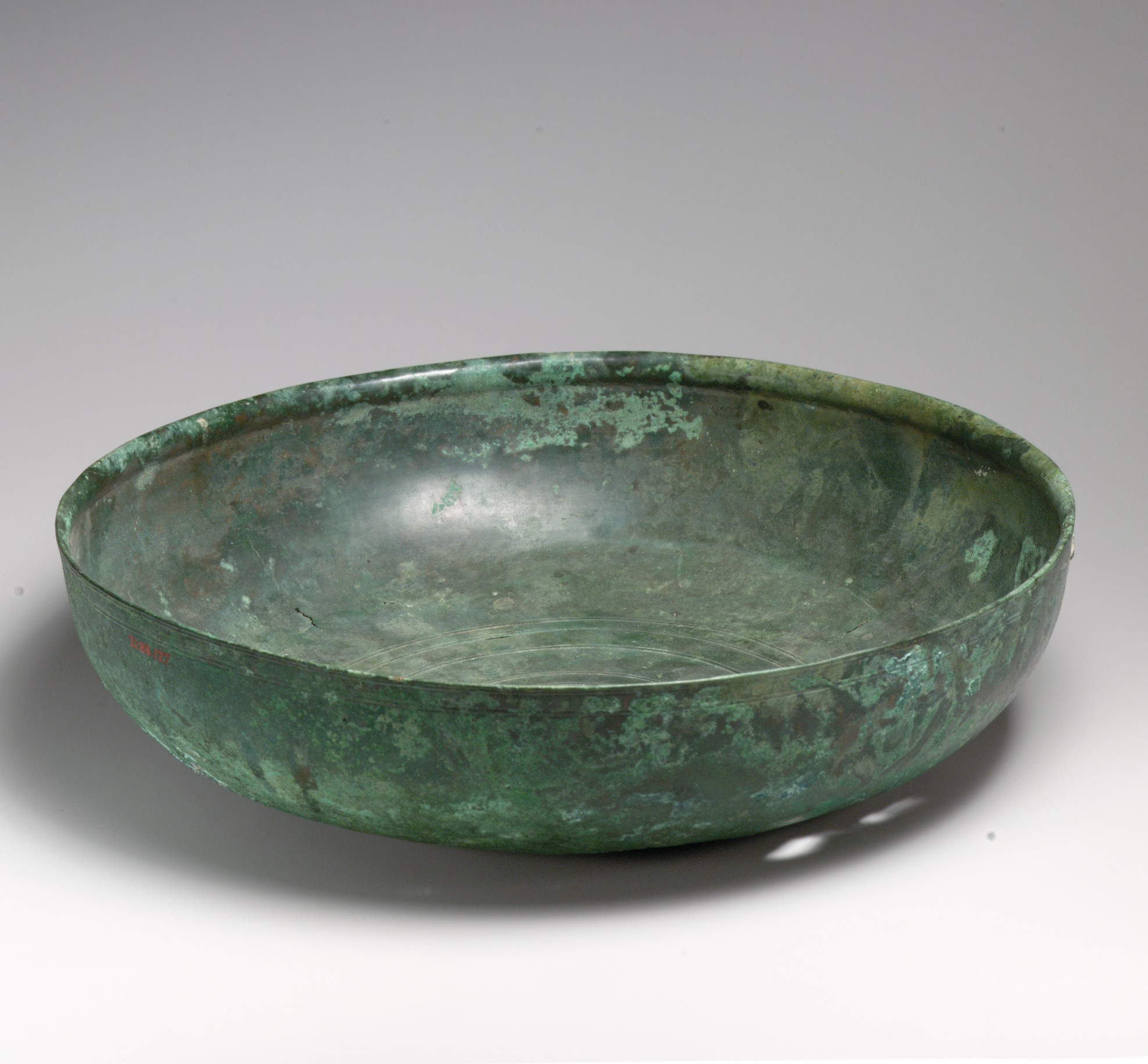
Unknown — "Bronze shallow bowl" (ca. 2nd century BCE–2nd century CE), public domain
Musonius on what makes a great soul.
Musonius Rufus, in his Discourses (Lecture 16A), says: «Μεγάλου γὰρ ἀνδρὸς ψυχὴ τὸ ὑπομένειν τὸν ἐν ἁμαρτίᾳ ἄνδρα.» — "It is a sign of a great soul to bear with patience one who is in error." His philosophy was forged among senators and slaves alike.
Patience as Rome’s hardest virtue.
Musonius flips honor culture on its head. In Rome, an insult could spark violence—or doom a career. The Stoic answer? Don’t respond in kind; respond with strength. Patience isn’t weakness—it’s proof of mastery. If anger rules you, so does your enemy.
The Stoic drillmaster, in exile and at home.
Musonius Rufus was exiled under Nero not for plotting, but for teaching resilience. To him, philosophy wasn’t theory—it was training for the soul’s hardest battles: pride, insult, ego. His words still bite for anyone navigating a world full of provocations.
Musonius didn’t think virtue meant hiding anger—he thought real strength was absorbing insult without flinching. In a culture obsessed with honor, he made patience the bravest act of all.
