
Simonides: The Poet Who Charged for Praise
A grieving noble weeps at his son’s funeral—Simonides steps forward, pen in hand, waiting for payment before he writes the epitaph.
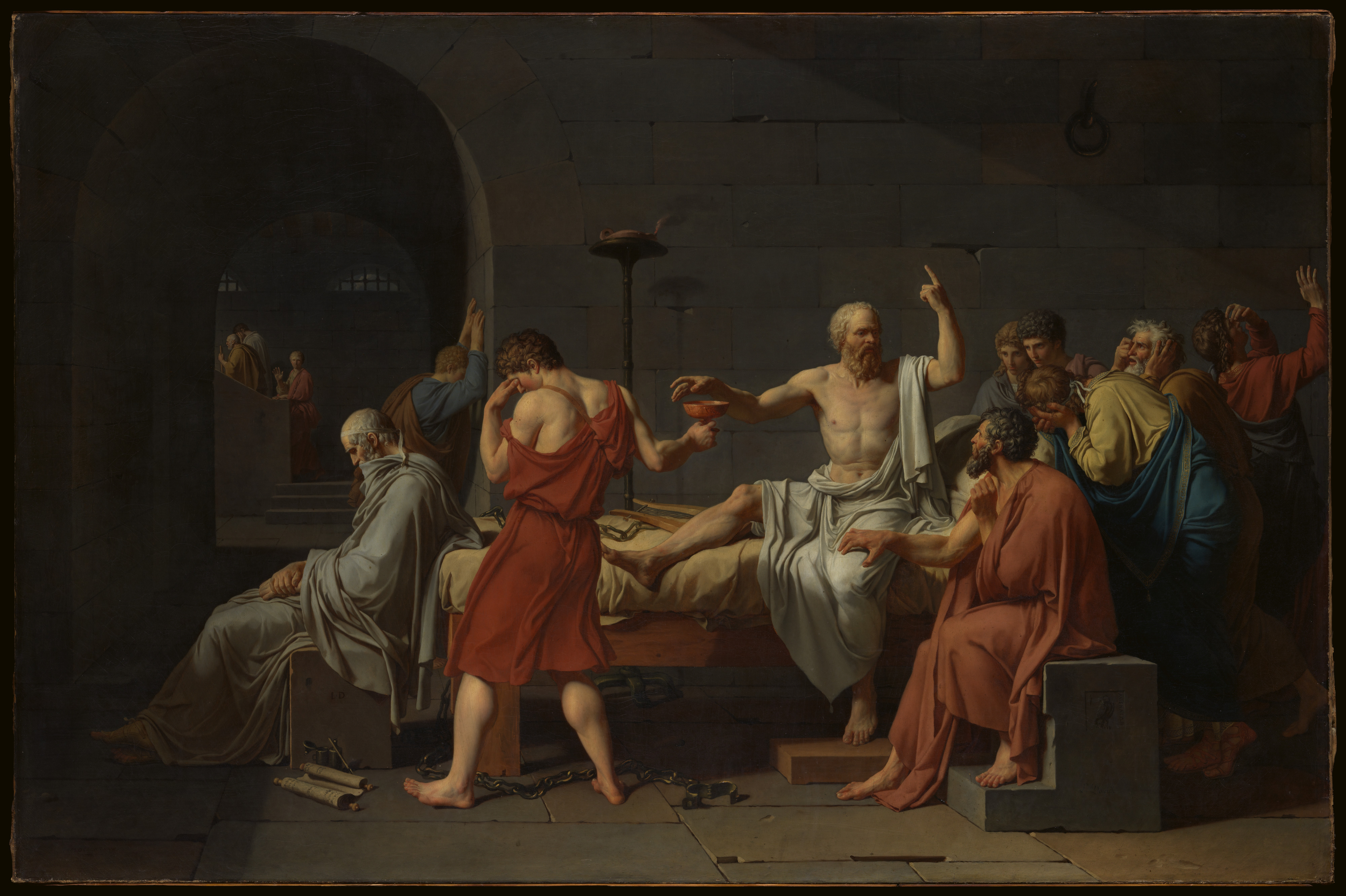
David — "The Death of Socrates" (1787), public domain
Funeral Poetry, For a Price
Simonides stands among mourners, poised to immortalize their grief—if they can pay. No gift of the gods, his verse is a contract inked with drachmas. Praise becomes something you can buy by the line.
From Sacred Song to Hired Wordsmith
In an age where poets should sing for glory or the gods, Simonides sees a market instead. He offers not just words, but the promise of remembrance. His name is on everyone’s lips—and every invoice.
Legacy: When Art Becomes Transactional
Some say Simonides cheapened poetry. Others say he invented the bestseller. Maybe both are true. Memory, like marble, now has a price tag.
Unlike Homer’s blind rhapsody or Sappho’s lyric fire, Simonides deals in praise for hire. Pay him enough, and your name outlives the stone. His sharp memory and sharper wit turn poetry into a profession—irritating purists, but making memory itself a luxury item for the rich.
