
Seneca on Anger
"Anger is a brief madness." Seneca, up late in Nero’s Rome, warns: "Ira est brevis insania."
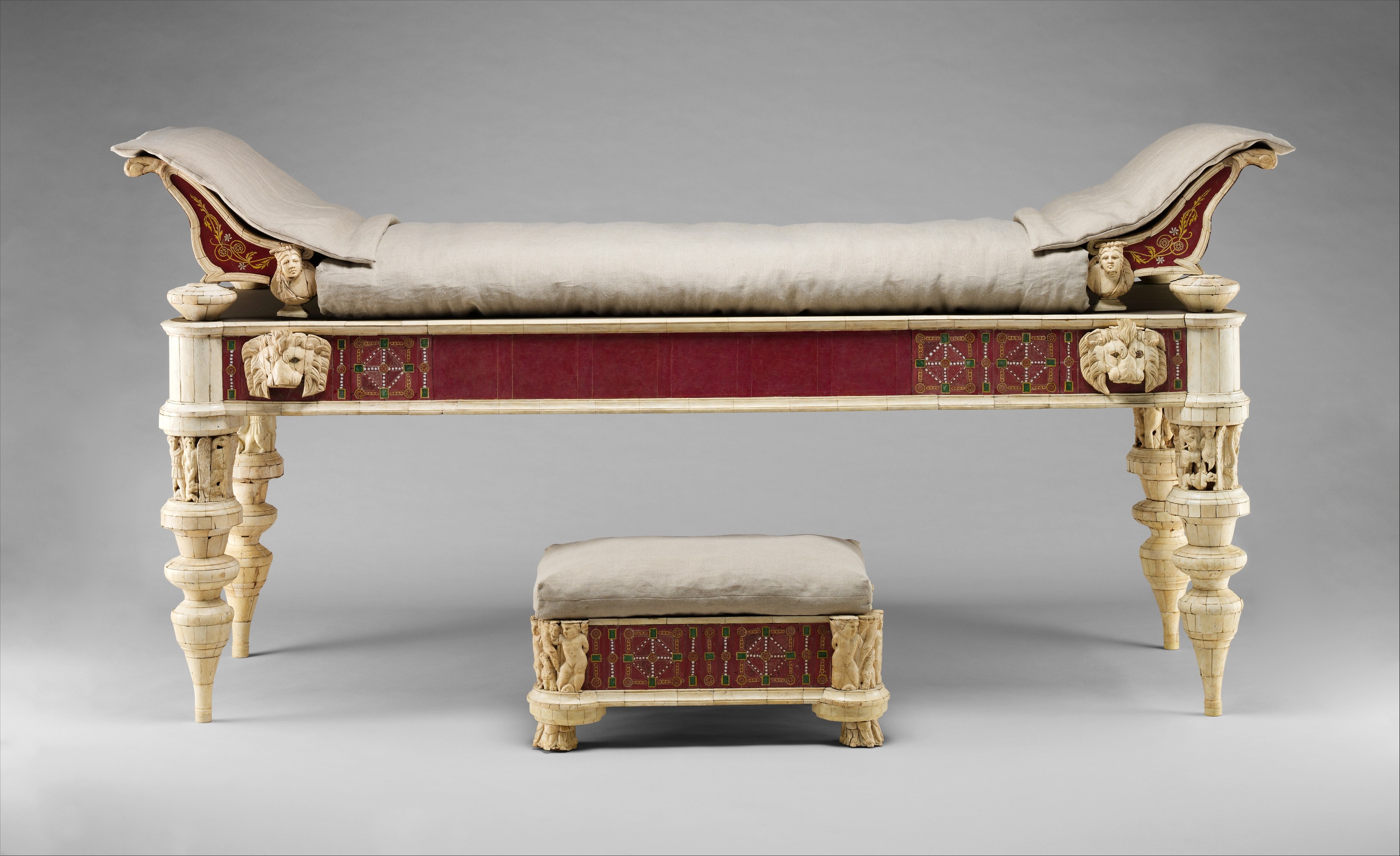
Unknown — "Couch and footstool with bone carvings and glass inlays" (1st–2nd century CE), public domain
The ancient word for rage.
Seneca, in De Ira (On Anger, Book II), writes: «Ira est brevis insania» — «Anger is a brief madness." He’s not being poetic—a Roman who lost his temper could lose his head, or worse.
Why Seneca cared so much.
Seneca taught that anger sweeps away reason, turning friends into enemies in a heartbeat. Living under Nero, he saw what happened when impulse ruled: banishments, murders, chaos. To him, rage wasn’t catharsis. It was a storm you survive by sheltering inside yourself.
A philosopher in the line of fire.
Seneca was tutor to an emperor, forced to watch his student twist into a tyrant. He wrote this warning having seen Rome unravel up close—reminding us there’s always a higher price for lashing out.
It isn’t a call for calm. Seneca saw where rage leads—blood on the floor, ruined families, fortunes lost before midnight.
