Fragmenta.
How It WorksPricingTodayBlog
Download for iOS
Today›Quote
Quote·Ancient Rome·Imperial Rome

Musonius Rufus on Teaching Women

"Women should study philosophy, too." — Musonius Rufus said the unthinkable out loud and meant it.
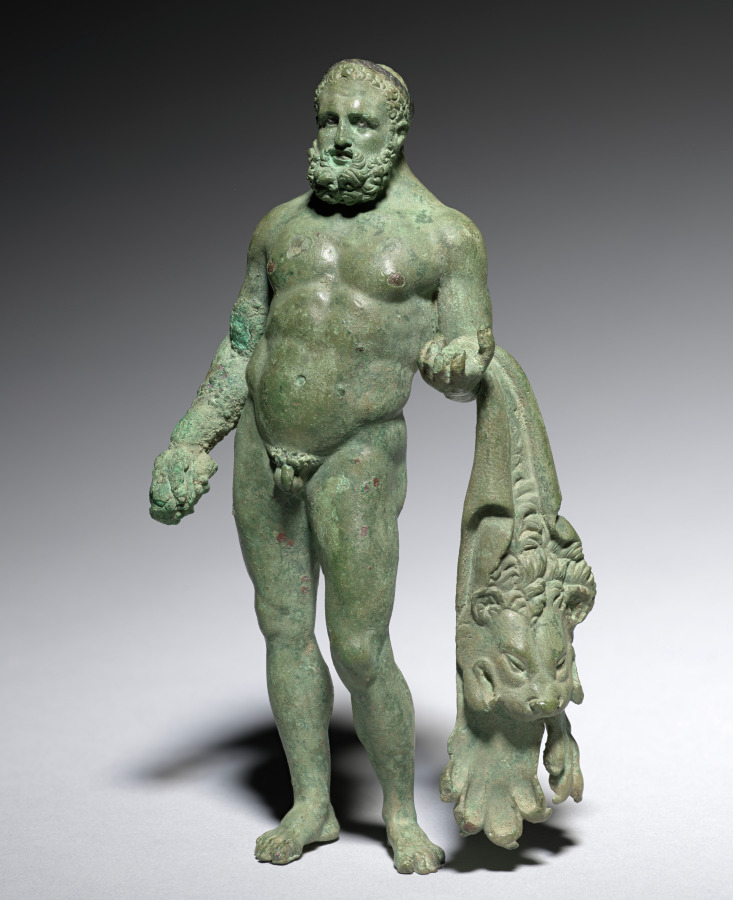
Musonius Rufus on Teaching Women

Unknown — "Hercules" (c. 30 BCE–20 CE), CC0

Rome wasn’t ready for this.

Musonius Rufus, in Fragment 4, writes: «πᾶσάν τε γυναῖκα φιλοσοφεῖν δέοι.» — "Every woman should study philosophy." In a society that saw education as a male domain, Musonius shrugged off the rulebook.

The Stoic argument for equality.

Musonius thought virtue had no gender. If men needed training to be good and wise, so did women. He taught philosophy to his own daughters and argued that strength of character mattered more than who you were allowed to marry.

The teacher who bent the norm.

Musonius never sat in the Senate, but his defiance echoed louder than many who did. When the roof caved in on his career, he was exiled for speaking his mind — not for what he taught but for who he taught.

Long before 'equal education' was a catchphrase, Musonius Rufus argued that philosophy belongs to everyone — in a room full of skeptical Romans.

Three minutes a day.

Fact-checked stories from ancient Greece and Rome, delivered every morning as swipeable cards.

Download for iOS
5.0 on the App Store

Keep reading

Story · Hellenistic Greece

Demetrius, the Besieger, and the Iron Ramp

Siege machines creaked in the night as Demetrius ordered an iron ramp built right over city walls—nowhere in Greece had seen anything like it.

Quote · Late Republic

Cato the Younger on Silence

"I begin to speak only when I am certain what to say is not better left unsaid." — Cato the Younger, the Senate’s last immovable object, measured every word as if it might be his last.

On This Day · Republican and Imperial Rome

On This Day: May 11 Was a Dies Comitialis

May 11: In Rome, today is a dies comitialis—a day when citizens could vote, debate, and change the future in the shadow of the Capitol.

Fact · Classical Athens, 5th–4th century BCE

Athenian Law: The Adulterer’s Radish

Athenians punished male adulterers by shoving a radish up a very personal place. And that was just the start.

Fragmenta.

Made with care for history that deserves it.

App Store

Product

How It WorksDaily FragmentsFeaturesToday in HistoryBlogDownload

Legal

Privacy PolicyTerms of ServiceEULASupportPress

Connect

TikTok
© 2026 Fragmenta. All rights reserved.