
Musonius Rufus on Eating Simply
"No food is better for a person than that which grows from the earth." Musonius Rufus, exiled again and again, laid the Roman table bare: «Οὐδὲν οὕτως ἄριστον ἀνθρώπῳ, ὡς τὰ ἀπὸ τῆς γῆς φαγώσιμα.»
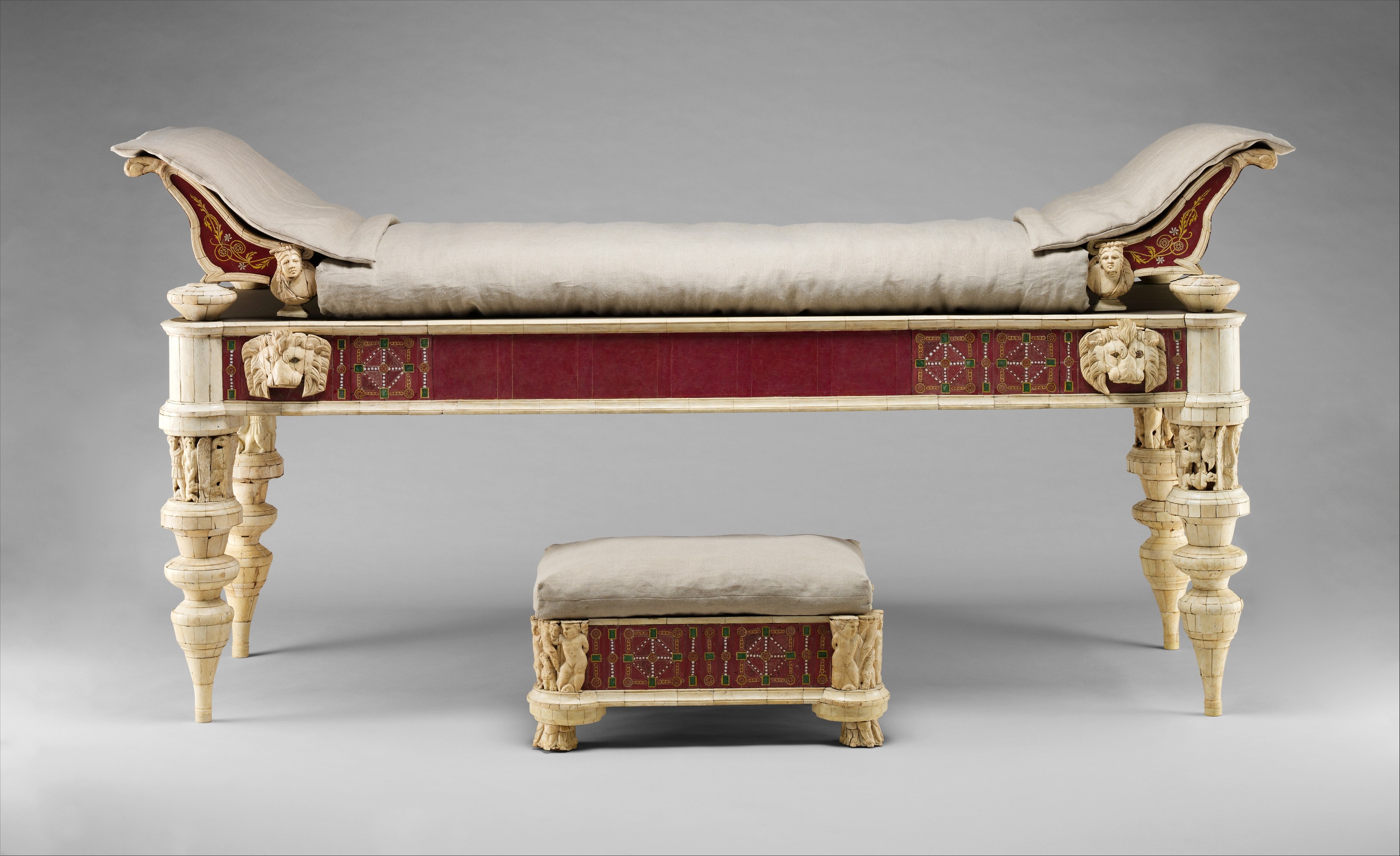
Unknown — "Couch and footstool with bone carvings and glass inlays" (1st–2nd century CE), public domain
Radical simplicity on a Roman table
From Stobaeus, quoting Musonius Rufus: «Οὐδὲν οὕτως ἄριστον ἀνθρώπῳ, ὡς τὰ ἀπὸ τῆς γῆς φαγώσιμα.» — "No food is better for a person than that which grows from the earth." Musonius pulled his philosophy straight into the kitchen.
What he actually meant
He’s laying down a rule against luxury. Grain, fruit, vegetables — that’s the Stoic menu. To Musonius, simple food built strong bodies and uncorrupted souls. Delicate sauces, rare imported delicacies? That was moral rot by another name.
Musonius didn’t just preach temperance — he ate like a farmer, not a senator. Simplicity at the table was Stoicism on the plate.
