
Hermione, Daughter of Helen: In the Shadows
On the morning of her wedding, Hermione is given away by her father—because her mother, Helen, is still in Troy with Paris.
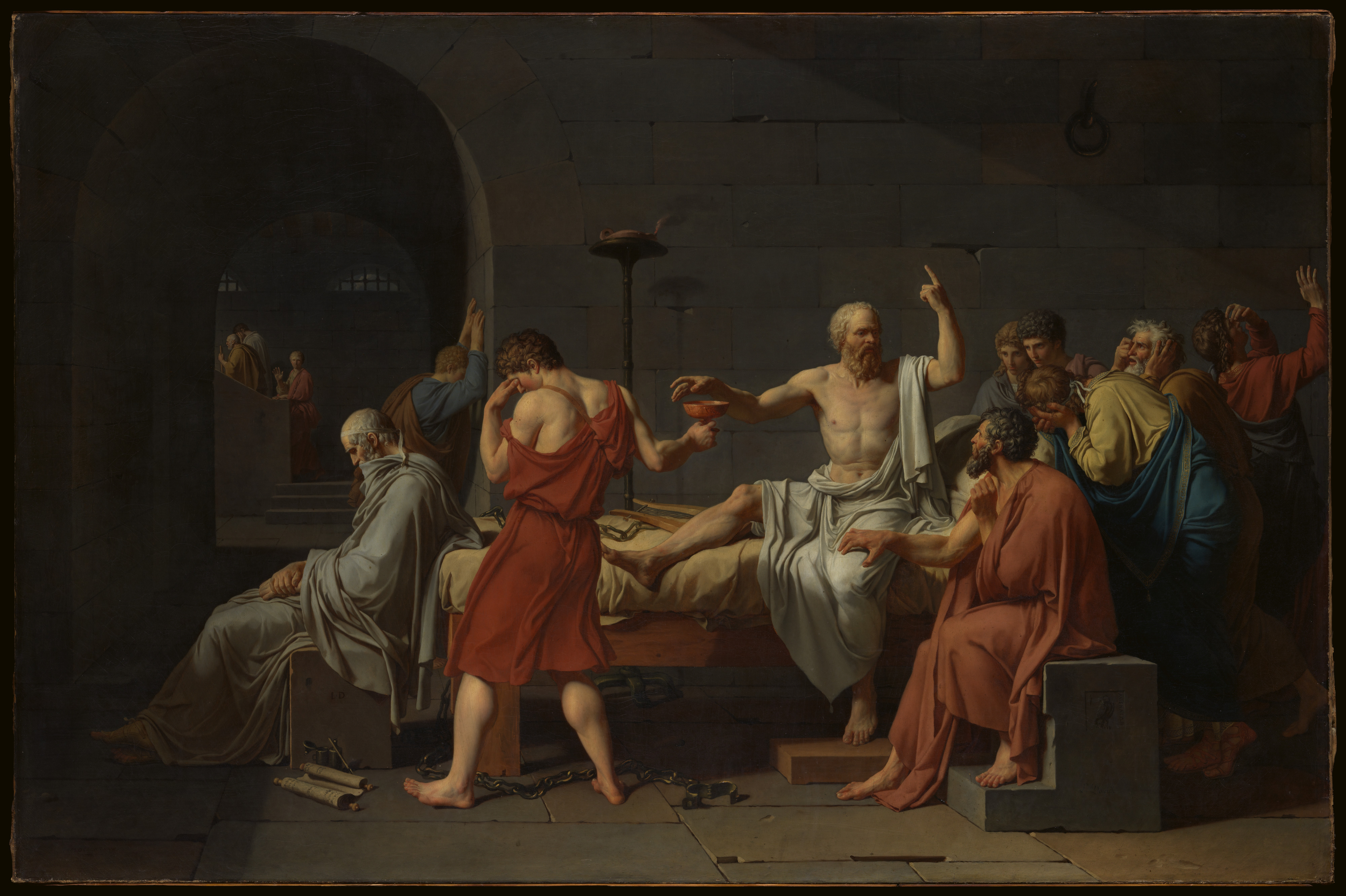
Jacques Louis David — "The Death of Socrates" (1787), public domain
A Daughter Left Behind
On the day Hermione marries Neoptolemus, her mother—the legendary Helen—is absent. Helen is still in Troy, a thousand ships and ten years away, locked in a war that will echo for centuries. Hermione, silent in the poetry, stands at the altar as a symbol of everyone else's choices.
Living With a Legend's Shadow
Hermione’s whole life happens offstage. She is traded between husbands, blamed for old betrayals, and haunted by her mother’s reputation. The Greeks mourn their dead and celebrate their heroes, but rarely ask what it costs the daughters left behind.
Collateral in a Family Epic
Hermione’s story is a reminder: for every famous face in the myths, there’s someone living with the consequences. Her name survives not in glory or song, but in the gaps between. Sometimes the shadow of legend is heavier than the legend itself.
Hermione grows up as the silent collateral of the war that made her mother famous and her city infamous. In the epics, she has no lines; in later tragedies, she is married off, bartered, and resented by her own husband for her mother’s choices. Her fate is a footnote to larger legends—a daughter who inherits all of the shame, but none of the story.
