
Counterfeit Coins and Ancient Scanners
An Athenian money-changer flicks a silver coin and listens for a clean, ringing note—his ear is trained to catch a fake.
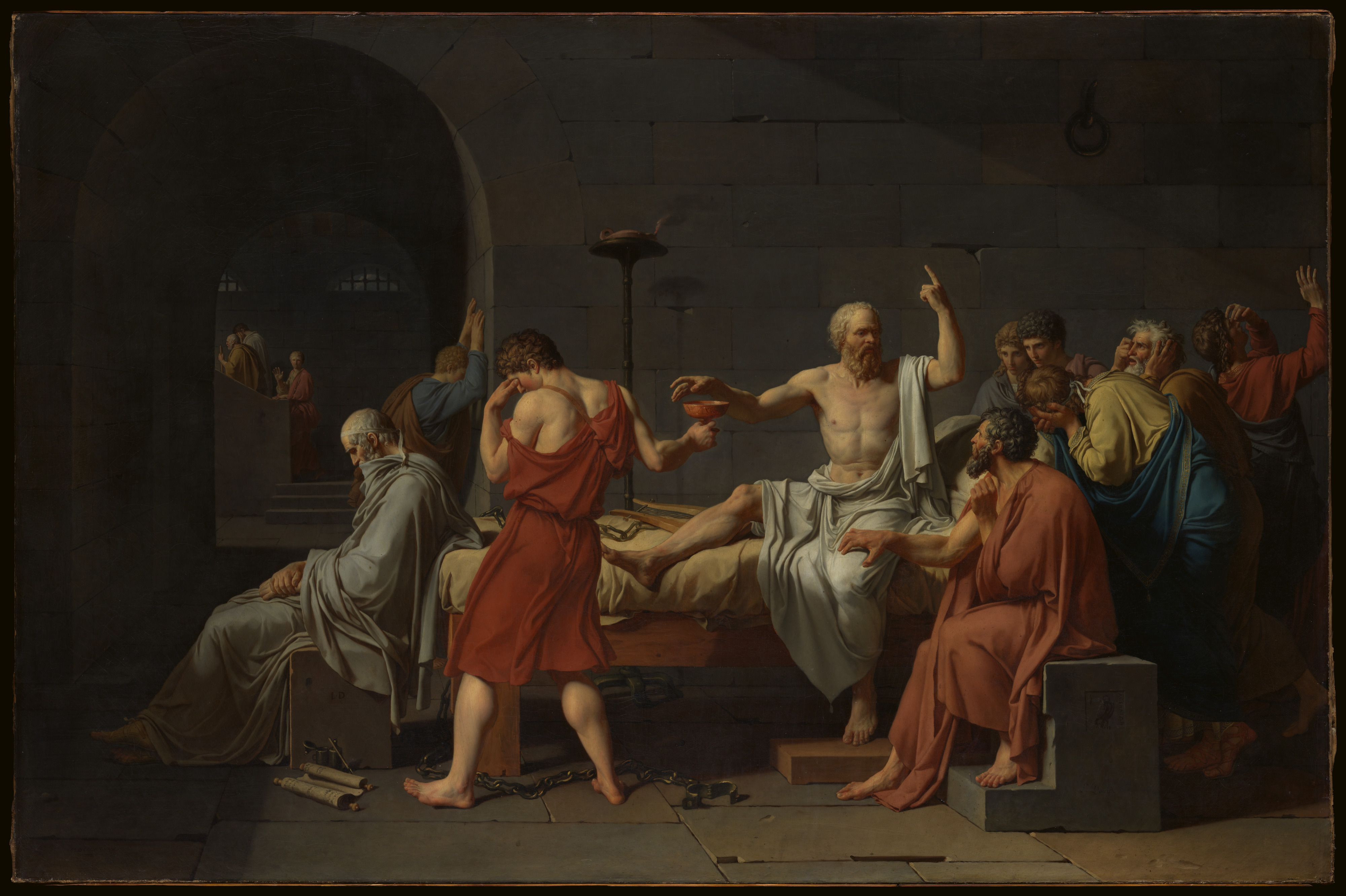
David — "The Death of Socrates" (1787), public domain
Ancient Greek Coin Inspection
Athenian bankers tested coins by sound. If a silver drachma rang true when flicked, it was likely pure. If it thudded flat, the coin might be a bronze core plated with precious metal. No gadgets—just sharp ears and a sharp knife.
Spotting Fakes by Blade and Ear
Money-changers sometimes sliced coins to check the metal inside. Archaeologists still find cut and gouged coins in the agora, marked from these ancient ‘quality-control’ tests. Counterfeiting was not just a crime—it was a daily risk in a city built on trade.
A Market Built on Trust
Their tricks worked: Athens thrived as a financial superpower. Trust in the silver drachma echoed across the Aegean—thanks to thousands of vigilant ears and test cuts that scar coins to this day.
Before modern technology, Athenians used sound and touch to detect counterfeits. Their vigilance protected markets, and centuries-old coins still bear the cut marks of those tests.
