
Prosthetic Limbs and Votive Offerings
Near the temple steps, archaeologists keep finding bronze arms, legs, fingers—even ears.
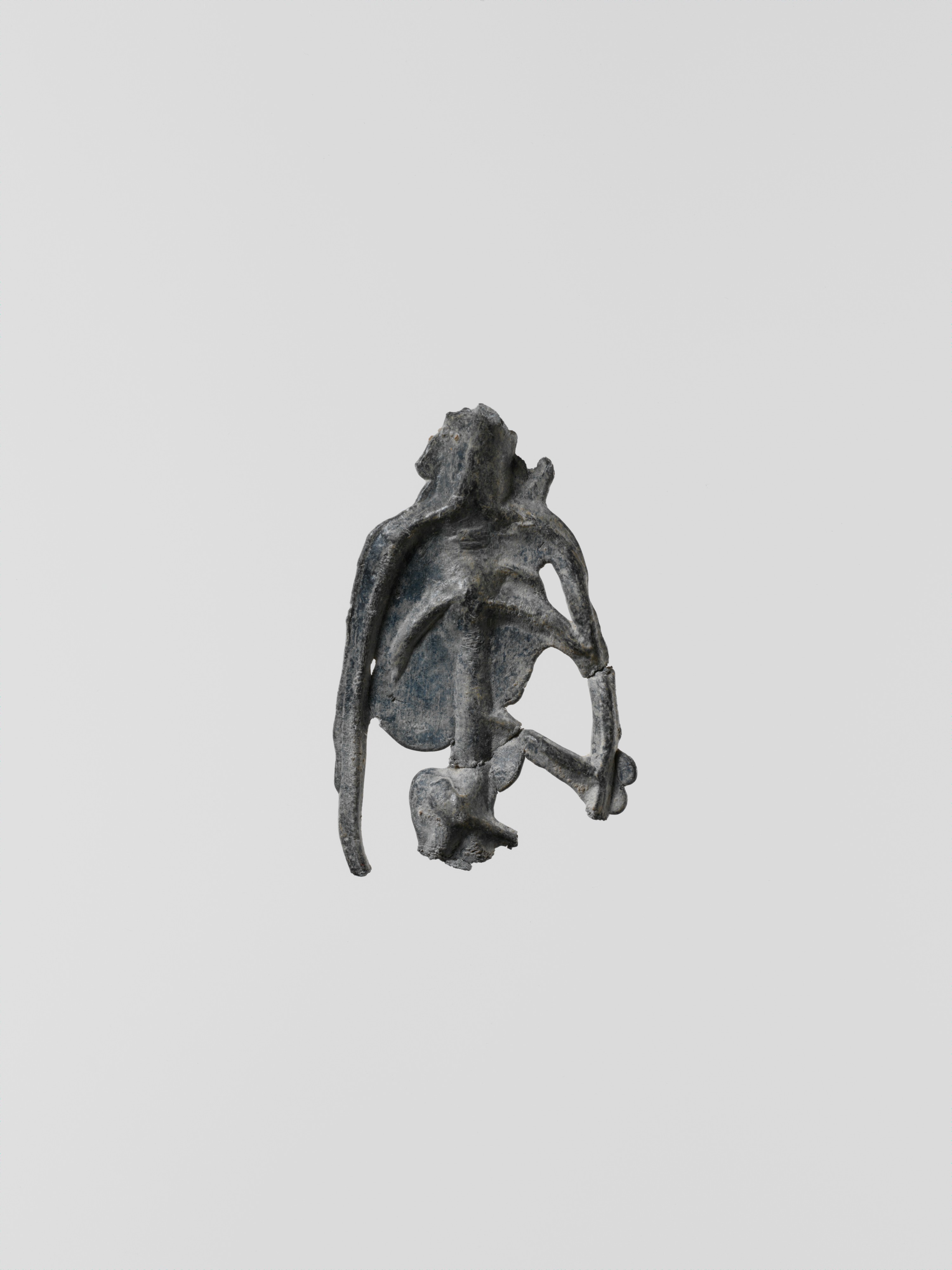
Unknown — "Lead figure, possibly of a skeleton" (possibly 4th century BCE), public domain
A Temple Littered With Bronze Limbs
Near ancient Greek temples, especially at Epidaurus, archaeologists dig up hundreds of hollow bronze arms, legs, fingers, even genitals. Not statues—these were made to be left behind.
Healing, Hope, and Amputation Evidence
Most ‘spare parts’ were left by people praying for a cure, or thanking the god Asclepius after healing. But a few are different. Some show cut marks on real bones inside—hard evidence of ancient amputations after injury or infection. We even have Greek texts describing crude prosthetics, strapped on and hidden under robes.
Many ancient Greeks left hollow metal body parts at healing sanctuaries—thanks for a cure, or hope for one. But some fragments show evidence of real amputation, complete with marks left by bronze saws. A few of these ancient patients may have used simple wooden or metal prosthetics for daily life.
