
On This Day: Athens Watches the Grain Ripen
Early May: The wheat fields outside Athens shimmer gold—almost ready for harvest, and everyone is watching the sky.
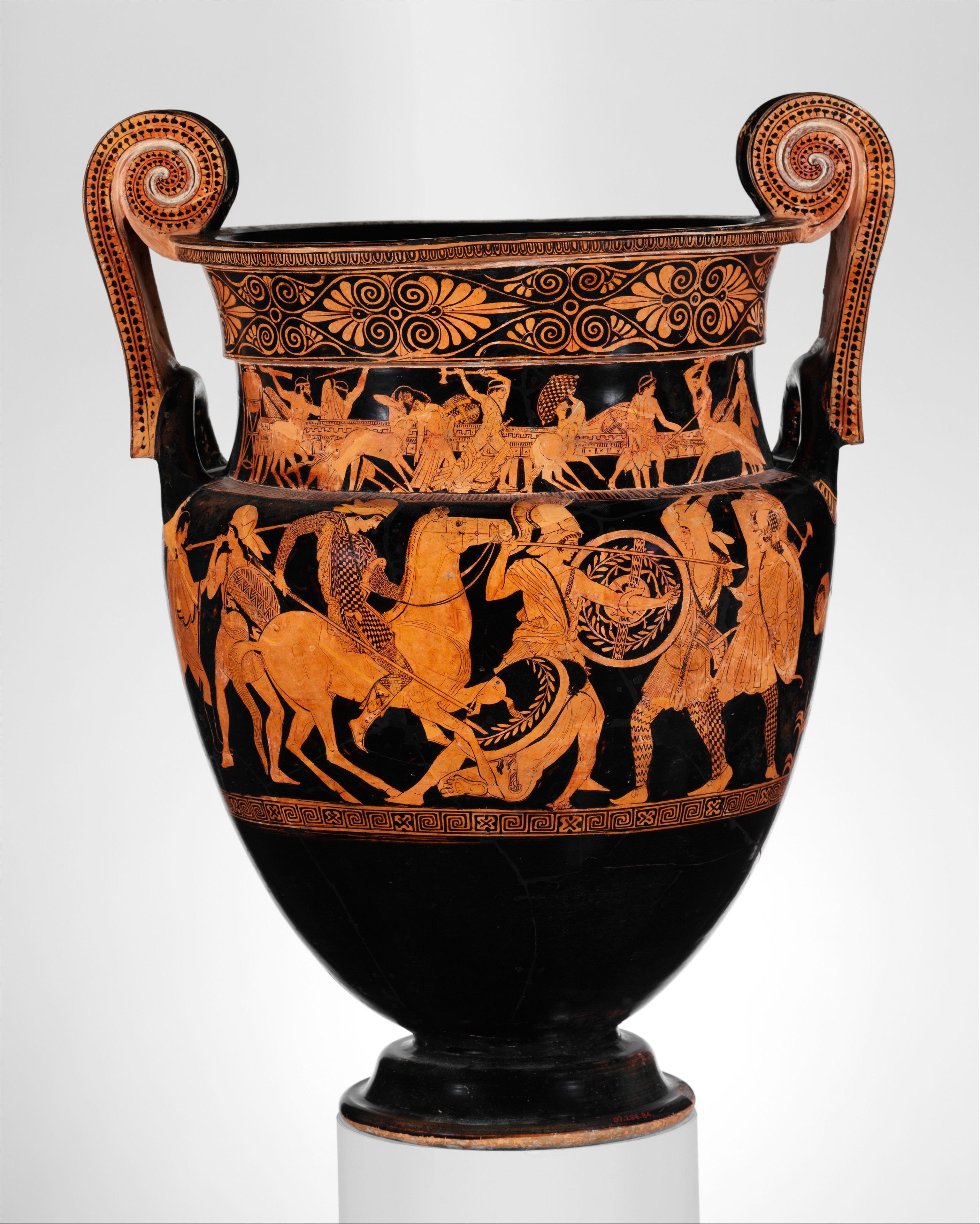
Painter of the Woolly Satyrs — "Terracotta volute-krater (bowl for mixing wine and water)" (ca. 450 BCE), public domain
Fields of gold—Athens holds its breath
By early May, the hills of Attica glistened with ripe wheat. Farmers scanned the horizon for dark clouds—too much rain now could flatten everything. The difference between another golden year and hungry months came down to the next storm.
Wheat and power—why a city’s fate hung on harvest
Grain was Athens’s lifeblood. A bad crop could spark riots, empower demagogues, or force the city to imports. The Assembly might debate philosophy, but what happened in the fields decided who held real power.
For Athenians, the safety of the city depended on these fragile stalks—the difference between feast and famine, rebellion and peace, was a handful of kernels.
