
Did Greek Statues All Look the Same?
All ancient Greek statues are the same—blank stares, perfect abs, cloned bodies. Weren’t they obsessed with a single ideal?
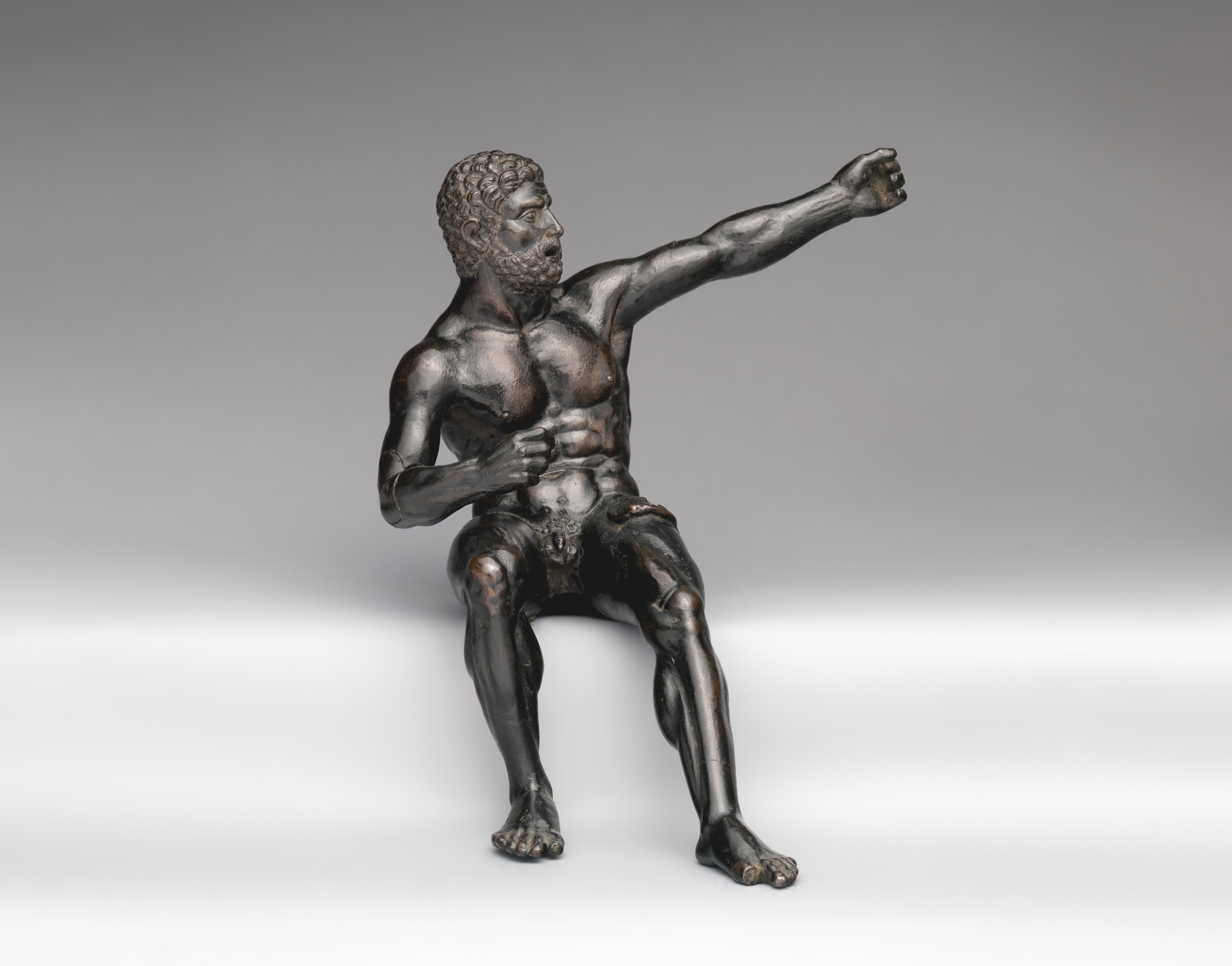
Vittore Gambello — "Seated Hercules in the act of shooting at the stymphalian birds" (ca. 1515–20), public domain
Statues: Ancient Greek Copy-Paste?
You’ve seen them in museums. Marble gods and athletes, chiseled and smooth, all apparently cast from the same mold. The myth: Greek sculptors worshipped one standard of beauty, copying it again and again—the strongest jaw, the most perfect abs.
Real Bodies, Real Stories, Real Flaws
But look closer: the Discobolus’ tense neck, the dying Gaul’s battered face, the Venus de Milo’s twisted hips. Sculptors added scars, crow’s feet, even beer bellies to celebrate individual achievement, old age, or the pain of a champion’s defeat. Ancient critics prized statues that captured personality—sometimes even ugliness.
Why Does This Myth Stick?
In the 18th and 19th centuries, European artists and museums favored restored or fragmentary statues, smoothing out quirks and damages. Their taste for symmetry and uniform muscle made ancient art seem more perfect than it ever was—hiding the wild, imperfect originals.
Greek sculptors celebrated variety. Look closely—each statue has its own scars, muscles, wrinkles, and flaws. Individuality mattered just as much as perfection.
