Fragmenta.
How It WorksPricingTodayBlog
Download for iOS
Today›Character
Character·Ancient Greece·Classical Athens, 4th century BCE

Demosthenes: The Stammerer Who Defied Macedon

Demosthenes practices speeches with pebbles in his mouth, spitting out a stutter to sharpen the weapon he’ll use against kings.
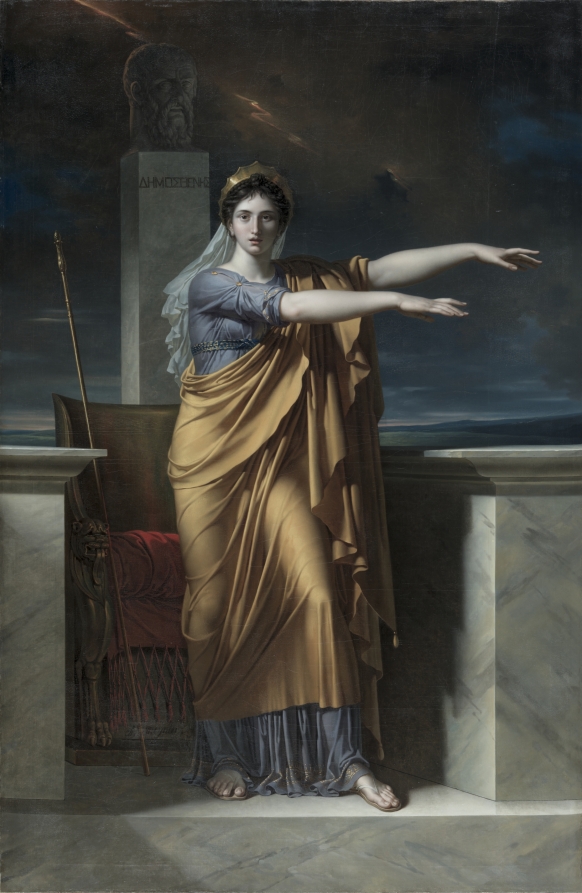
Demosthenes: The Stammerer Who Defied Macedon

Charles Meynier (French, 1768–1832) — "Polyhymnia, Muse of Eloquence" (1800), CC0

He Trains His Voice with Pebbles

Demosthenes, Athens’ greatest orator, begins as a boy mocked for his stutter. He runs to the sea, fills his mouth with stones, and battles his own tongue—so he can battle tyrants with words.

The Last Voice Against Macedon

Philip of Macedon threatens to swallow Greece. In the assembly, Demosthenes hurls thunder—warning, cajoling, pleading for unity. Most Athenians roll their eyes. They don’t believe war is coming. But Demosthenes keeps shouting, long after hope has gone.

A Voice That Echoes After Defeat

Macedon wins. Athens falls silent. But Demosthenes’ words echo for centuries—proof that sometimes, the one who shouts into the storm isn’t just making noise.

He stood almost alone in Athens, railing against Philip of Macedon’s rise, voice shaking but words like arrows. The city didn’t listen—until it was too late. Power can sound like warning, or it can sound like wind.

Three minutes a day.

Fact-checked stories from ancient Greece and Rome, delivered every morning as swipeable cards.

Download for iOS
5.0 on the App Store

Keep reading

Quote · Late Republican Rome

Cicero on Friendship and Truth

“A friend is, as it were, a second self.” Cicero, under threat of exile, writes a line that outlasts every office and every war.

Story · Classical Greece

Antigone Buries Her Brother

By torchlight, Antigone dared to sprinkle dust over her brother’s corpse—knowing it meant death.

On This Day · Classical Athens

On This Day: Athens Watches the Grain Ripen

Early May: The wheat fields outside Athens shimmer gold—almost ready for harvest, and everyone is watching the sky.

Fact · Late Republic and Early Empire

Roman Women Could Divorce Their Husbands

If a Roman matron wanted out of her marriage, she could pack her bags, walk out the door, and file for divorce—no trial, no drama, no husband’s permission needed.

Fragmenta.

Made with care for history that deserves it.

App Store

Product

How It WorksDaily FragmentsFeaturesToday in HistoryBlogDownload

Legal

Privacy PolicyTerms of ServiceEULASupportPress

Connect

TikTok
© 2026 Fragmenta. All rights reserved.