
Cato the Younger on Freedom
"I would rather die than be ruled by a tyrant." — Cato the Younger, drawing a hard line in the sand.
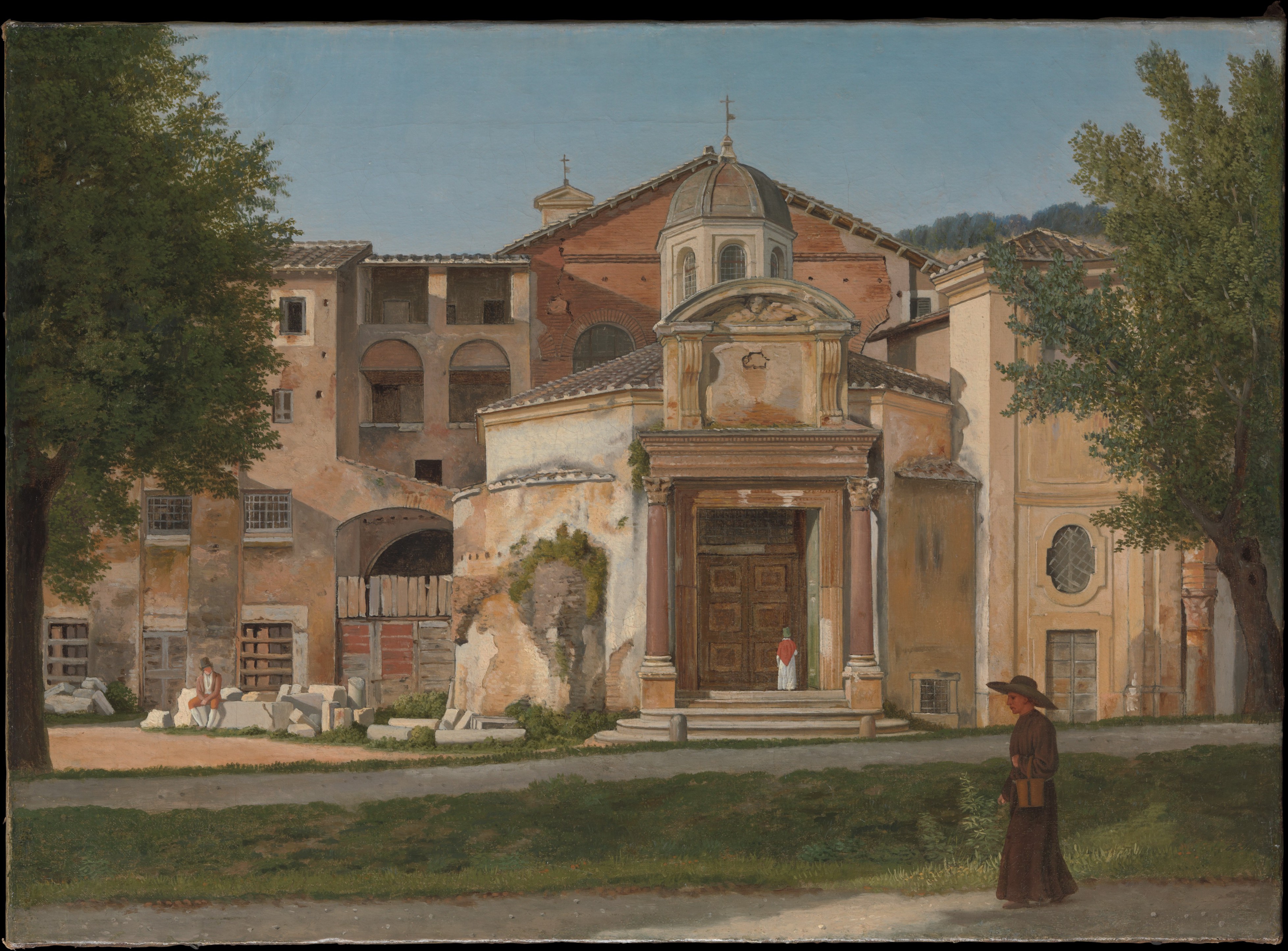
Christoffer Wilhelm Eckersberg — "A Section of the Via Sacra, Rome (The Church of Saints Cosmas and Damian)" (ca. 1814–15), public domain
A line no strongman would cross.
Plutarch, in Life of Cato the Younger, records Cato’s words: «Μᾶλλον αἱροῦμαι τεθνάναι ἢ καθ᾽ ἑνὸς ἀνδρὸς ἀρχὴν ζῆν.» — "I would rather die than live under the rule of a single man." Cato uttered this as civil war closed in and Caesar seized Rome by force.
Liberty or nothing.
Cato was Rome’s unyielding defender of the Republic, refusing to bend the knee to Caesar even as his allies deserted. For Cato (and for Stoics), freedom is worth more than safety, comfort, or even life. Some called him stubborn — others, Rome’s last honest man.
The man who would not be broken.
Cato died in Utica by his own hand rather than accept Caesar’s pardon. His death became legend: a symbol for later generations who believed virtue is proven only at the razor’s edge. Even his enemies had to respect the stand.
Cato wasn’t speaking in metaphors — he chose death over submitting to Caesar. To him, liberty was a sharper blade than any sword.
