
Xenophon, The Reluctant Commander
A Greek writer, stranded deep in enemy Persia, suddenly finds himself leading ten thousand mercenaries home—whether he wants to or not.
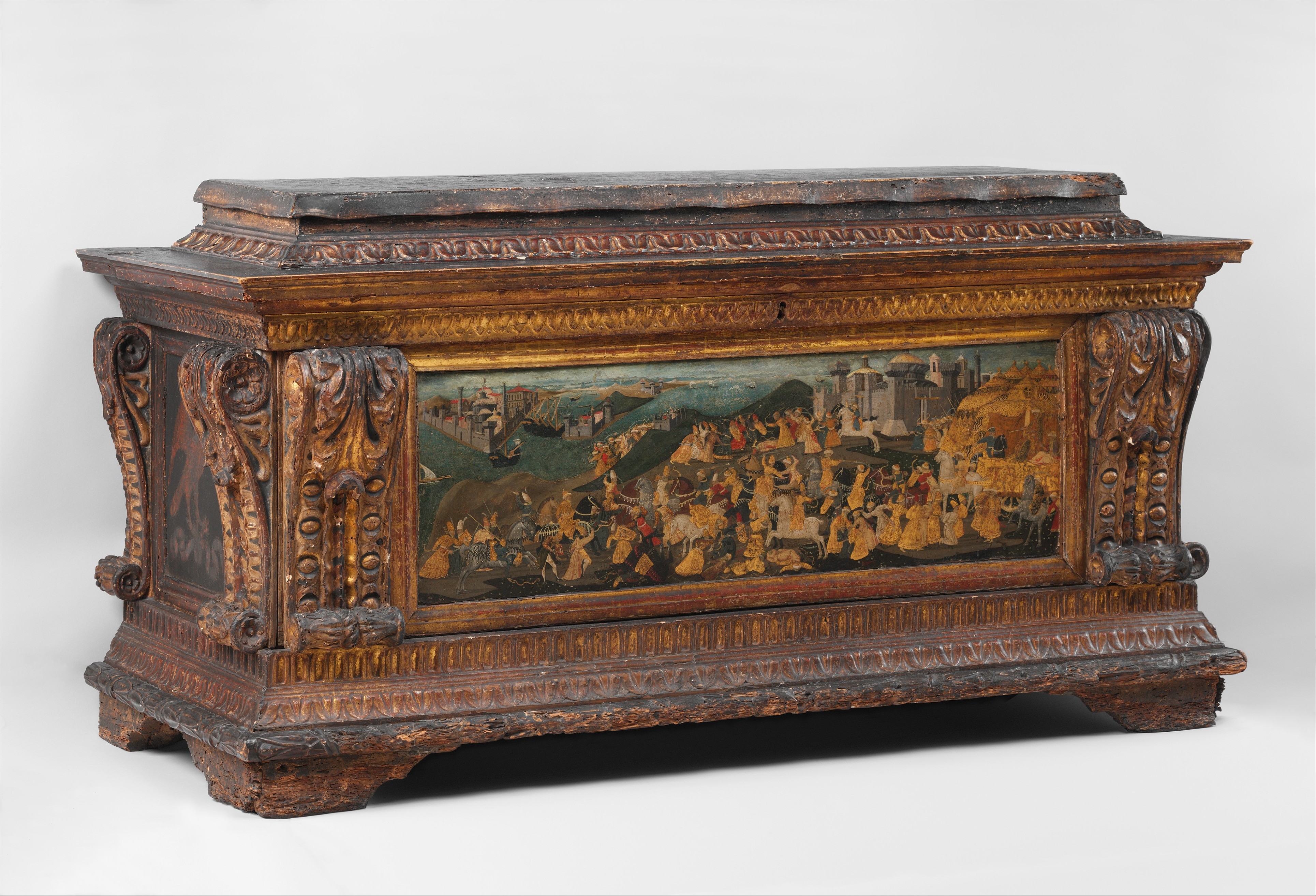
Apollonio di Giovanni di Tomaso — "Cassone with painted front panel depicting the Conquest of Trebizond" (after ca. 1461), public domain
A Philosopher Trapped Behind Enemy Lines
Xenophon is stranded far from Greece, deep in Persian territory. The generals are dead—betrayed, beheaded, gone. Soldiers stare at him. Someone has to lead them through a thousand miles of hostile land.
Not Born a General—Made by Circumstance
He’s no official commander, just a man who studied with Socrates. But urgency pulls him forward. Xenophon rallies the survivors, organizes the march, and bargains with warlords. He writes it all down, every scrape and shortcut—his ‘Anabasis’ becomes a manual in courage for centuries.
The Pen Survives Where Swords Break
Xenophon returns home with a story, not a crown. His greatest weapon isn’t command—it’s the written word. The path out of Persia becomes a blueprint of leadership under fire.
Xenophon wasn’t a general, just a junior officer—and a student of Socrates. But after their leaders are killed in a Persian ambush, the army turns to him. By nightfall, Xenophon is planning a desperate march north, surrounded by enemies, with no authority but his words. He makes it—writing the epic ‘Anabasis’ as proof.
