
The Sunburst Beneath the Earth: Tomb at Vergina
An unassuming Greek farmer’s shovel struck gold—literally. Buried beneath Macedonian earth was a royal tomb sealed for over 2,000 years.
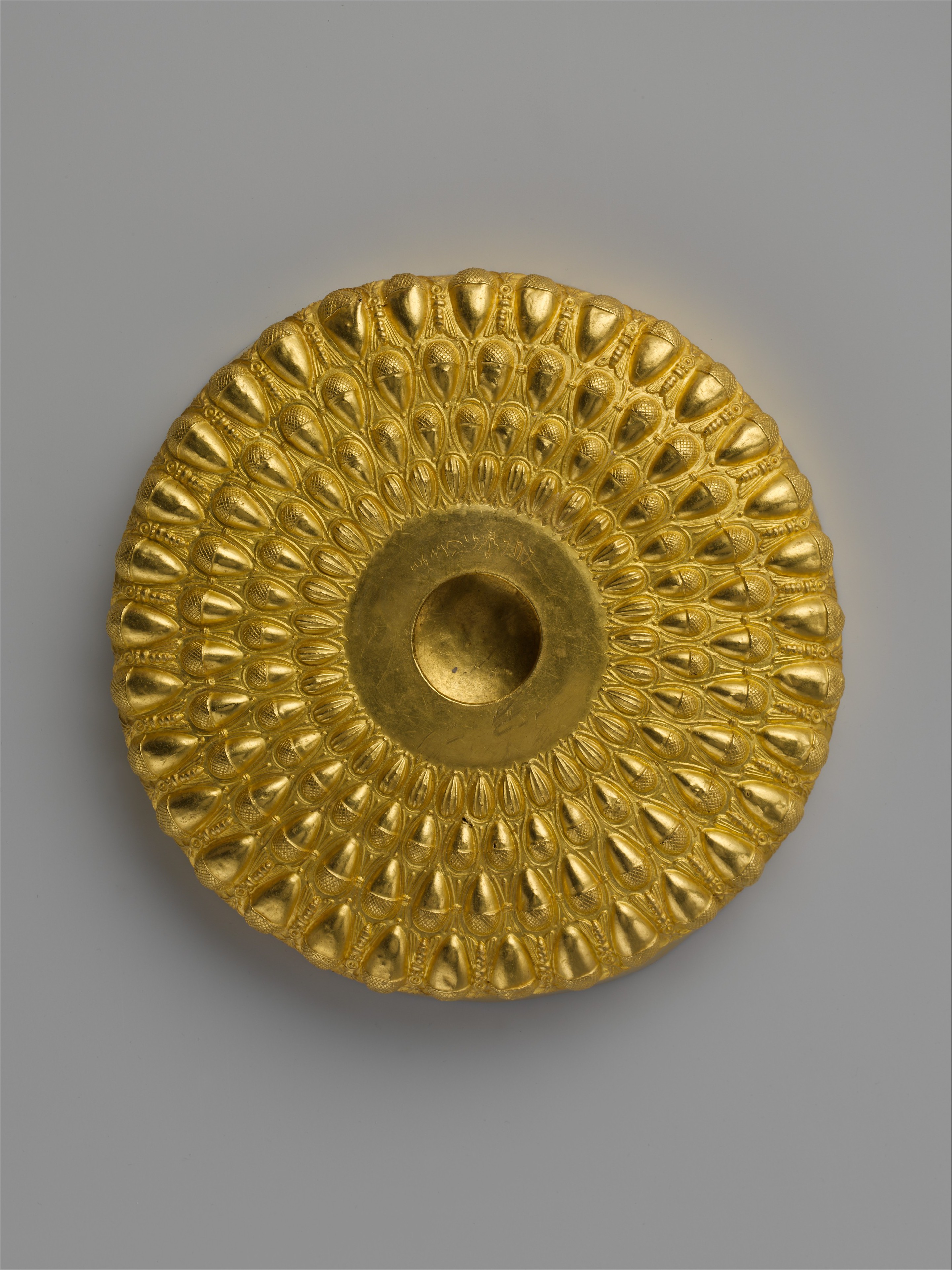
Unknown — "Gold phiale (libation bowl)" (4th–3rd century BCE), public domain
Gold under the plow.
In 1977, a farmer in Northern Greece unearthed what would become one of archaeology’s wildest finds: the royal burial at Vergina. There, archaeologists uncovered golden wreaths, a shield, and the mysterious sunburst that became a symbol of Macedon.
The bones of a king?
In a stone chamber, two gold-laden sarcophagi lay undisturbed—the remains inside possibly those of Philip II, father of Alexander the Great. Debate rages still. The tomb’s treasures, from gilded armor to a gold larnax, are real. But the secret of whose bones rest there? Still argued over coffee and journal pages.
A kingdom reclaimed, identity disputed.
For Greece, the tomb meant proof of a royal legacy. For the rest of the world, it was a reminder: history doesn’t rest easy, and even a handful of ancient bones can change the story nations tell about themselves.
The discovery of the tomb at Vergina revealed treasures untouched since the age of Alexander—and ignited a firestorm over which bones belong to kings.
