
A Murder Trial in the Athenian Theater
The defendant stands alone, surrounded by 6,000 angry Athenians—his fate decided by a sea of pebbles.
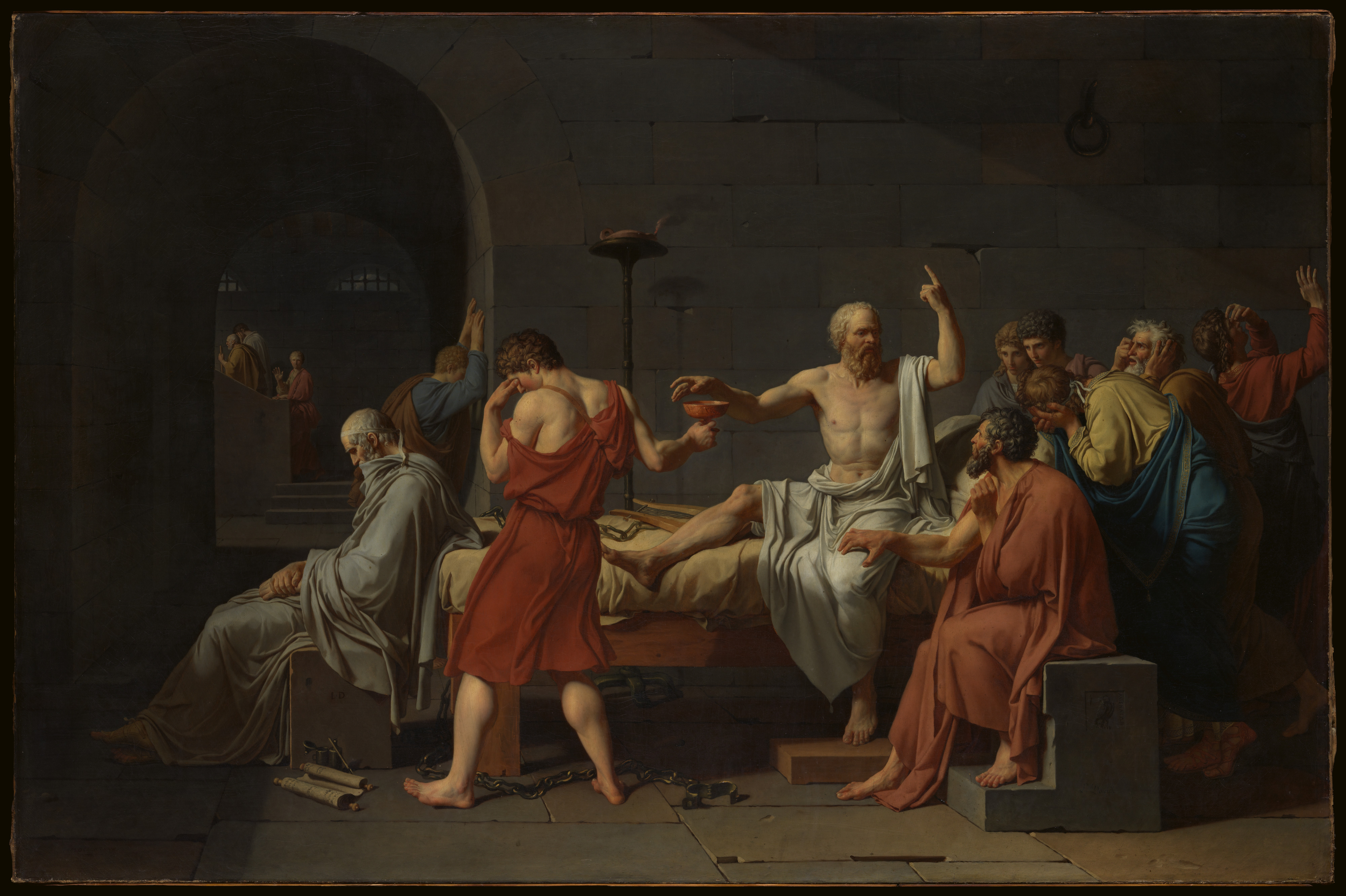
David — "The Death of Socrates" (1787), public domain
6,000 Jurors, One Life at Stake.
In Athens, the jury was a mob—sometimes 6,000 citizens packed onto benches. Imagine the roar as the accused pleaded for mercy, sweat dripping as he scanned the crowd for sympathy.
Justice by Pebble.
The fate of the accused? Decided by dropping black or white pebbles into a giant urn. No appeals. No lawyers. Just the echo of pebbles and a city’s mood that afternoon. Sometimes, all it took was a clever turn of phrase—or a single slip.
Trial as Blood Sport.
If you lost, execution could be immediate. Sometimes exile. The whole city watched, hungry for drama. In Athens, justice wasn’t blind—she was loud, public, and not above a little blood.
The Athenian jury trial was more gladiator fight than calm debate—one wrong word, and your life could be decided in a single afternoon.
