
The Death of Socrates
Socrates drinks a cup of hemlock—calmly, with friends weeping around him.
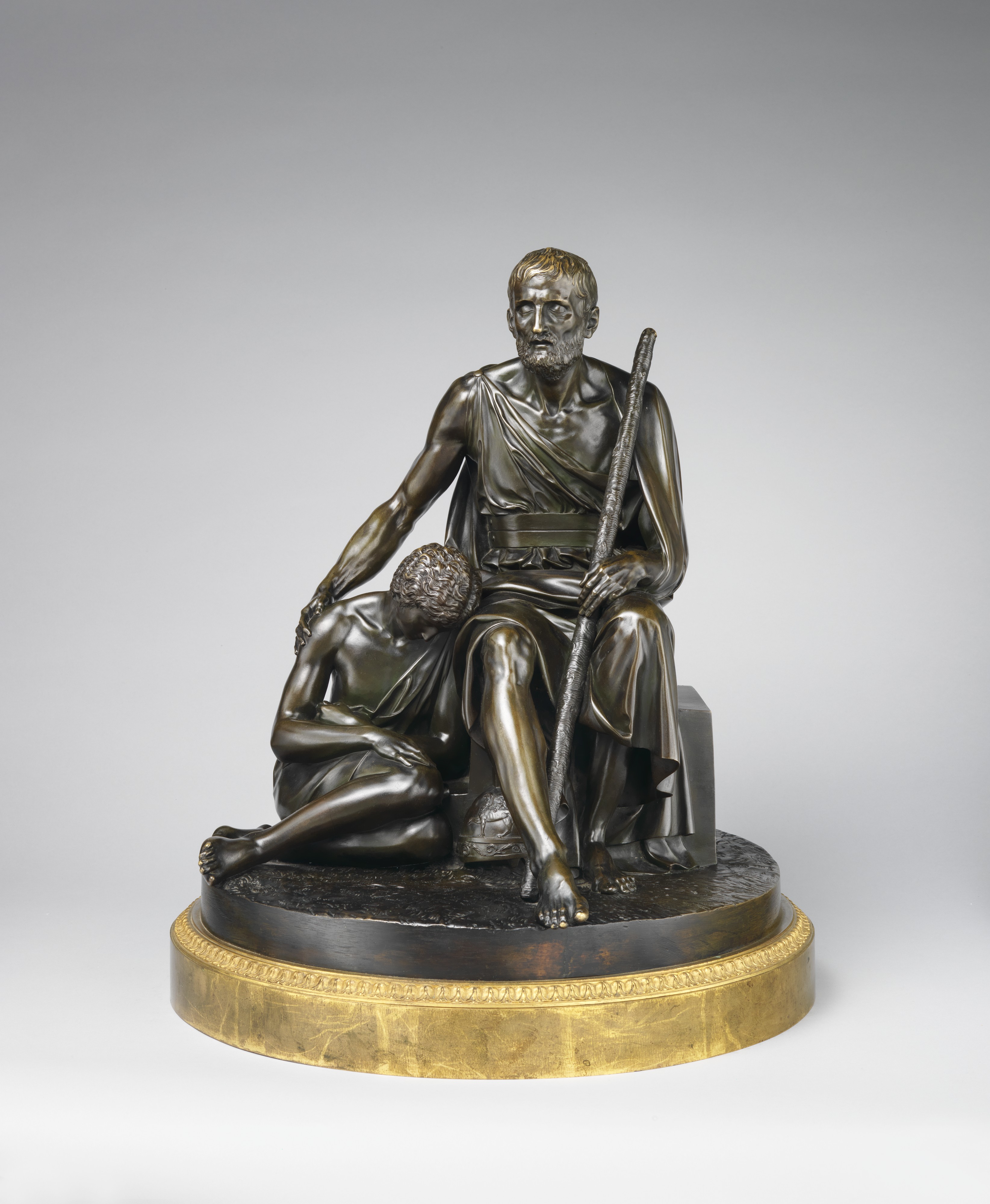
Antoine Denis Chaudet — "Belisarius and His Guide" (1794), public domain
A cup, a sentence, the end.
In 399 BC, Socrates sits in an Athenian prison. His friends beg him to escape. He refuses. When handed the cup of poison hemlock, Socrates raises it to his lips—without trembling.
Death as a final lesson.
According to Plato's account, Socrates spends his last moments discussing the soul's immortality, reasoning until the poison reaches his heart. While his friends break down, he chides them for their grief—asking only that they offer a rooster to Asclepius, as if death were a cure.
A death Athens could never forget.
They watched him die slowly, his body growing numb. His refusal to flee turned execution into philosophy—transforming a sentence meant to silence him into one of history’s loudest echoes.
Socrates spent his final hours discussing the soul, comforting his followers, and died not with fear, but with quiet defiance.
