
Phrynichus and the Knife in the Street
A politician walks through Athens—then feels a knife between his shoulder blades. In daylight, on a busy street.
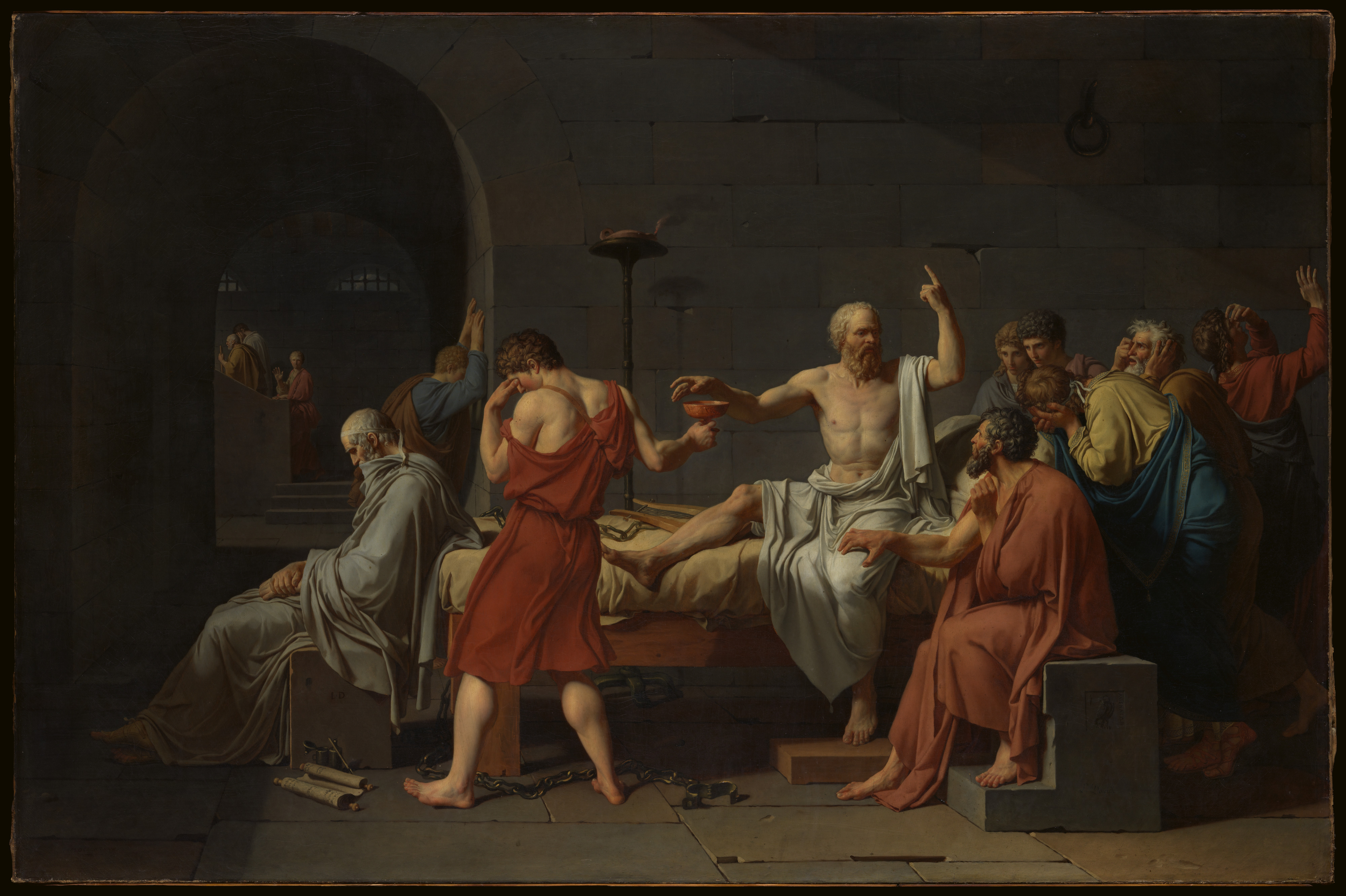
David — "The Death of Socrates" (1787), public domain
The knife in broad daylight.
Phrynichus, a sharp-tongued Athenian politician, was hated by both camps as Athens spiraled into civil unrest. One morning, as he walked through the Agora, an assassin plunged a blade into his back—and left it there as the body slumped.
Democracy, bought and betrayed.
The murder was no random street crime. Phrynichus had warned the democracy about an impending coup. The plotters paid a fellow citizen ‘a thousand drachmas and citizenship’ for the kill. His corpse, the knife still in place, was a message: politics in Athens was now life or death.
A city on edge.
His murder didn't stop the coup, or restore order. For months, Athens teetered between mob violence, show trials, and secret deals. Even the city of Socrates could turn into a place where a knife in your back read like a press release.
When Athens slipped toward dictatorship, one anti-coup leader was assassinated by his own faction. The hitman left the knife still bristling from the body—a warning, and a pay-off for betrayal.
