
Did Roman Emperors Eat Lying Down?
Every Roman emperor feasted lying on his side, grapes in hand, on a velvet couch. You've seen it in every movie and painting.
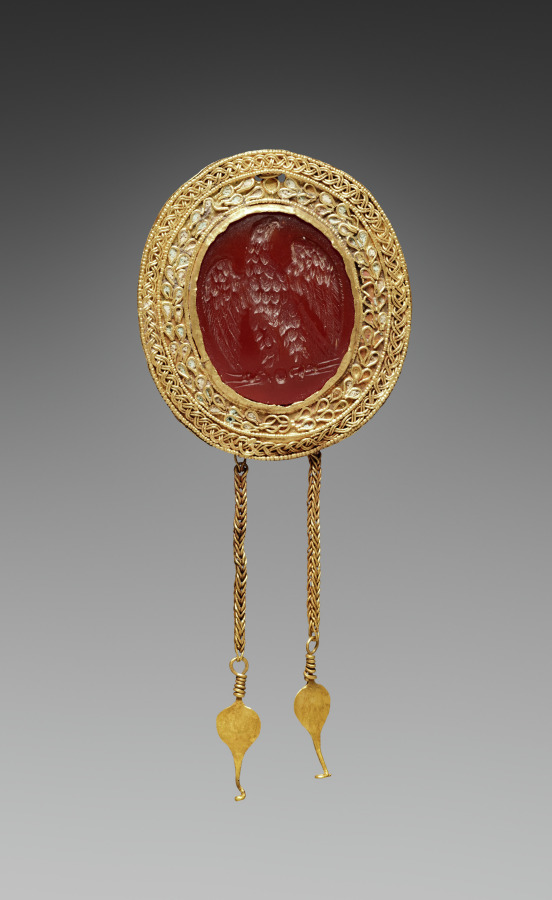
Unknown — "Intaglio: Imperial Eagle" (c. 1–25 CE), CC0
The iconic reclining emperor.
We’re all trained by art and movies to imagine Roman emperors feasting on their sides, lounging while slaves serve roasted peacock and honey cakes. It looks effortless—power and luxury in a single pose. But this image leaves out half the story.
Who actually reclined?
Reclining at the table was a privilege reserved for freeborn men and honored guests. Women and children were usually expected to sit upright—unless you were the Empress and even that could depend on the host. Archaeology shows most banqueting couches were sized for two or three, not the whole room. Even some emperors, especially early on, dined sitting up for public rituals or modesty’s sake.
Why do we picture it this way?
Later Roman writers exaggerated imperial luxury. Painters—especially in the 1800s—latched onto the image of decadent emperors, velvet couches, and endless grapes. The truth: Roman dining was a status game, not a universal sprawl.
Reclining at dinner was a privilege for freeborn men, not a universal rule—even for emperors. Women, children, and sometimes even the emperor himself often sat upright. Roman dining customs were complicated—and status obsessed.
