
Seneca on Death and Fear
“Death is not an evil.” Seneca, staring down a death sentence, wrote it as cold Latin: «Mors non est malum.» — “Death is not a bad thing.” He refused to flinch where most of Rome ran.
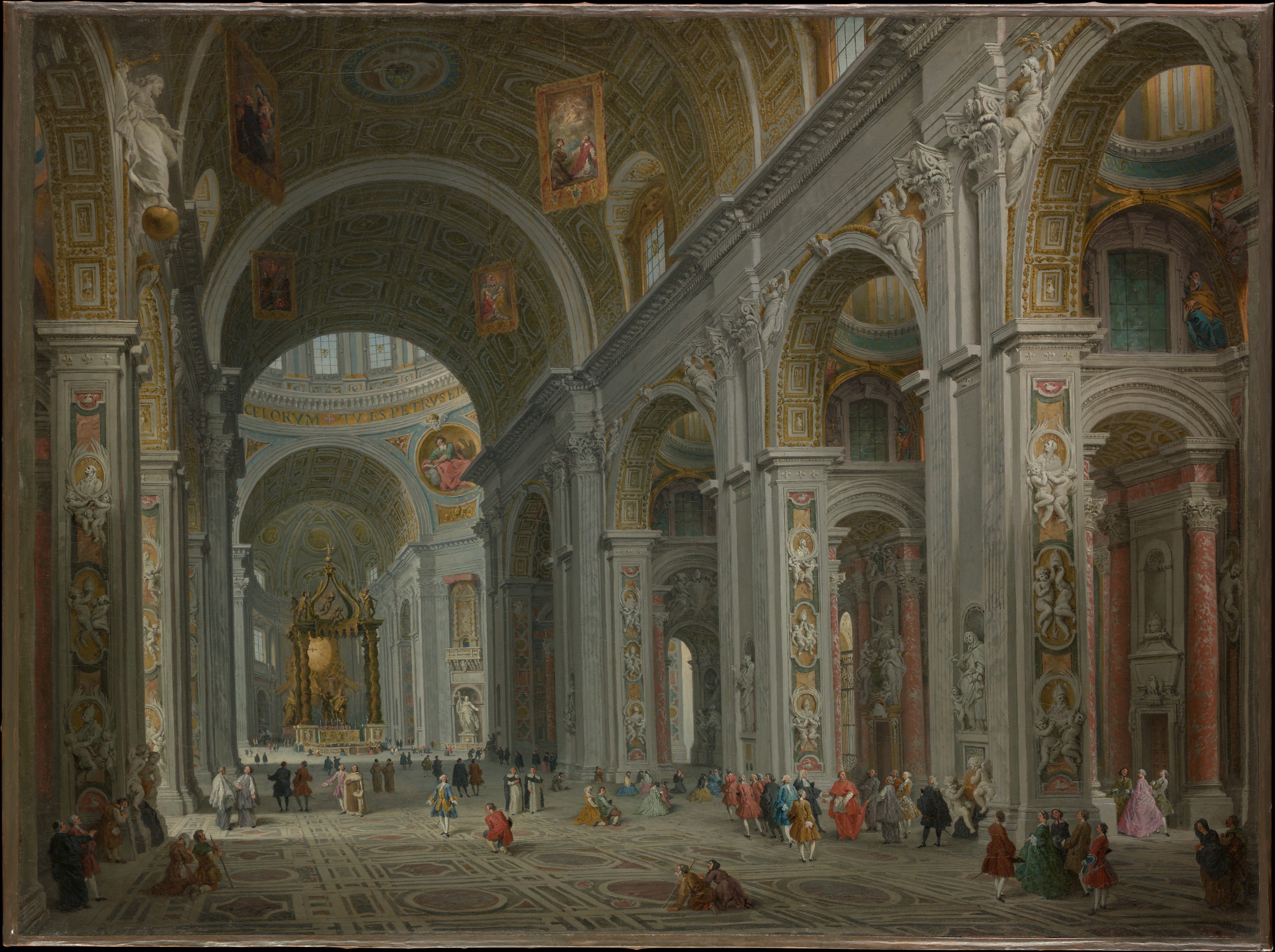
Panini — "Interior of Saint Peter's, Rome" (after 1754), public domain
The calm before the sentence.
Seneca, in his Letters to Lucilius (Letter 70), wrote: «Mors non est malum.» — “Death is not an evil.” This line wasn’t theory. He’d been recalled from exile, survived imperial purges, and was now marked for death by Nero. Still, he refused to fear the end.
What Seneca meant—dying is not the worst.
To Seneca, what ruins lives isn’t death, but the terror of it. People waste years hiding from the inevitable, missing everything worth living for. Stoics taught: let go of the one thing you cannot control. Death is the last stop, not a punishment—what matters is how you travel there.
A philosopher’s exit, legend and fact.
Seneca’s final moments were almost a public performance—drinking poison and slicing his own veins as friends watched. He stayed composed, even comforting his wife. He believed a good death crowned a good life, and his words still challenge us to face the end without blind fear.
Seneca saw death as a fact, not a tragedy—because the fear of dying does more damage than death itself.
