
Roman Wine Flavored With Sea Water
You take a sip of Roman wine—and your lips taste salt. Sometimes, the amphorae were filled with seawater on purpose.
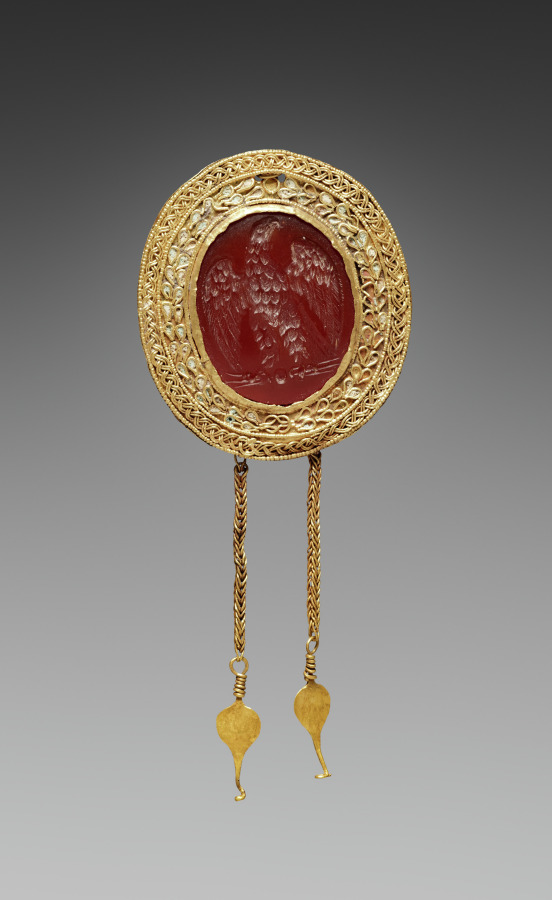
Unknown — "Intaglio: Imperial Eagle" (c. 1–25 CE), CC0
Roman Wine—With a Pinch of Sea Salt
You take a sip of Roman wine, and your lips taste salt. Amphorae from shipwrecks show wine mixed with seawater—sometimes on purpose, not by accident. It wasn’t a mistake. Pliny the Elder describes recipes for salty wine, praised by both sailors and innkeepers.
Why Ruin Good Wine?
Mixing wine with seawater made it last longer on the journey from vineyard to tavern. It cut sourness and allowed even cheap wine to pass as drinkable. This brined brew, called 'salsum,' was especially popular with the lower classes and on ships, where fresh water spoiled quickly.
Wine and Waves, Bound Together
Raise a Roman glass and you might taste the Mediterranean itself. The Romans blurred the lines between land and sea—and their wine told the story with every briny sip.
Romans didn’t just drink their wine watered down, they often laced it with brine. Mulsum (wine with honey) was just one option—another, called 'lora' or 'salsum,' was wine mixed with salt water. Some amphorae even show mineral traces that match Mediterranean seawater. Pliny the Elder spells out the recipes, claiming brined wine was popular with sailors and the poor. It kept longer, masked sour notes, and hit the tongue with a shock of sea and stone.
