
Roman Toilets and Sponge Sticks
Public toilets in Rome came with a communal sponge on a stick—shared by everyone.
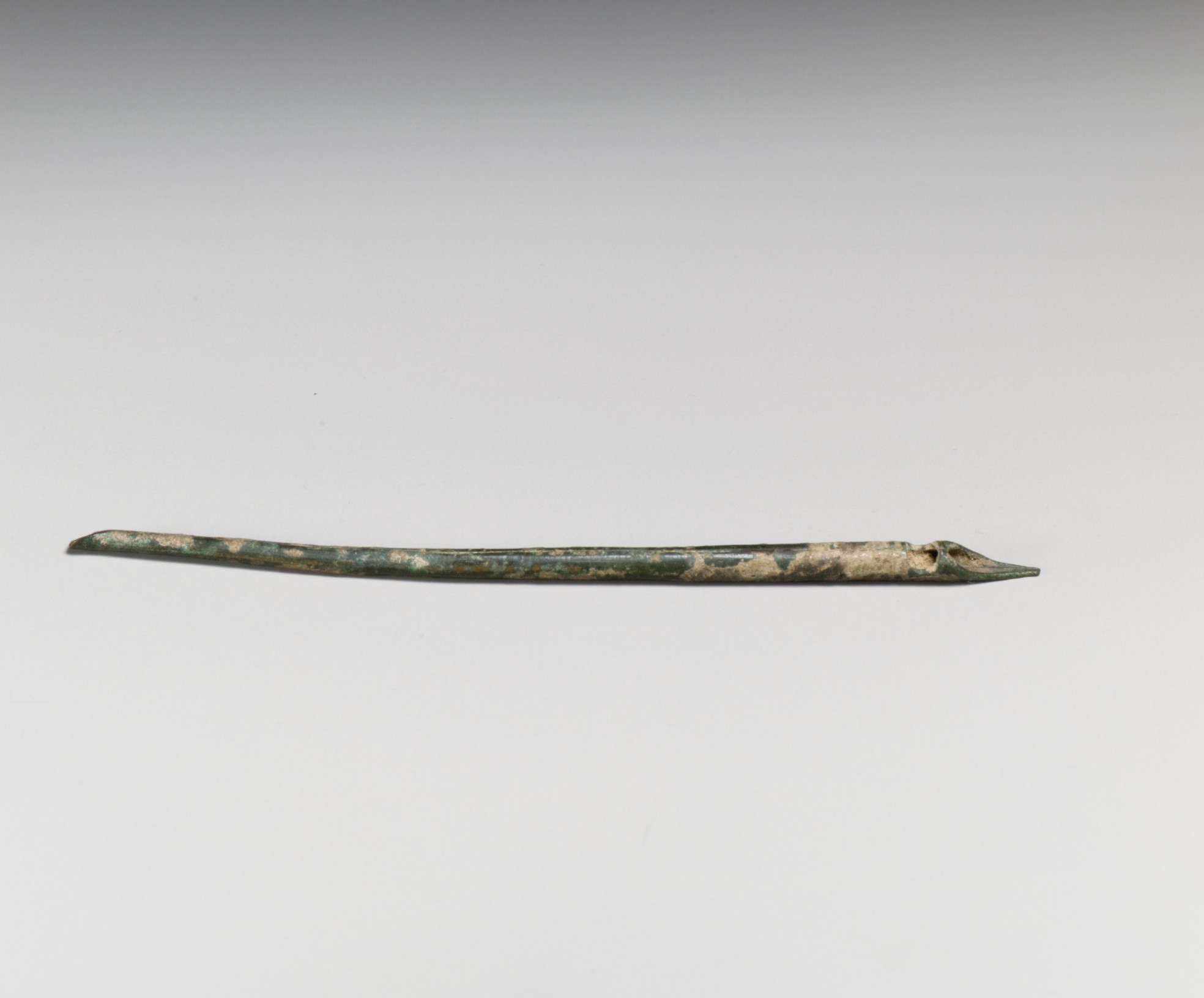
Unknown — "Bronze stylus" (1st‒2nd century CE), public domain
One Sponge, Many Romans
A row of marble toilet seats, no partitions. In the corner, a bucket brims with vinegar and water. Floating inside is a sea-sponge tied to a wooden stick—the tersorium. Everyone used it. When you finished, you rinsed it and left it for the next person.
Ancient Hygiene, Crowd-Sourced
Archaeologists have found traces of human waste on ancient latrine drains across the empire. Literary sources—Seneca and Martial included—joke about the awkwardness. Romans thought vinegar cleaned things. Bacteria likely disagreed.
It wasn’t just the architecture that made Roman cities feel crowded. Even in the lavatory, privacy was rare and hygiene, by modern standards, was questionable. The same sponge stick could see dozens of backsides in a single day.
