
Togas: Not the Default Roman Outfit
Imagine every Roman swanning through the forum in a white toga. Robed from dawn to dusk, citizen and senator alike—Hollywood’s favorite ancient dress code.
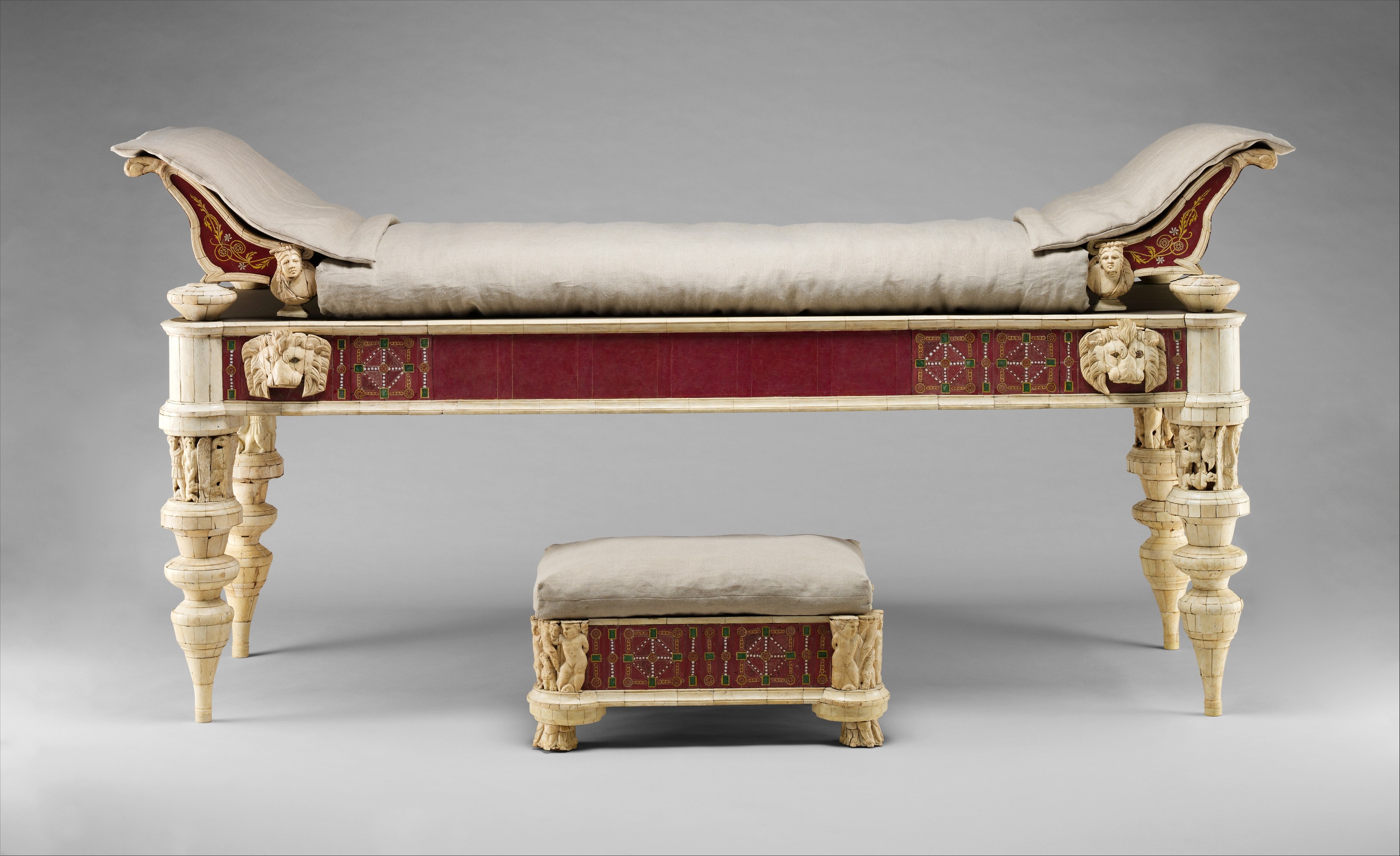
Unknown — "Couch and footstool with bone carvings and glass inlays" (1st–2nd century CE), public domain
The all-toga, all-the-time myth.
Every Roman film or Halloween costume gets the same memo: white togas for everyone, every day. From senators to shopkeepers, the toga was ancient Rome’s daily uniform. Or so we’re led to believe.
Tunics for daily life, togas for show.
In reality, the toga was awkward, hot, and tricky to put on—an eight-meter woolen bedsheet, often requiring help. Only male citizens wore them, mainly for ceremonies, court, or public events. Shopkeepers, slaves, and even most elites wore tunics: knee-length, sleeveless, and way more comfortable.
Where did the image come from?
Nineteenth-century neoclassical painters and early Hollywood loved dressing everyone in togas—simple, dramatic, instantly 'Roman.' It stuck, even though a real toga party would have been a sweaty, undignified mess.
Togas were formal, cumbersome, and mostly reserved for male citizens at public events. Most Romans wore tunics day-to-day—togas were the ancient equivalent of renting a tux.
