
Did Romans Use Toilet Paper?
Roman toilets had no toilet paper. Instead, people reached for a communal stick with a sponge, dipped in vinegar between uses.
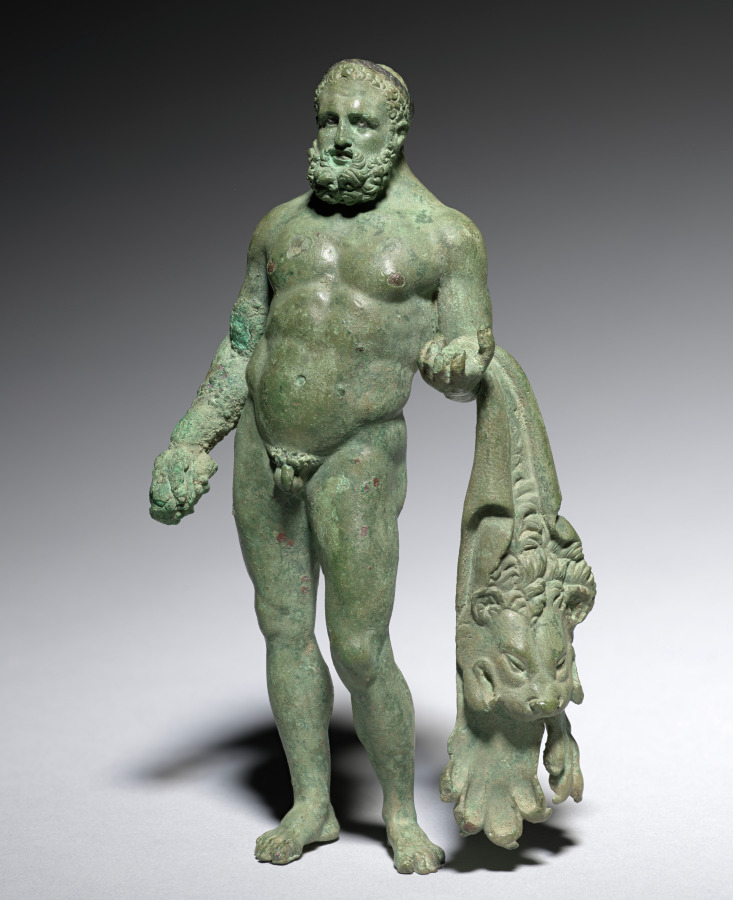
Unknown — "Hercules" (c. 30 BCE–20 CE), CC0
No TP in Ancient Rome.
Forget Charmin. In a Roman public latrine, you got a stone bench with holes and a stick with a sea sponge on the end—the 'tersorium.' Everyone shared it, rinsing in a gutter of vinegar water. For most Romans, this was the morning routine.
The sponge on a stick.
Archaeologists have found the stone benches, gutter channels, and even pictorial graffiti in places like Ostia and Pompeii. Some sponges and sticks survived in the trash heaps. Pliny the Elder and Seneca both reference the tersorium—Seneca even records a suicide by sponge.
How did the myth begin?
Toilet paper as we know it is modern. Classical textbooks quietly skipped the real details, and ancient writers thought this topic beneath them—except, occasionally, to make a joke. The myth of "toilet paper everywhere" comes from wishful thinking, not Roman hygiene.
Roman public toilets were social spaces with stone benches and shared sponges, not private stalls with soft paper. Archaeology gives us the dirty details.
