
Bread and Circuses: More Than Mindless Distraction
You’ve heard it: Romans kept the masses quiet with endless free food and wild games—just “bread and circuses.”
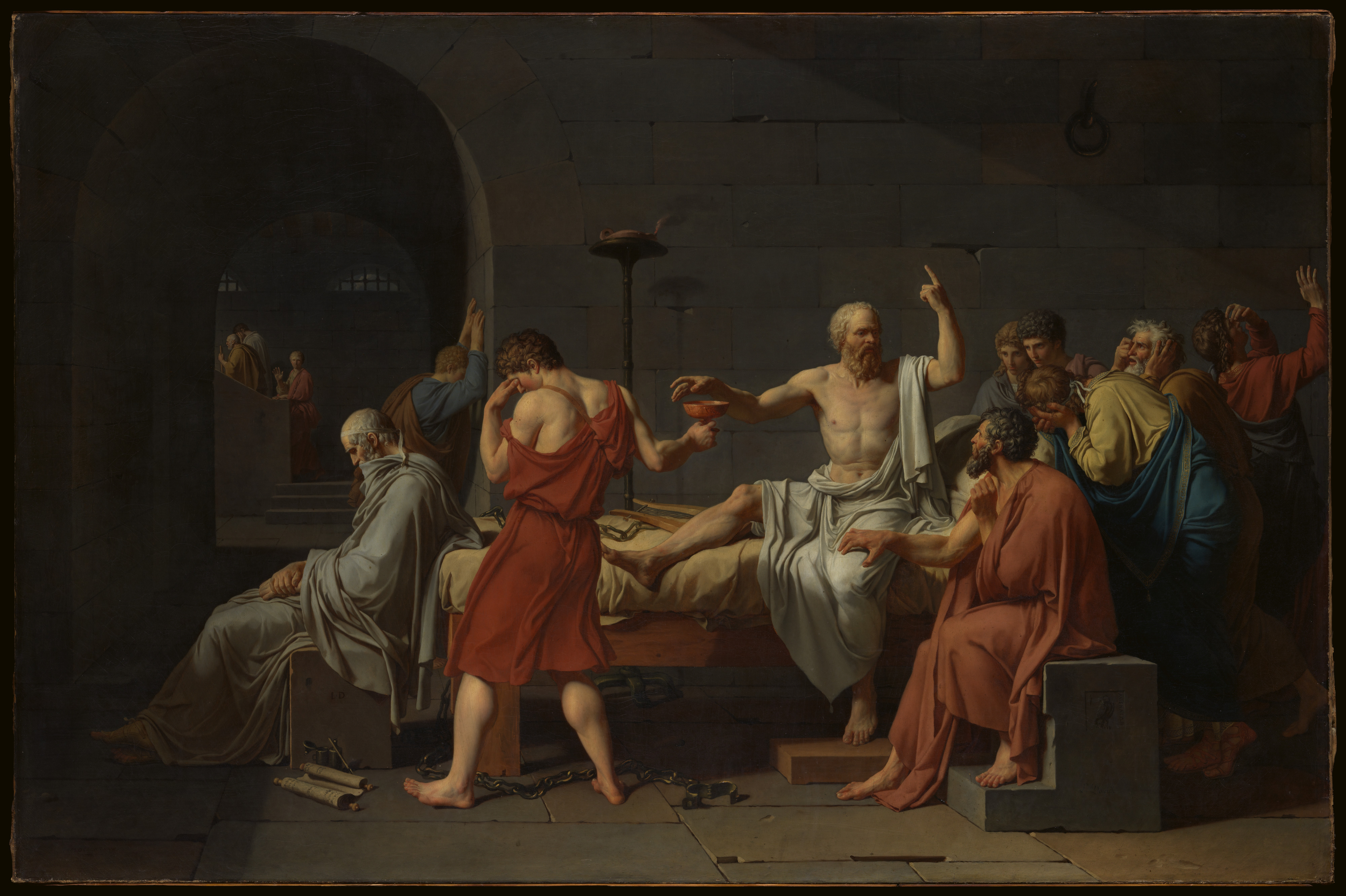
Jacques Louis David — "The Death of Socrates" (1787), public domain
The myth that fed the world.
We picture Rome’s poor sitting idle, stuffed with free bread, roaring at bloodstained spectacles from dawn to dusk. “Bread and circuses”—the ultimate bribe for a lazy mob, traded for their freedom. The phrase gets tossed around in every classroom and op-ed.
The real Roman safety net.
In truth, the free grain dole (annona) covered only select citizens—usually about a third of Rome’s adult males. Applicants had to stand in line, show up in person, and the ration kept no one fat. Gladiator games were expensive, rare, and often more about elite rivalry than pacifying the plebs. Urban laborers worked brutally hard just to supplement their ration.
A poet’s complaint, not imperial policy.
Juvenal, a sharp-tongued satirist, coined ‘bread and circuses’ to mock his fellow Romans for caring more about comfort than liberty. The emperors never said it, and most Romans—hungry, ambitious, restless—were never truly ‘kept quiet’ by handouts and shows.
The reality? Roman urban policy was complex—free grain was a civic safety net, distributed with strict rules, and most citizens still had to work. The phrase comes from a satirical poet, not an imperial edict.
