
Were Roman Statues and Mosaics White?
Roman art wasn’t just white marble and dull stone. Statues and mosaics burst with color—ancient homes looked more like a technicolor movie than a museum hallway.
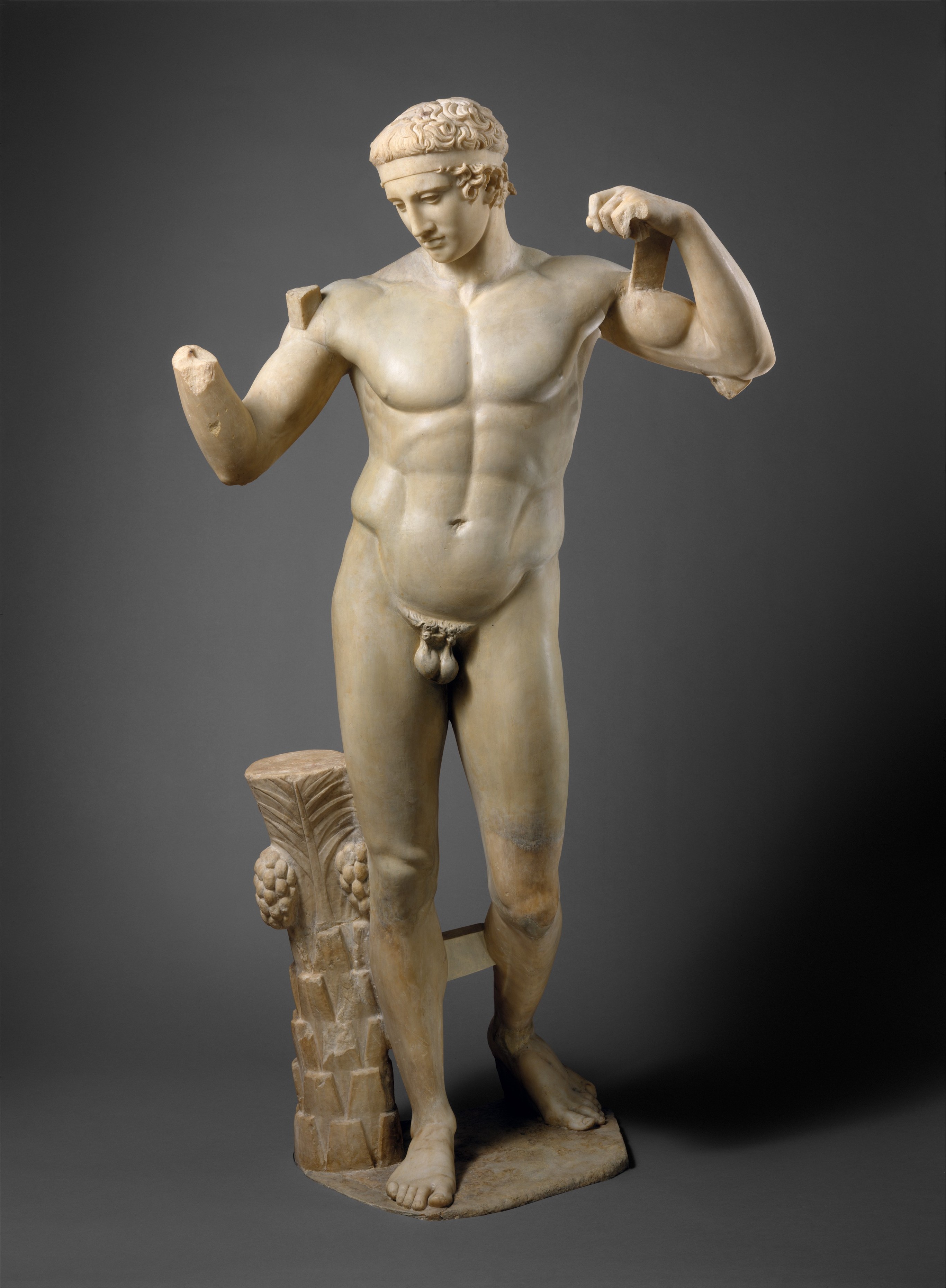
Polykleitos — "Fragments of a marble statue of the Diadoumenos (youth tying a fillet around his head)" (ca. 69–96 CE), public domain
White statues? Not in ancient Rome.
Visit any classical gallery—marble gods and emperors gleam in pure white. We imagine Roman villas were equally pale, with black-and-white mosaics underfoot. But step into a real Roman home, and you’d be ambushed by color.
A rainbow under the dust.
Microscopic pigment traces show statues were once painted in lifelike hues—lipstick reds, golden armor, eyes outlined in black. Roman mosaics mixed glass, semi-precious stones, and hundreds of colored tiles. Even the walls were painted with landscapes and myths. What we see as 'classic' was more like a blank sketch before the colors went on.
How did the myth start?
When Renaissance artists unearthed ancient statues stripped bare by time, they mistook weathered white marble for the original look. The myth stuck—and centuries of museums reinforced it, leaving us blind to Rome’s true colors.
Archaeologists have found traces of vivid pigments on statues and dazzling mosaics across the empire. Romans filled their spaces with deep reds, cobalt blues, and gold leaf—white was a blank canvas, not the final look.
