
Did Romans Bathe Together?
Picture a Roman bathhouse: steam rising, men and women lounging together in swirling pools. The myth says bath time was a free-for-all. Not quite.
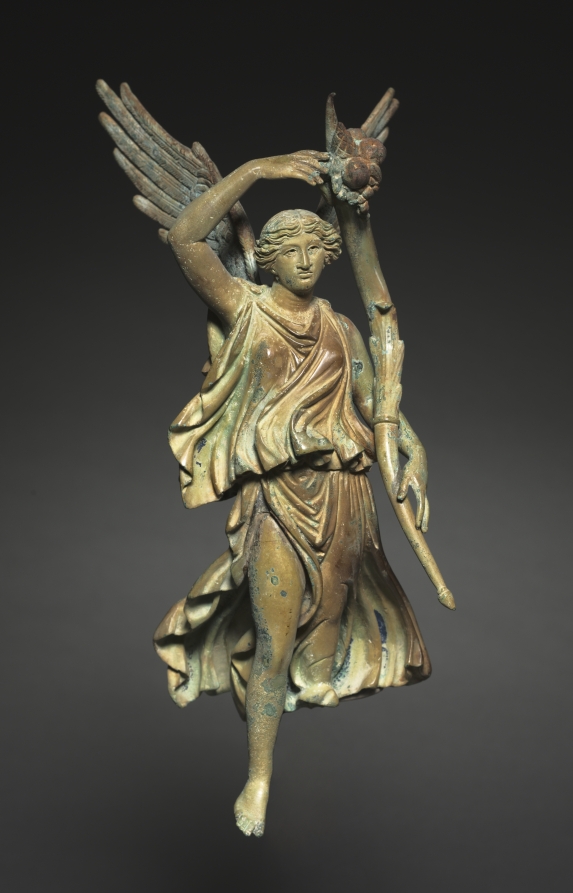
Unknown — "Victory with Cornucopia (Chariot Attachment)" (40–68 CE), CC0
The naked truth about Roman baths.
Hollywood loves this: men and women bathing together, gossiping, flirting, and splashing in marble pools. Roman bathhouses, so the myth says, were steamy dens of mixed company—sensual, social, scandalous.
Steam, but not steamy.
In reality, public Roman baths almost always separated men and women, either by different hours or entirely different spaces. Some emperors enforced strict gender segregation, and literary sources complain about rare exceptions. Mixed bathing happened, but it was controversial and far from the norm.
Where did the myth begin?
Victorian artists painted the Roman bathhouse as a playground of decadence—projecting their own fantasies onto the marble steam. The myth stuck, fueled by novels and movies that needed a little scandal in their toga parties.
Roman bathhouses were overwhelmingly segregated by gender—sometimes by time of day, sometimes by separate spaces. The steamy mixed-bathing scene is mostly a Victorian fantasy.
