
On This Day: Death of Pythagoras (Traditionally)
Around November 20, the air in Croton thickens with mourning—Pythagoras, the enigmatic sage, is dead. His followers weep in mathematical silence.
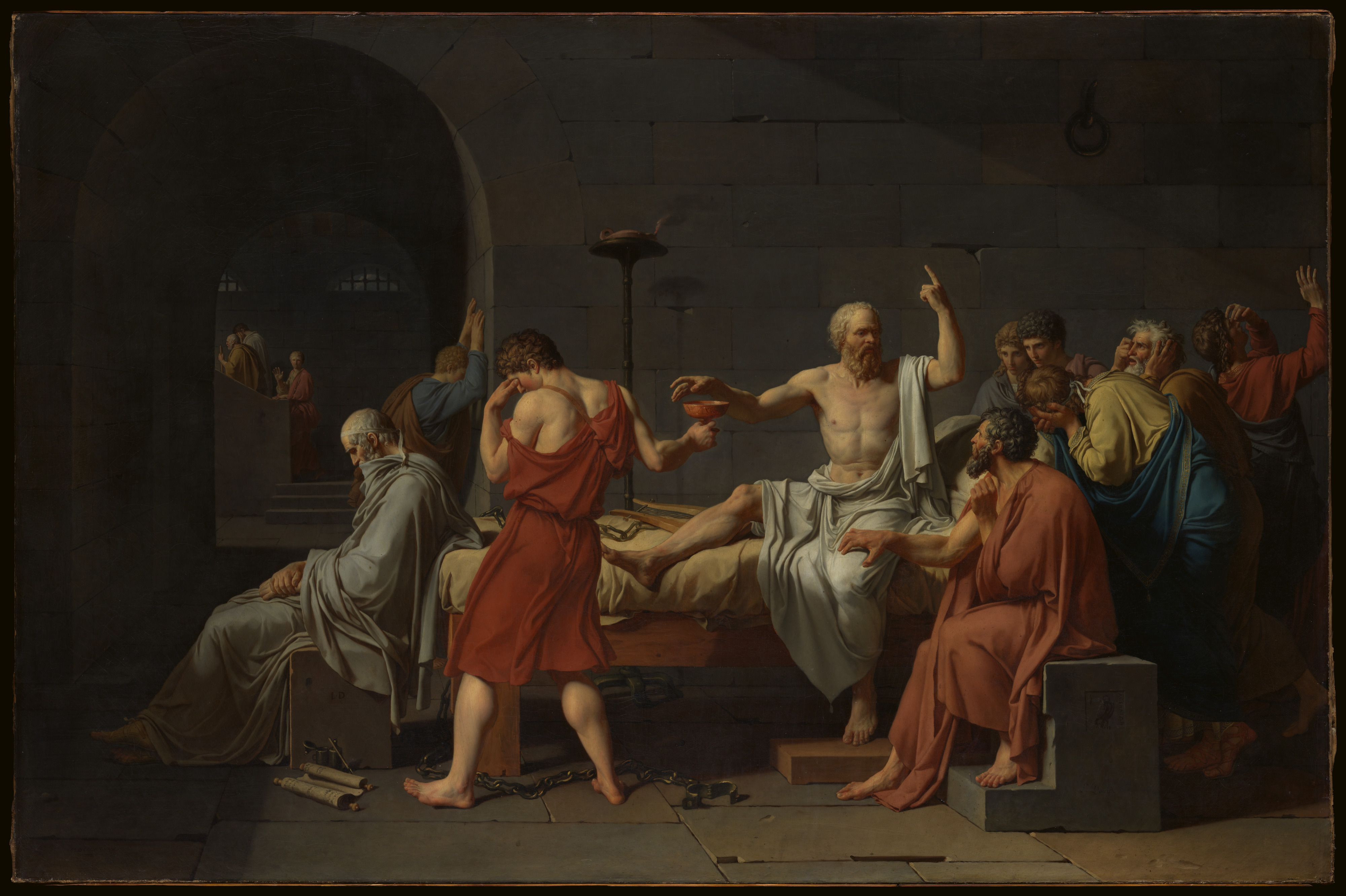
David — "The Death of Socrates" (1787), public domain
A philosopher’s death cloaked in legend.
Ancient sources record Pythagoras’ end in Croton, southern Italy, around this late autumn date. Some say envious rivals set fire to his school, forcing him into exile and death. Truth blurs—hard numbers and wild myth entangle in the smoke.
He turned numbers into gods.
Not just a mathematician, Pythagoras led a secretive brotherhood. They ate no beans, believed in the power of music, and saw the world as number—geometry as divinity. His influence rippled from Plato’s Academy to the Renaissance.
His mystical cult outlived him, echoing across centuries—from secret symbols to geometry class.
