
Praxiteles: Sculptor Who Dared to Show the Goddess Nude
Athenians gasped when the curtain dropped: Aphrodite, carved naked, her marble skin almost breathing.
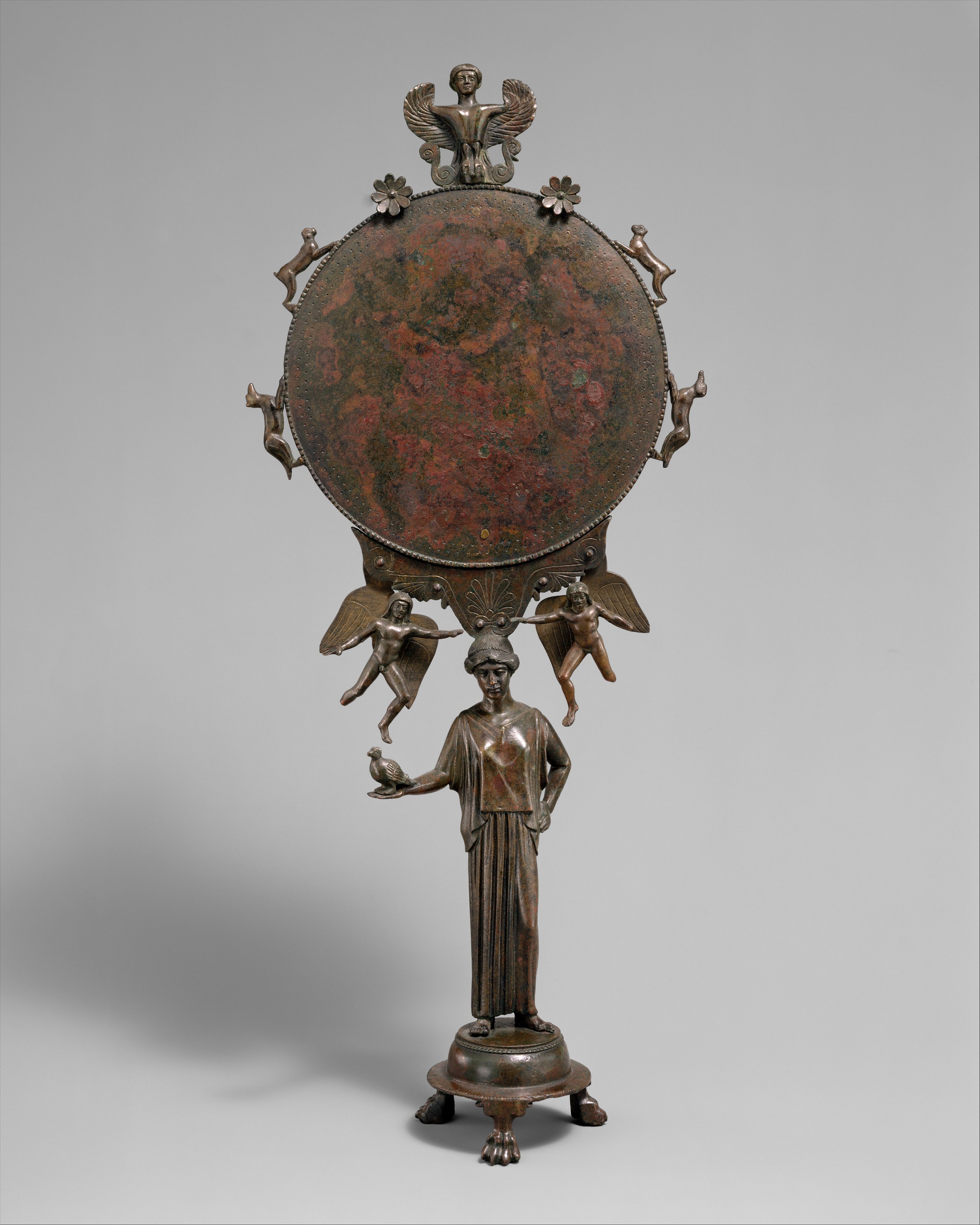
Unknown — "Bronze mirror with a support in the form of a draped woman" (mid-5th century BCE), public domain
A Goddess Without Her Veil
When the citizens of Knidos unveiled Praxiteles' Aphrodite, it wasn’t the drapery that shocked them—it was the absence of it. Never before had a Greek sculptor dared to carve a goddess completely nude, her hand coyly covering herself, marble curves laid bare.
Risking Outrage for Beauty
For centuries, goddesses in Greek art were shown clothed, distant and untouchable. Praxiteles threw tradition aside, blending divinity with desire. Some accused him of sacrilege. But pilgrims and poets came from as far as Asia Minor to see the statue, and Knidos grew rich on the traffic.
An Idea Too Powerful to Hide Again
Aphrodite of Knidos became the model for countless copies and imitations. The shock wore off, but the influence never faded. Greek art—and later, Roman—would never again hide beauty behind a veil.
Praxiteles risked scandal and applause by sculpting the first life-sized female nude—a goddess, no less—for the city of Knidos. Some called it blasphemy. Others flocked from across the Mediterranean just to stare at her. In that chiseled moment, Greek art crossed a line it would never uncross.
