
Plutarch, The Man Who Wrote Greatness
Plutarch sits in his study, ink-stained and surrounded by scrolls—quietly choosing which deeds to record, which to let fade.
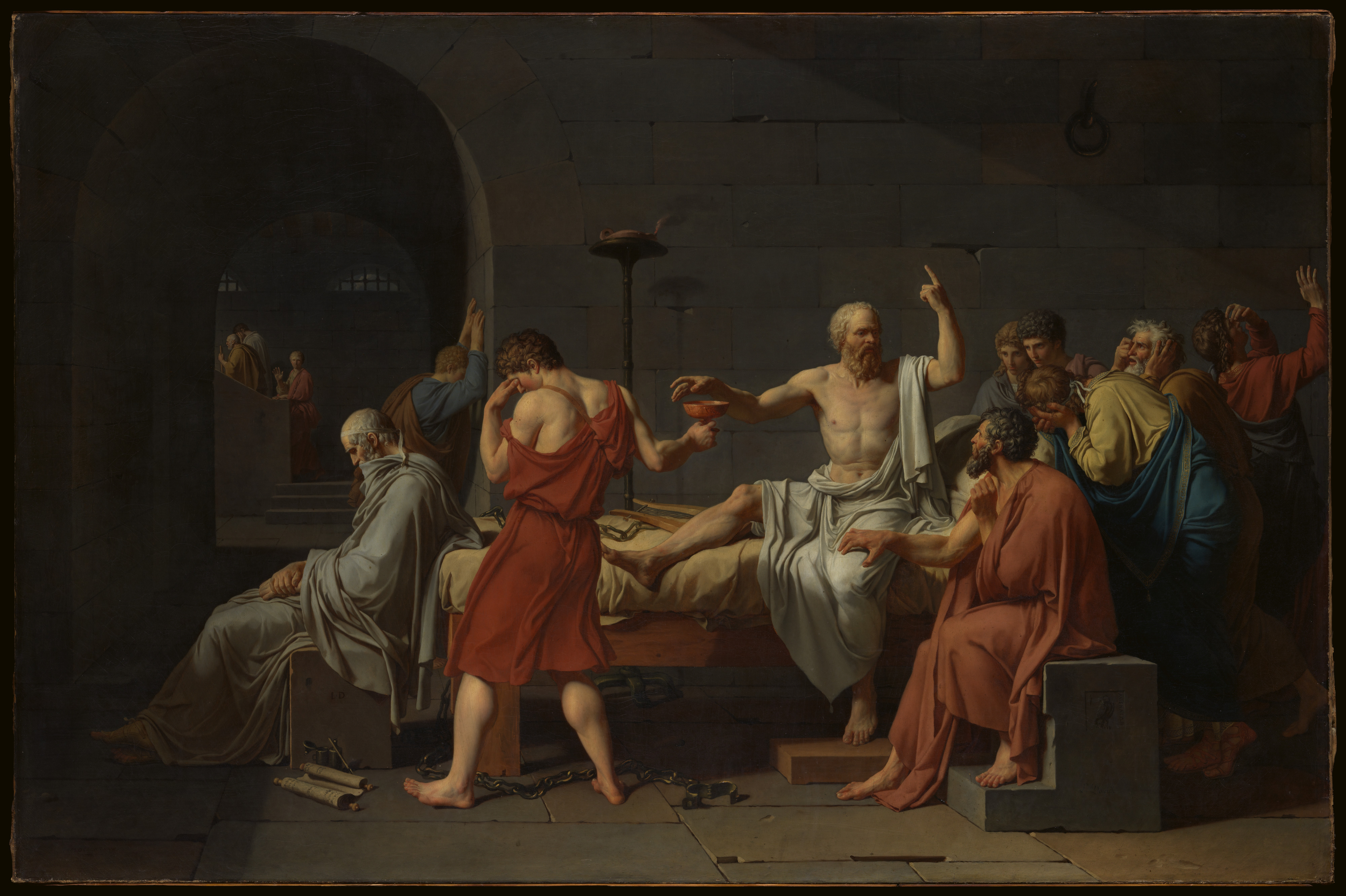
Jacques Louis David — "The Death of Socrates" (1787), public domain
The Author Behind the Legends
Plutarch sits surrounded by stacks of lives—Alexander, Caesar, Pericles, Brutus. He is not just recording history, he’s crafting it. Every story he picks is a judgment about greatness.
Choosing What Survives
Writing in the quiet town of Chaeronea, Plutarch compares Greeks and Romans by pair—hero to hero, flaw to flaw. Fact blurs with moral lesson. A sharp anecdote can shape a reputation for eternity, outlasting marble statues.
History as a Mirror
His choices taught generations how to see ambition, mercy, and power. Every time we imagine Caesar’s mercy or Alexander’s rage, it’s Plutarch’s voice echoing in the background.
He could have been a forgotten priest from a small Greek town. Instead, Plutarch shaped our portraits of Greek and Roman heroes—writing parallel lives that made Caesar and Alexander, Pericles and Fabius Maximus, seem to speak across centuries. His pages blend fact and pointed anecdote, sculpting not just reputation but the very definition of character.
