
Pliny the Younger: Rome’s Reluctant Witness
He stands at a window, watching a black cloud race toward him—Vesuvius erupts, and Pliny writes it all down.
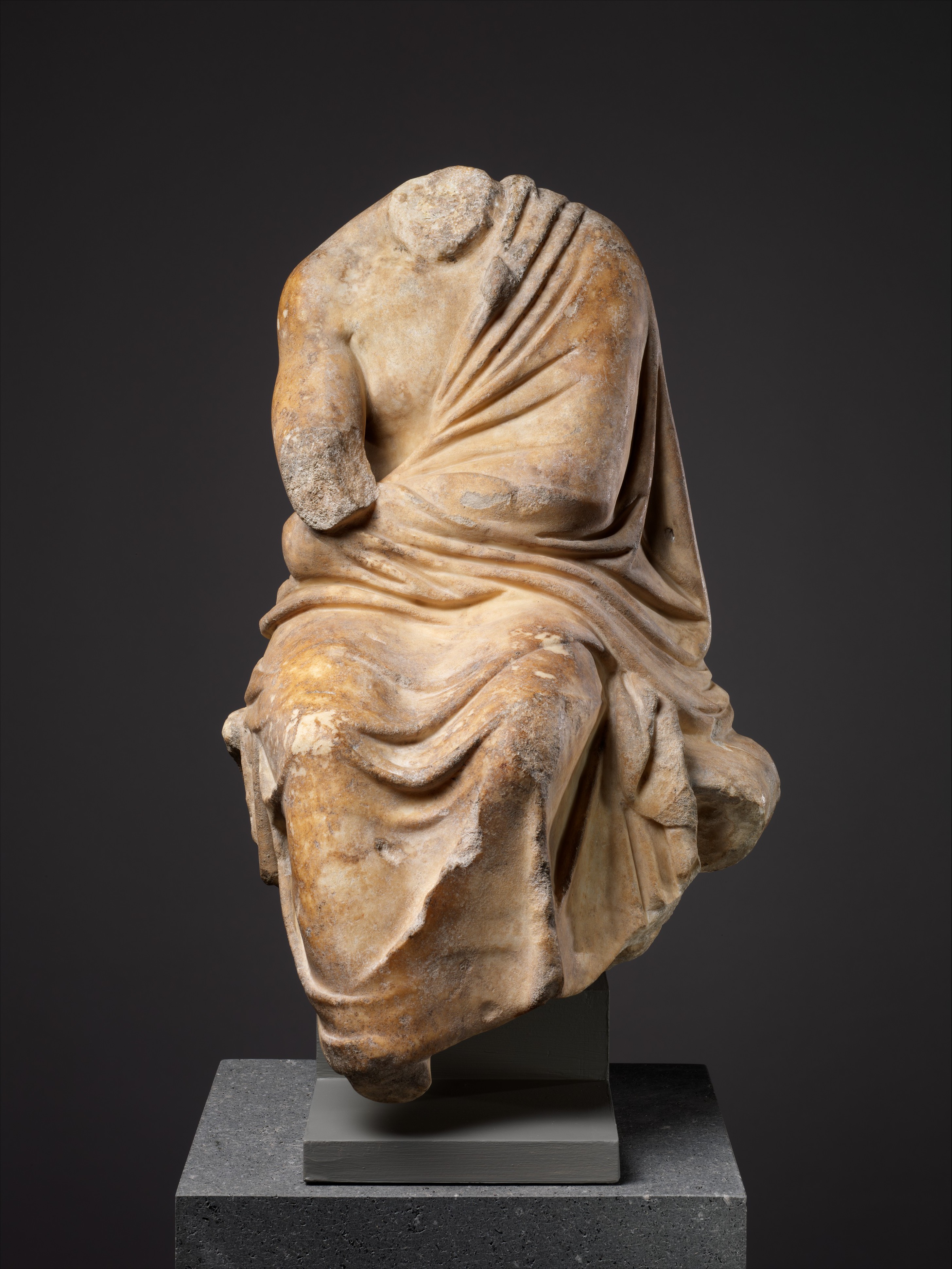
Unknown — "Marble statuette of a seated philosopher" (1st or 2nd century CE), public domain
Letter from the Edge of Disaster
A cloud, shaped like a pine, climbs above Vesuvius. Pliny the Younger, just 17, describes ash blotting out the sun, the taste of sulfur, neighbors running in the dark. He writes not a poem, but a stark letter—blunt, trembling, chillingly human.
Survival and the Burden of Memory
While his famous uncle sails toward the eruption and never returns, Pliny survives. Rome craves stories of heroics, but Pliny offers something stranger: the unease of being spared, the helplessness of seeing a world erased in hours.
History’s First Disaster Reporter
No emperor’s triumph. No epic. Just the raw account of a man who looked catastrophe in the eye. Pliny’s letter is still read aloud in Italian classrooms every August—proof that bearing witness can be a kind of courage.
Pliny didn't fight emperors or lead armies. He bore witness. Through one terrified letter, the eruption of Vesuvius becomes not a legend, but a heartbeat missed in real time.
