
Phryne, The Woman Who Dared to Bare All
A courtroom gasps. Phryne stands accused—her advocate tears open her robe, baring her to the jury.
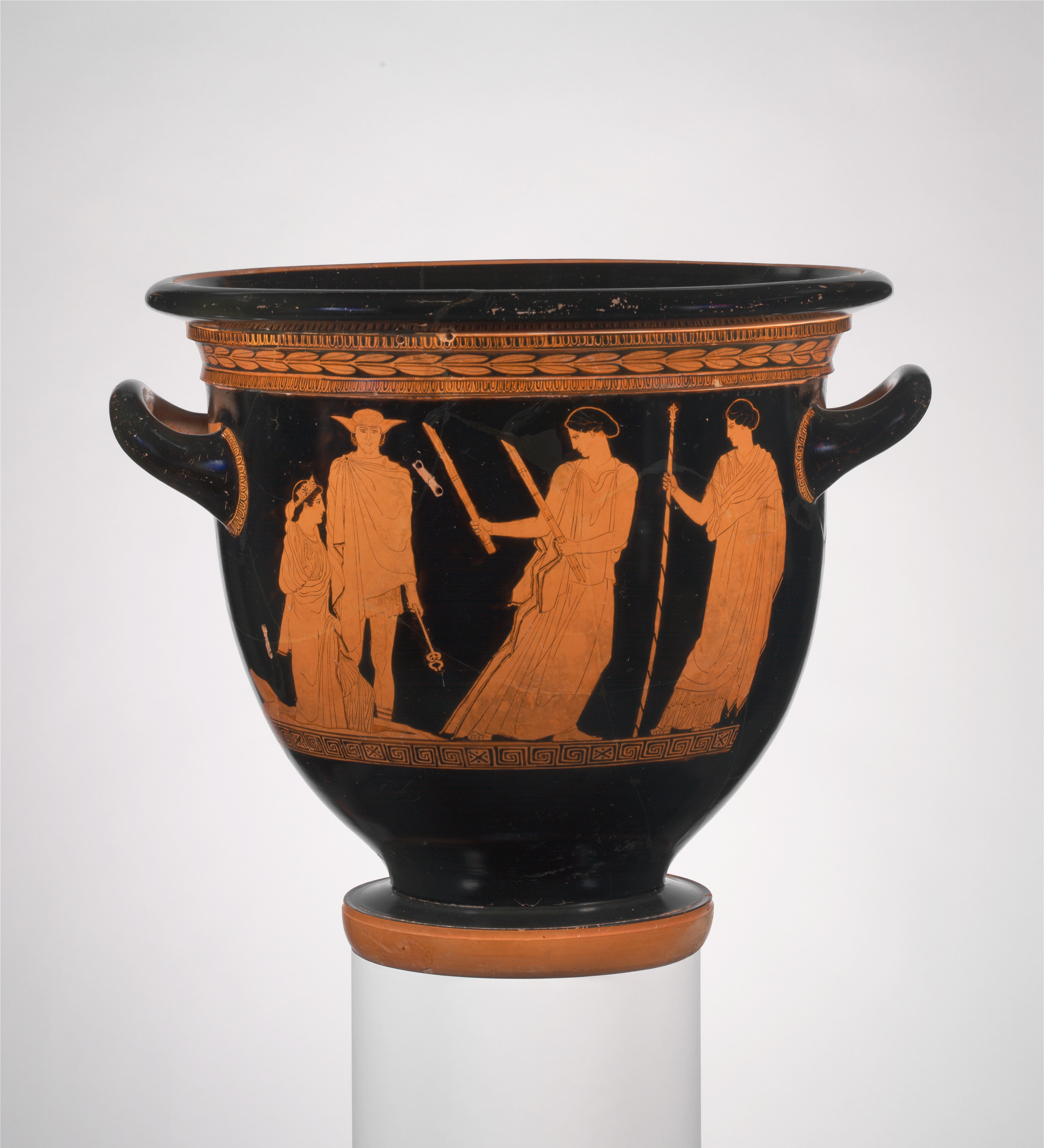
Persephone Painter — "Terracotta bell-krater (bowl for mixing wine and water)" (ca. 440 BCE), public domain
The Weaponization of Beauty
A courtroom gasps. Phryne stands accused—her advocate tears open her robe, baring her to the jury. In that flash, the line between shame and power blurs.
The Real Trial in Athens
Phryne, a famed courtesan, was prosecuted for impiety—an accusation as political as it was moral. Facing a jury of Greek citizen men, she could not speak for herself, so her defender gambled on spectacle. The city that worshipped beauty found it impossible to condemn her.
Judgment by Flesh
The jury acquitted her, undone by what they saw. Phryne’s body won her freedom—but it also exposed how little Athens trusted its own laws when faced with power that could not be named.
Phryne wasn’t just famous for her beauty, but for using it as a weapon. In Athens, where women could not speak in court, she forced the city to see and judge her—on her own bold, unsettling terms.
