
Pericles on Athenian Citizenship
"Our constitution is called a democracy because power is in the hands not of a minority but of the whole people." — Pericles, Funeral Oration, recorded by Thucydides.
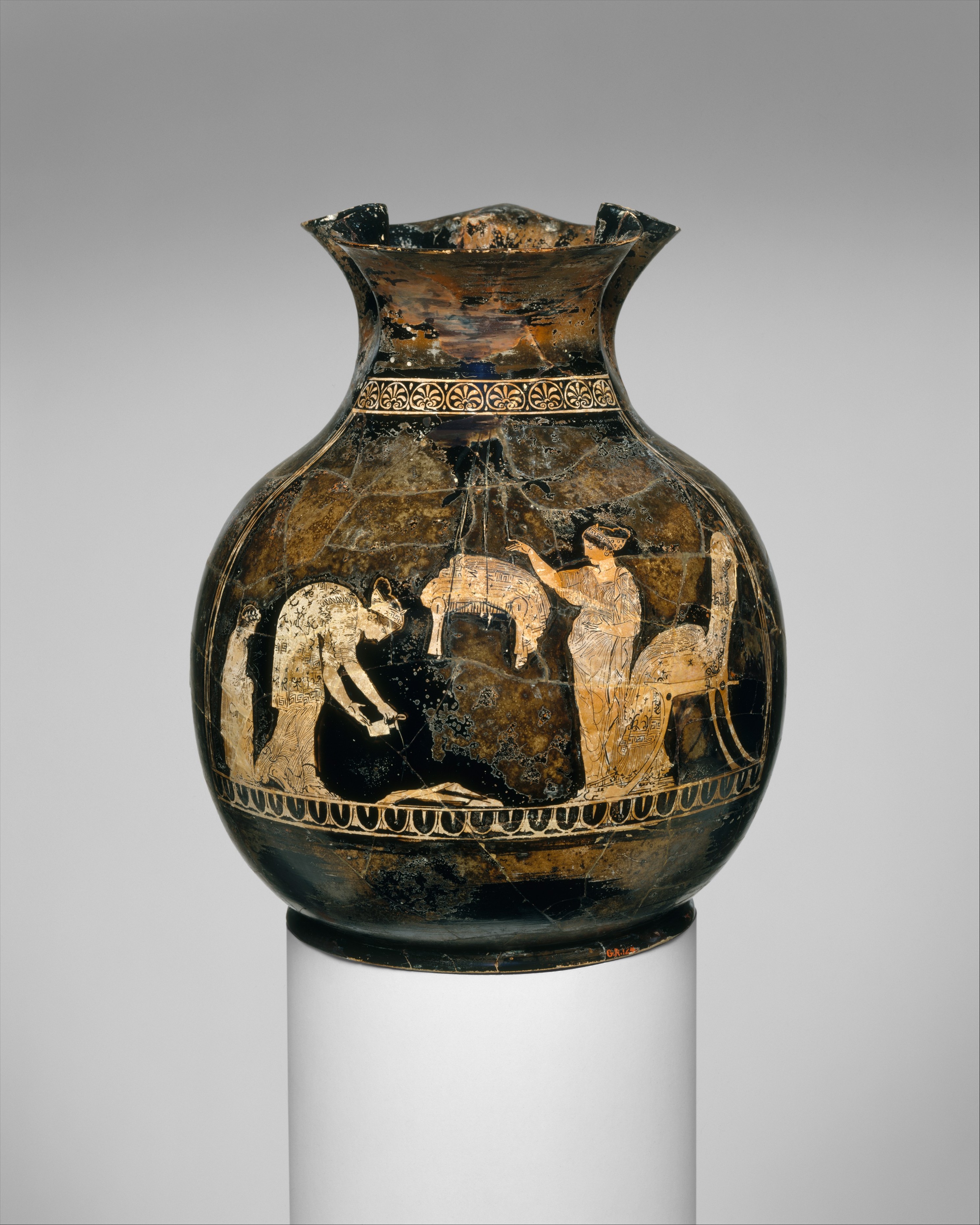
Meidias Painter — "Terracotta oinochoe: chous (jug)" (ca. 420–410 BCE), public domain
Democracy, defined on the battlefield.
After the first year of the Peloponnesian War, Pericles addressed the grieving citizens of Athens. In a speech recorded by Thucydides, he declared: “Our constitution is called a democracy because power is in the hands not of a minority but of the whole people.” This wasn’t just comfort — it was a challenge to every older way of ruling.
Not just a speech — a civic manifesto.
In these few words, Pericles captured what made Athens different. Citizenship meant responsibility and pride in shared decision-making. Thucydides carefully preserved this oration as the moment Athens articulated its own ideals, even as the city stared down disaster and loss.
Pericles' words during Athens' darkest hour reveal a radical pride in participatory government — and a sense of citizenship that reshaped Western ideas of belonging and duty.
