
Pericles: Grief and Glory Collide
Pericles stood before a grieving city and dared to praise democracy—while war dead were still unburied.
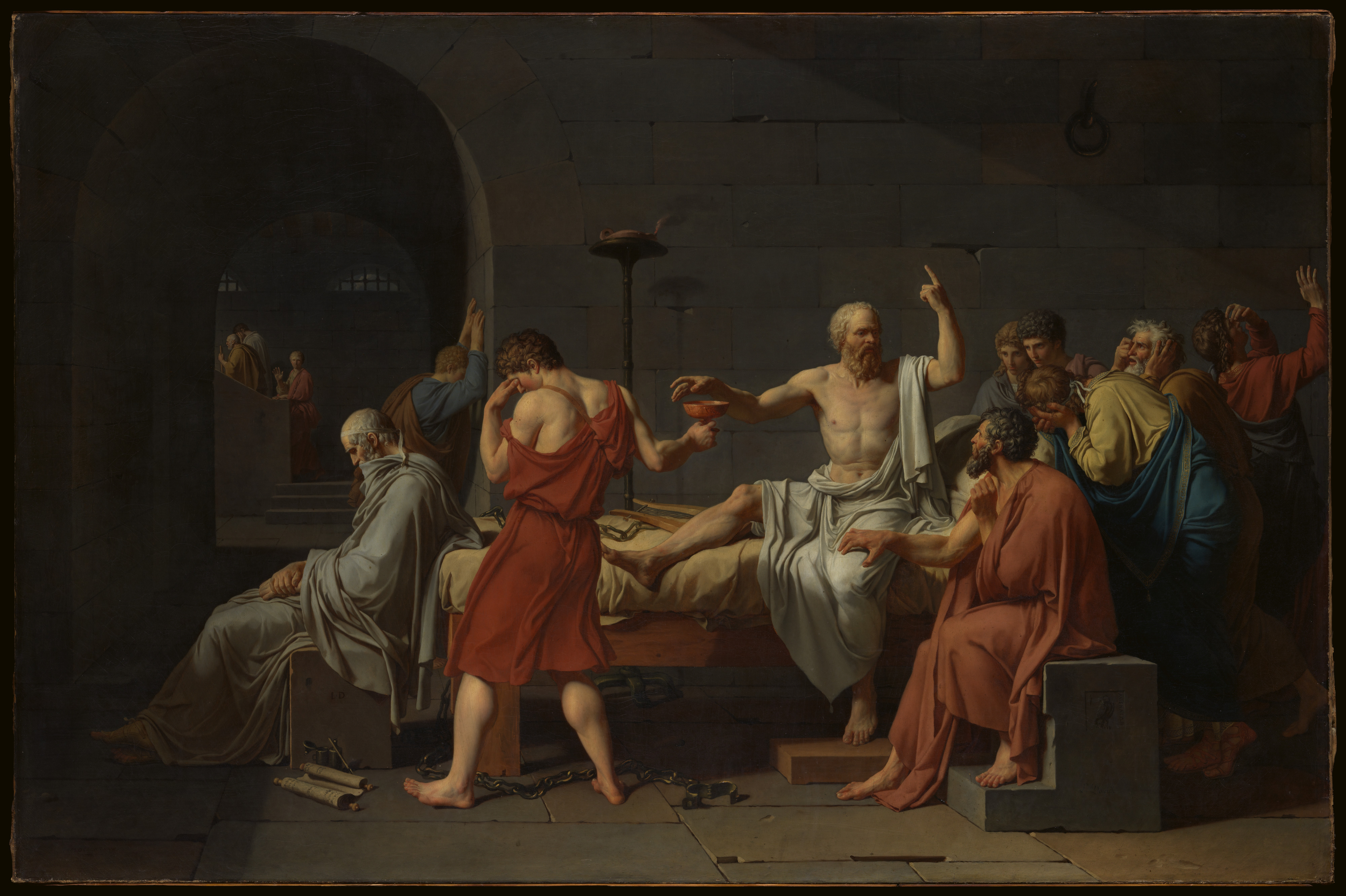
David — "The Death of Socrates" (1787), public domain
The Orator Amid Coffins
As Athenians gathered to mourn their war dead, Pericles delivered a speech that echoed across centuries. He didn't dwell on individual grief. He elevated collective sacrifice, tying personal loss to the glory of Athens itself.
Democracy on Trial
Athens in 431 BCE was a city at war, its democracy both weapon and weakness. Pericles knew words could steel morale or deepen despair. His oration, documented by Thucydides, fused patriotism with pain—casting Athens as both vulnerable and exceptional.
Few leaders have gambled with words like Pericles during the Peloponnesian War. Instead of comforting Athens after its first losses, he transformed a funeral into a manifesto on citizenship and sacrifice. Thucydides preserves his oration—a balancing act of pride, loss, and uneasy confidence as Athens confronted its own mortality.
