
Musonius Rufus on True Wealth
"He who is not contented with what he has, would not be contented with what he would like to have." Musonius Rufus, Rome’s exiled blunt instrument, puts the real currency in Greek: «Ὁ μὴ ἀρκούμενος οἷς ἔχει, οὐδ’ ἂν ἔχῃ ἃ βούλεται, ἀρκέσει.»
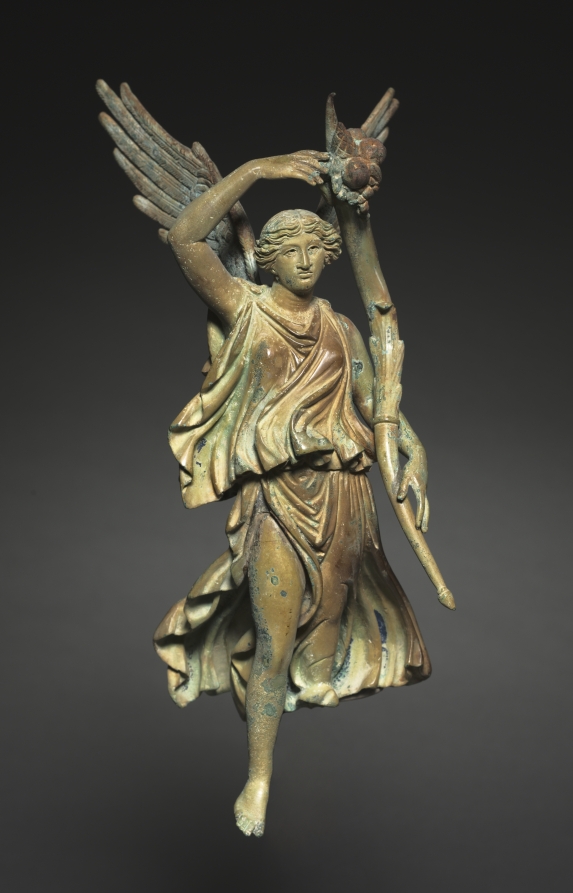
Unknown — "Victory with Cornucopia (Chariot Attachment)" (40–68 CE), CC0
Real wealth, by the toughest Stoic.
Musonius Rufus, as recorded by Stobaeus (Florilegium 4.33.26), wrote: «Ὁ μὴ ἀρκούμενος οἷς ἔχει, οὐδ’ ἂν ἔχῃ ἃ βούλεται, ἀρκέσει.» — "He who is not contented with what he has, would not be contented with what he would like to have." Greed never goes hungry.
Satisfaction is a skill.
Musonius believed luxury sours the soul. You don’t become grateful by hoarding, but by practicing restraint. Contentment, for him, is a form of power — armor against every whim and loss. Rome’s richest men were, in his eyes, often the poorest.
The exile made for this lesson.
Musonius was exiled more times than most men change jobs. He taught philosophy at the margins of empire, growing his own food, owning almost nothing. His life was his proof: want less, and nothing can touch you.
Musonius Rufus watched Roman elites chase luxury from exile after exile. For him, satisfaction was a muscle — if you never flexed it, no amount of gold could fill the gap. His lesson lands hardest in a world that always wants more.
