
Hannibal Crosses the Alps
War elephants picking their way through snow — Hannibal’s plan was outrage personified.
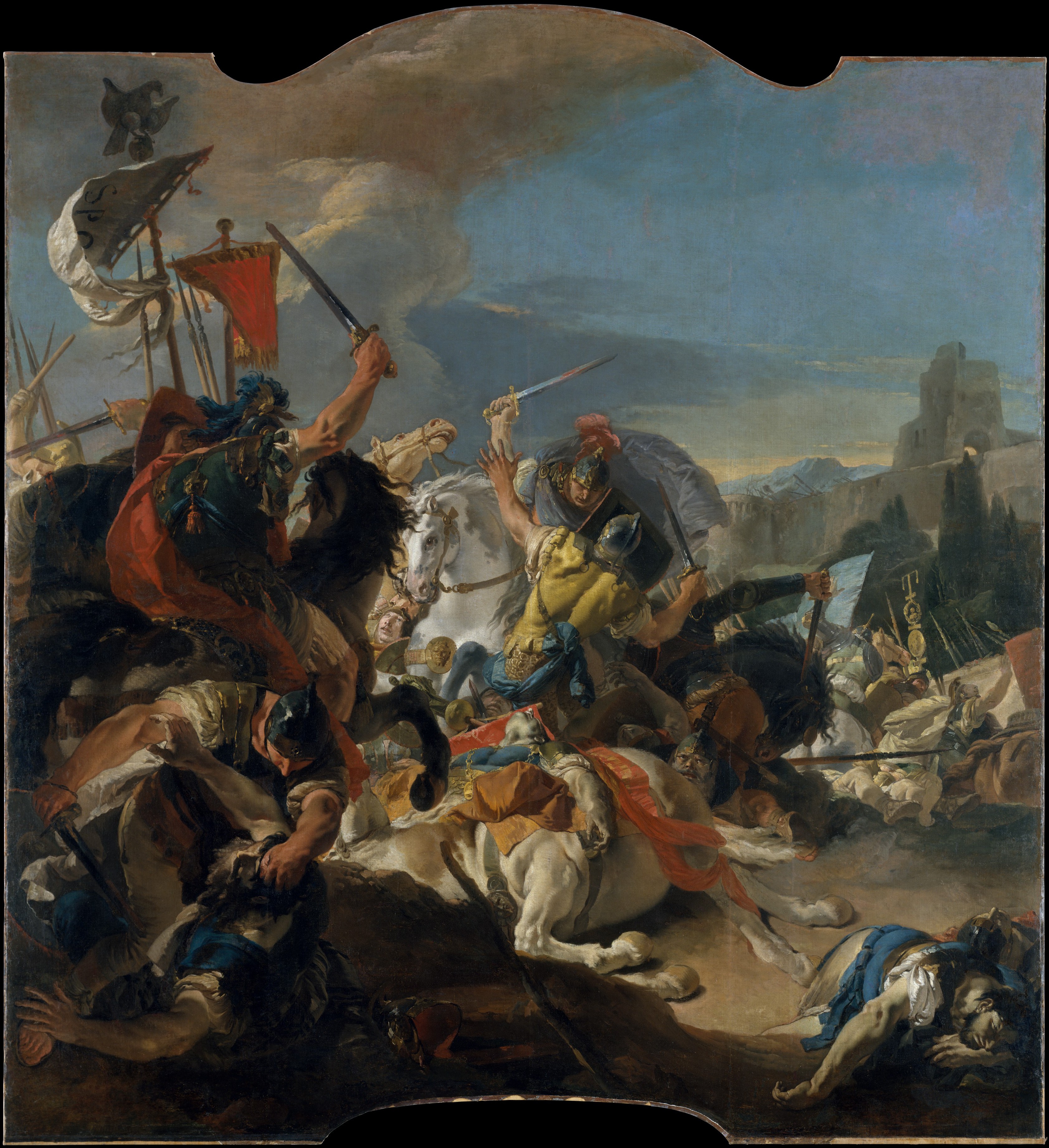
Giovanni Battista Tiepolo — "The Battle of Vercellae" (1725–29), public domain
Into the white teeth of the mountains.
In 218 BC, Hannibal led some 50,000 men, thousands of horses, and a handful of elephants over the Alps to attack Italy from the north. Roman commanders didn’t just underestimate the feat — they thought it physically impossible.
Ice, ambush, and mutiny.
The crossing was carnage. Avalanches and hostile tribes killed half his force. But what emerged from the snow was an army hardened by hell — and Rome’s flat-footed generals had no answer for elephants charging through the mist.
A new kind of fear.
Hannibal’s move reshaped the war and Roman strategy for years. The Romans had to learn that no frontier was safe — not even those guarded by mountains.
Defying Roman expectations, Hannibal dragged his army (and a few surviving elephants) across the Alps, launching a legendary invasion that haunted Roman nightmares for decades.
