
Musonius Rufus on Action over Talk
"It is not those who praise virtue who are good, but those who practice it." Musonius Rufus, Rome’s Stoic drill sergeant, made every lesson practical—no applause required.
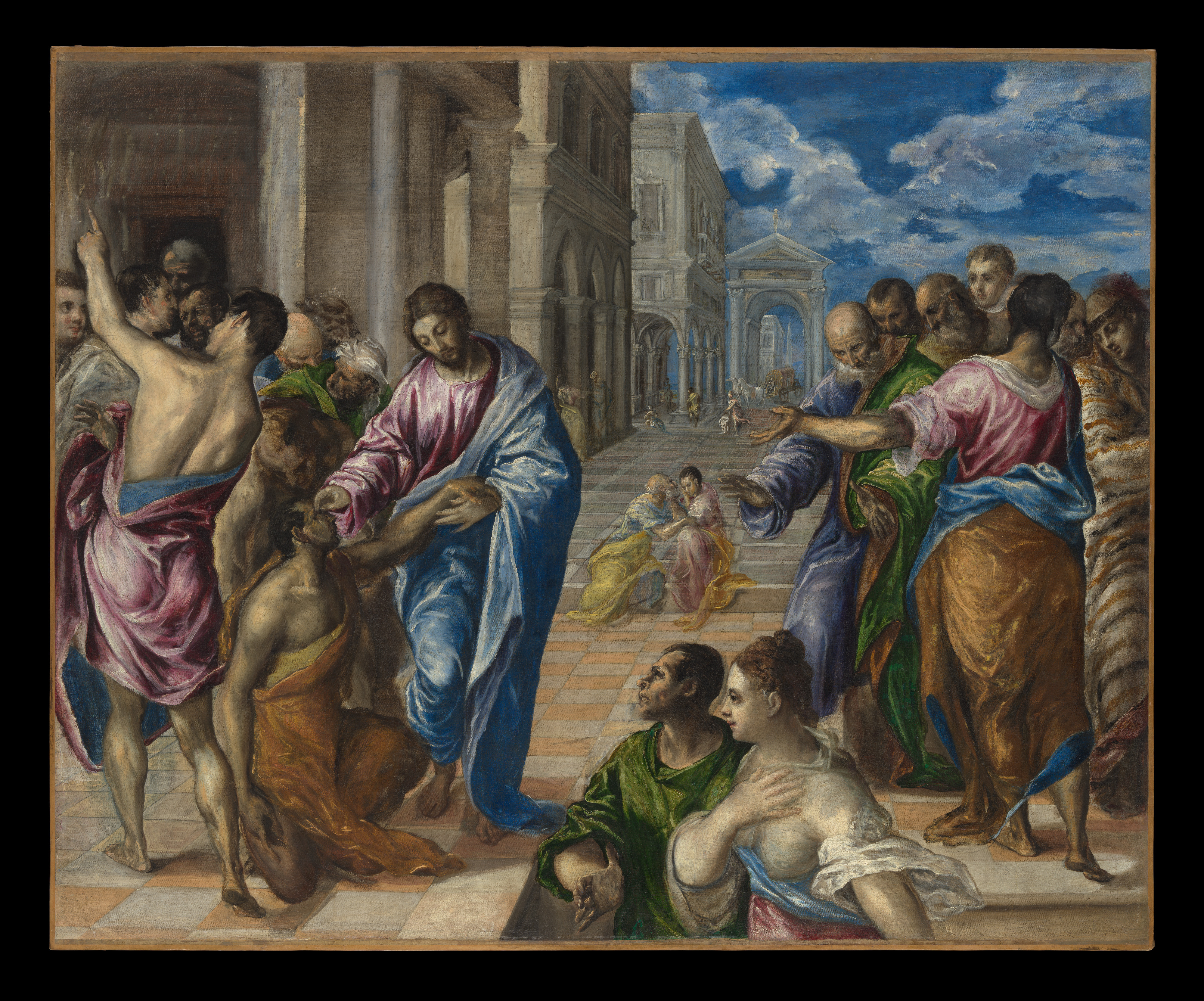
El Greco (Domenikos Theotokopoulos) — "Christ Healing the Blind" (ca. 1570), public domain
Virtue, unperformed, is silent.
Musonius Rufus, in his Lectures (Lecture 6), says: «οὐ τοὺς αἰνοῦντας ἀρετὴν ἀγαθοὺς εἶναι, ἀλλὰ τοὺς πράττοντας.» — "It is not those who praise virtue who are good, but those who practice it." No Roman crowd cheered this, but he didn’t care.
What he actually meant.
For Musonius, virtue is muscle memory, not a monologue. Philosophy that stays in your mouth never makes it to your hands. If you want to be good, live good—don’t just talk about it over dinner.
The teacher built for friction.
Musonius trained senators, soldiers, and slaves. He made students live in the cold, eat basic food, and walk the walk. He was exiled for his trouble, but he never stopped—because, to him, only action proved a soul’s worth.
Musonius Rufus hammered one lesson over and over: philosophy is for doing, not for saying. If you’re not living it, you’re just making noise.
