
Musonius Rufus on Necessity and Endurance
"We must endure what we cannot avoid and not lament what is beyond our power." In Greek, Musonius Rufus makes endurance a rule, not a suggestion.
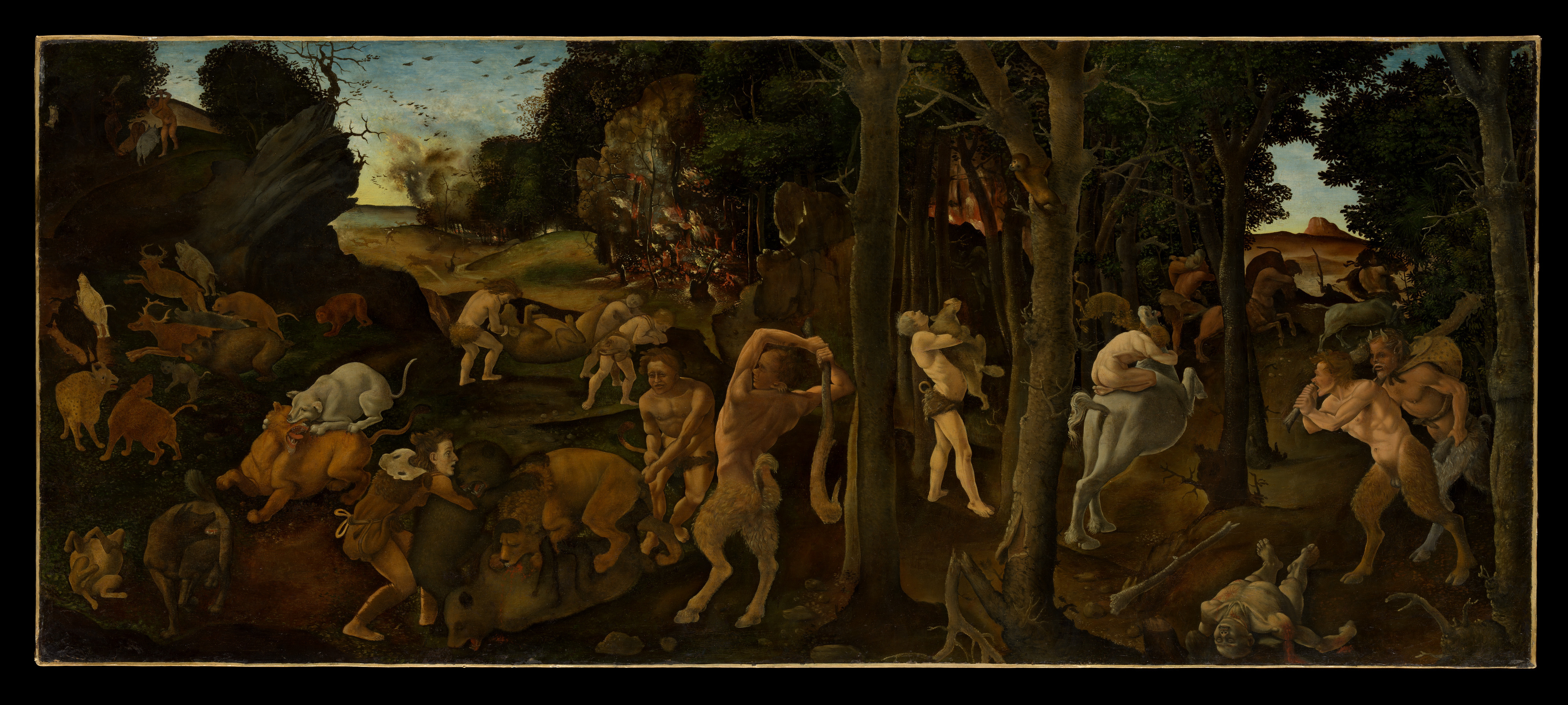
Piero di Cosimo (Piero di Lorenzo di Piero d'Antonio) — "A Hunting Scene" (ca. 1494–1500), public domain
The law of hardship.
Musonius Rufus, in Lecture 9, commands: «Χρὴ τὰ ἀναγκαῖα ὑπομένειν καὶ μὴ ὀδύρεσθαι τὰ μὴ ἐφ’ ἡμῖν» — "We must endure what we cannot avoid and not lament what is beyond our power." For Musonius, this wasn’t a comfort—this was the starting line.
Endurance as skill, not suffering.
Musonius hammered this into every lesson: hardship is unavoidable, but how you meet it is your choice. Complaining hands your power to circumstances. Enduring, on the other hand, makes every blow a rep—training for the mind. To Musonius, even disaster was a chance to get stronger.
A Stoic forged in exile.
Musonius Rufus was banished, starved, and mocked, yet kept teaching. He didn’t write philosophy in a villa—he delivered it on the road, in the rain, to whoever would listen. The more the world punished him, the more calmly he met it. That was his lesson.
Musonius Rufus survived exile, hunger, and ridicule by treating necessity as training. The world wasn’t going to get easier—so he got stronger.
