
Musonius Rufus on Freedom and Discipline
"The free man is not he who does what he wishes, but he who wishes to do only what is right." Musonius Rufus, Rome’s iron Stoic, flips liberty on its head.
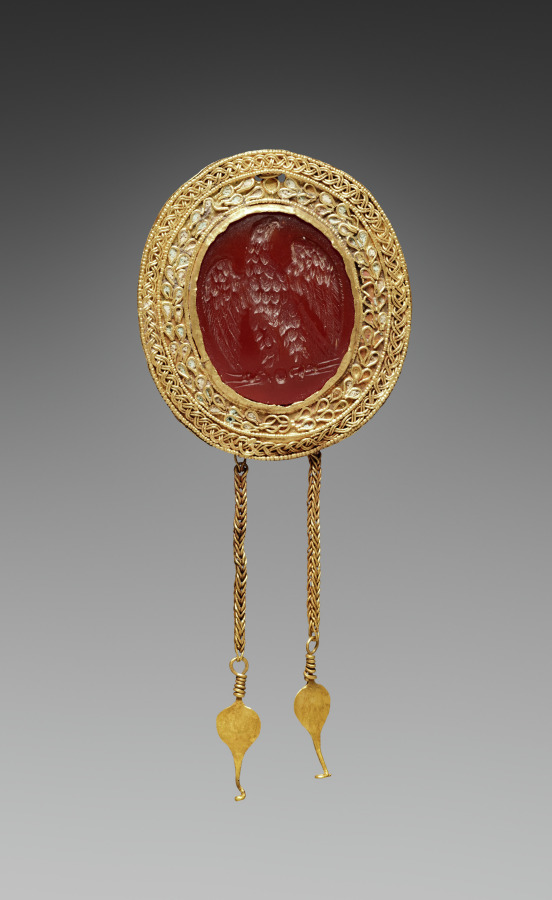
Unknown — "Intaglio: Imperial Eagle" (c. 1–25 CE), CC0
"Freedom is discipline in disguise."
Musonius Rufus, in fragments quoted by Stobaeus (Florilegium 4.32.21), states: «Ὁ ἐλεύθερος οὐχ ὁ ποιῶν ἃ βούλεται, ἀλλ’ ὁ βούλεται ποιεῖν τὰ δέοντα.»—"The free man is not he who does what he wishes, but he who wishes to do what is right." This isn’t license—it’s liberation from your own appetites.
Why this slices the Roman ego.
Musonius taught senators and slaves alike that real power starts inside. Obeying every impulse made you a slave to desire. Only by wanting what is just could you become truly free. In Rome, where status was everything, he made self-rule the ultimate rebellion.
The Stoic who outlasted emperors.
Musonius was exiled twice, survived palace plots, and trained Epictetus. His legacy wasn’t grand monuments—it was this razor-edged vision of inner autonomy, as radical now as it was under Nero.
For Musonius, real freedom was never about license. In a world built on domination, he dared to define freedom as self-mastery—harder to win than any empire.
