
Musonius Rufus on Needing Less
"He who has the least wants is nearest to the gods." Musonius Rufus, exiled over and over, put this in hard Greek while Rome drowned in luxury.
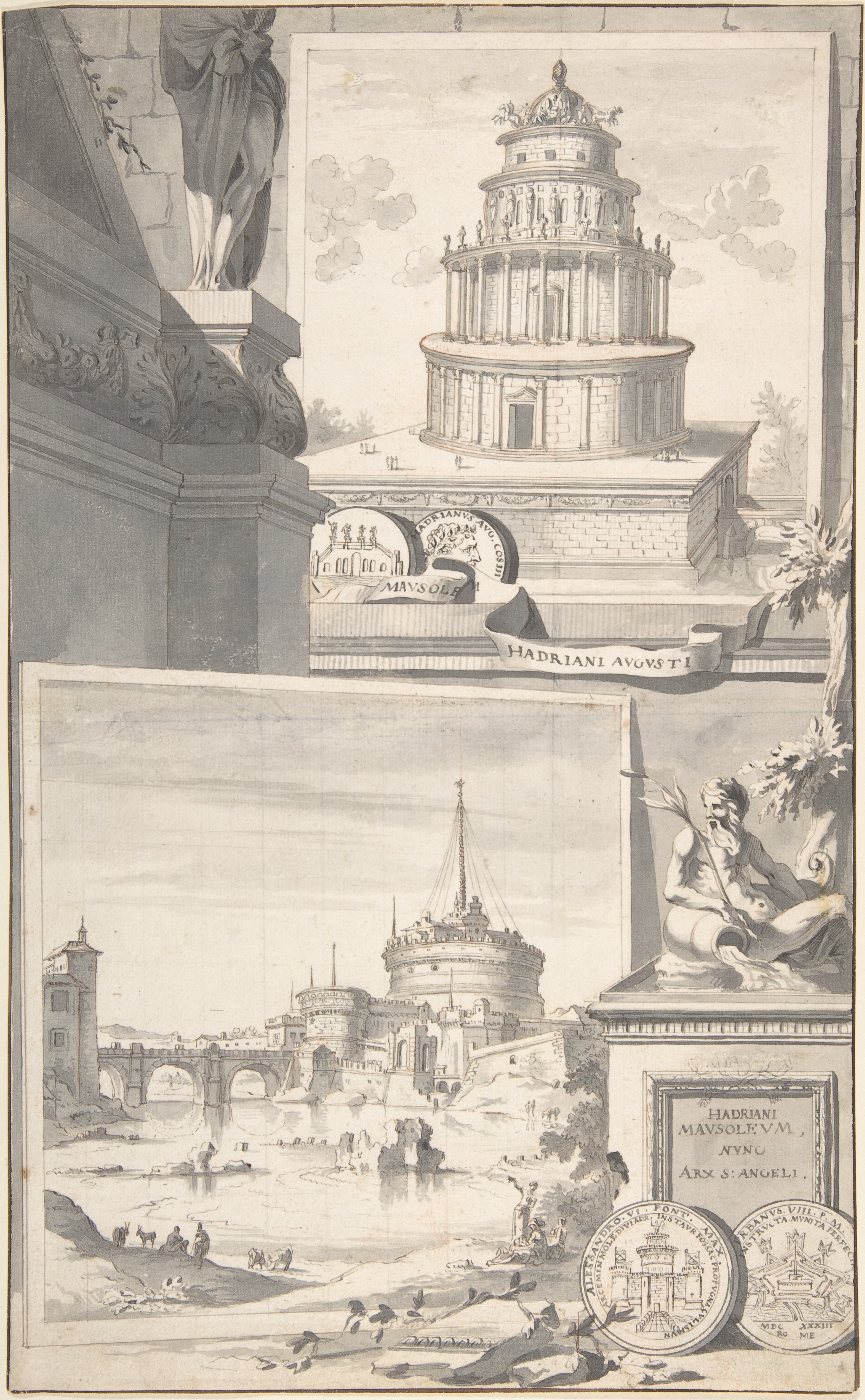
Jan Goeree — "Reconstruction of the Mausoleum of Hadrian (above) and a View of the Castel S. Angelo (below)" (before 1704), public domain
Musonius sets the bar low — for desire.
Musonius Rufus, in Lectures (Fragment 18), writes: «Ὁ πλεῖστα ἔχων οὐκ ἐγγὺς θεῶν, ἀλλ᾽ ὁ ἐλαχίστων δεόμενος.» — "He who has the least wants is nearest to the gods." He told this to students who’d rather be rich than wise.
Why less is freedom, not poverty.
Musonius Rufus saw every craving as a new chain. To him, freedom wasn’t about having things, but escaping the need for them. Businessmen and senators found his message brutal — but several followed him anyway, trading gold for a clean conscience.
The teacher who lived his sermon.
Musonius was exiled at least three times, stripped of property, forced to eat roots and live rough. Each loss made him harder and clearer. He showed Rome that real power comes not from possession, but from letting go.
Musonius didn’t just preach temperance — he forced it on himself, leaving comfort behind every time politics exiled him again. He believed needing little was the ultimate freedom.
