
Musonius Rufus on Anger and Peace
"A man least disturbed by anger is closest to peace." Musonius Rufus turns Roman rage culture on its head—in plain Greek.
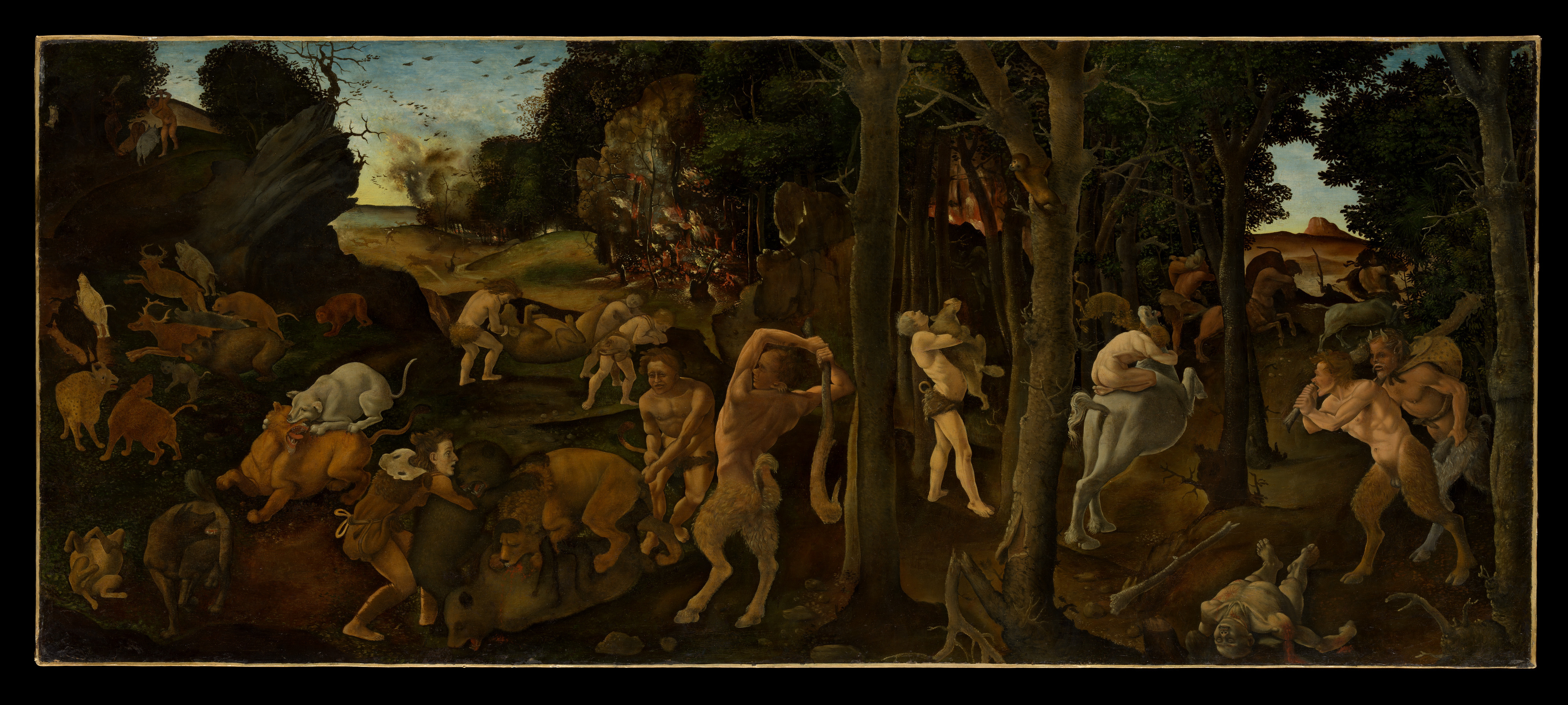
Piero di Cosimo (Piero di Lorenzo di Piero d'Antonio) — "A Hunting Scene" (ca. 1494–1500), public domain
The Stoic path to peace.
Musonius Rufus, in his lectures (as preserved by Stobaeus), lays it out: «Ὁ ἀπὸ θυμοῦ ἥκιστα ταραττόμενος πλησιέστατος εἰρήνης.» — "A man least disturbed by anger is closest to peace." In a city built on pride and quick tempers, this was almost a revolution.
Why rage was Rome’s real poison.
Musonius saw anger ruin lives, shatter friendships, and destroy families. To him, peace wasn’t the absence of conflict, but the mastery of your own fire. It’s a lesson that made him both feared and respected in the Senate—and one he had to practice every day, in exile and under pressure.
Musonius was no armchair sage. He called out senators for losing their tempers in public, and trained himself to hold steady even in exile. Stoic peace: not soft, but unshakable.
