
Musonius Rufus on Peace and Anger
"The man least disturbed by anger is closest to peace." — Musonius Rufus, Rome’s exile philosopher, measures mastery in calm, not conquest.
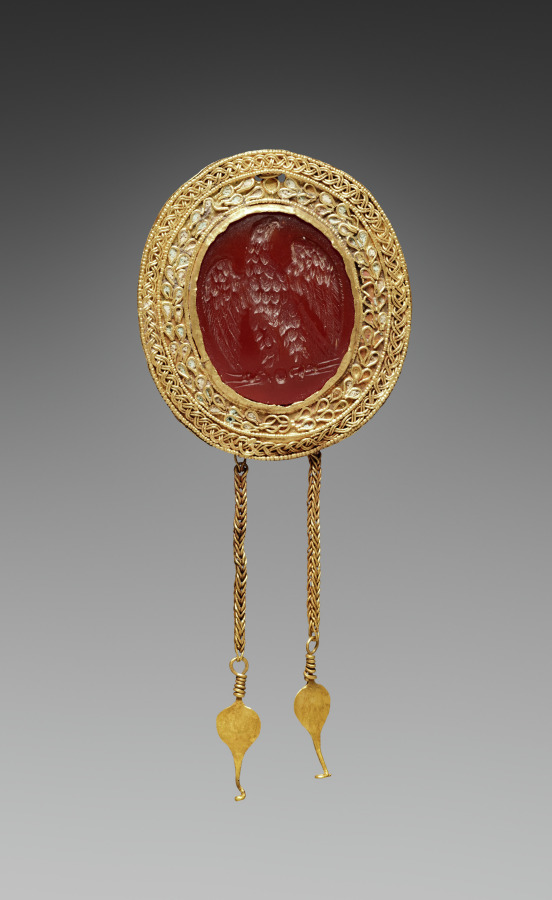
Unknown — "Intaglio: Imperial Eagle" (c. 1–25 CE), CC0
A Stoic’s litmus test for peace.
Musonius Rufus, as recorded by Stobaeus (Florilegium 3.19.32), says: «ὁ ἥκιστα θυμώδης ἀνὴρ πρὸς εἰρήνην ἐγγυτάτω.» — "The man least disturbed by anger is closest to peace." He didn’t want statues or speeches, just steady nerves.
How does this land under Roman roofs?
Musonius had no patience for fury — not in the Senate, not in the street, not at home. He taught that rage only ever makes a mess, inside and out. If peace is rare, it’s because self-mastery is too.
Who was Musonius Rufus?
He was exiled repeatedly for telling emperors and mobs alike what they didn’t want to hear. Yet he calmly returned every time, unbroken. His legacy lingers not in monuments, but in the minds he steeled for peace.
Musonius knew rage was cheap. He wanted students who could stare down chaos and keep their grip. Ancient Rome burned from riots, but Musonius wanted peace to start one person at a time.
