
On This Day: Ludi Capitolini Games Rattle Rome
October 12, trumpets shatter the morning—Rome’s Ludi Capitolini have begun. The city thrums with chariot races, athletic contests, and rowdy crowds beneath the shadow of Jupiter’s great temple.
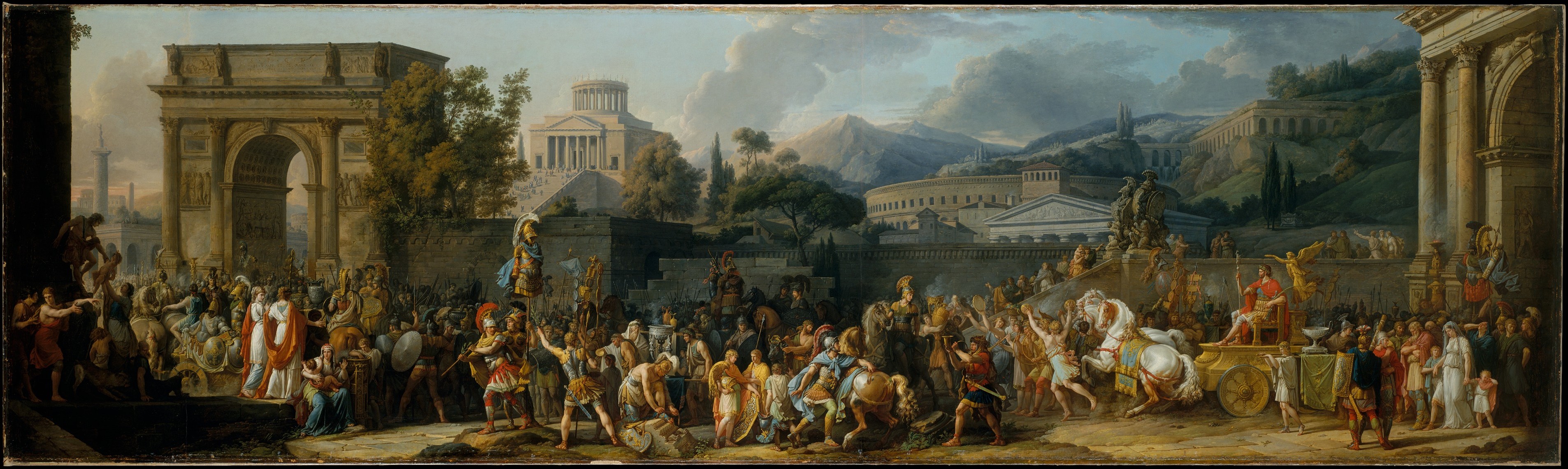
Carle (Antoine Charles Horace) Vernet — "The Triumph of Aemilius Paulus" (1789), public domain
The roar of competition fills the Forum.
Instituted in the fourth century BCE and revived by Emperor Domitian, the Ludi Capitolini sprang to life around October 12. Contests swirled through the city—footraces, wrestling, and the expected bedlam of the chariot arena. The Capitoline Hill was the city’s nerve center for pageantry.
Not just a festival—an identity.
Winning here was about more than prizes. The games honored Jupiter, Rome’s chief deity, and reminded citizens of the city’s roots and ambitions. Domitian’s version was lavish, a pointed echo of Greek athletic glory—but pure Roman pride fueled the cheers.
From celebration to empire-wide broadcast.
Domitian’s Ludi Capitolini set the tone for future emperors: games as political theater. For a few riotous days, Rome’s people could forget their troubles and lose themselves in the crush of spectacle.
The Ludi Capitolini, revived by Domitian in late first century CE, turned mid-October into a spectacle of speed, strength, and civic pride. Ancient calendars marked this week as one of pure Roman showmanship.
