
The Night of the Poisoned Offering
A priestess woke trembling to learn her own cake had poisoned a festival guest—in front of the goddess’s altar.
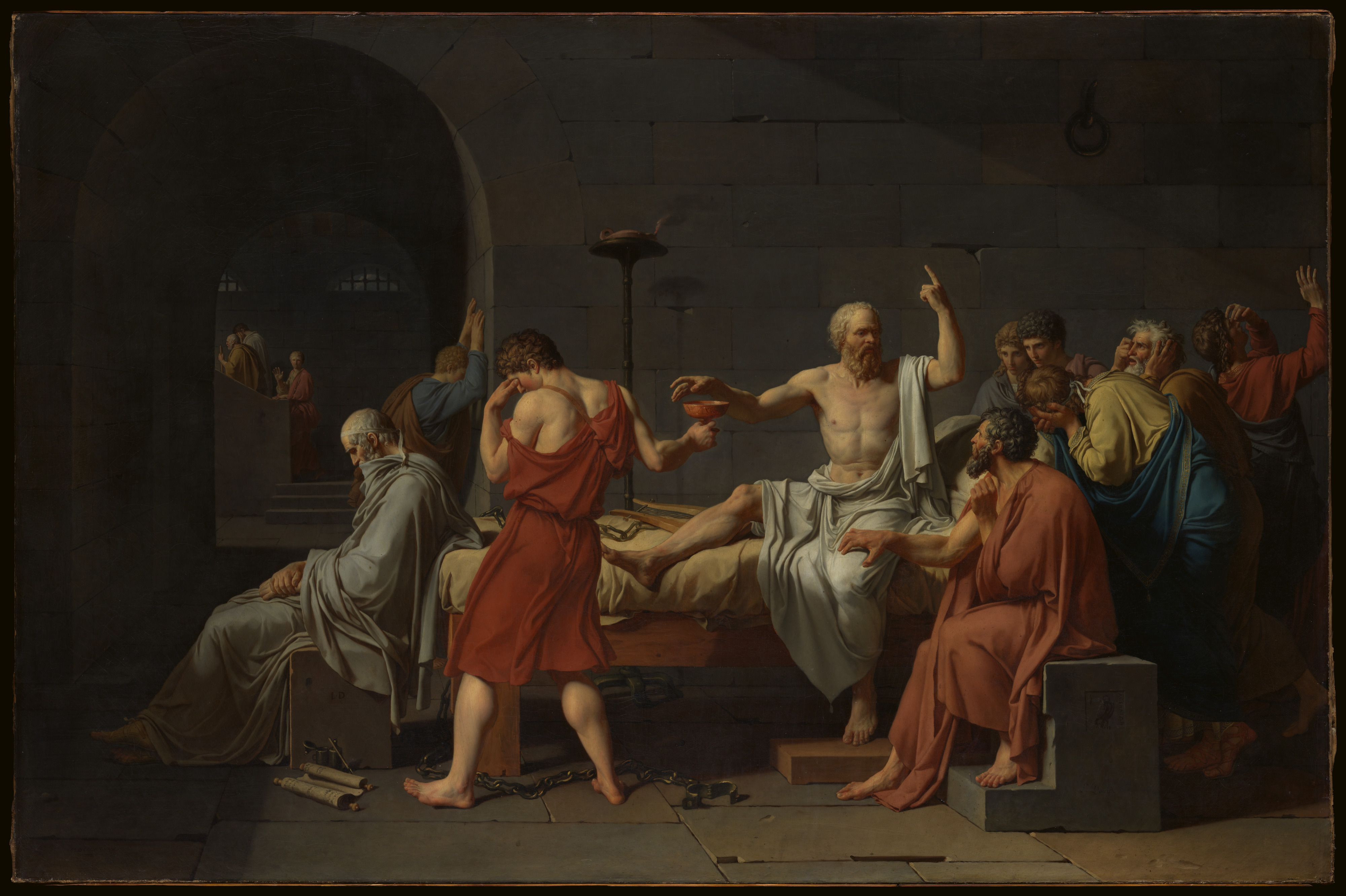
David — "The Death of Socrates" (1787), public domain
Poison at the altar.
During a festival to Artemis, a priestess laid out ritual cakes sweetened with honey and poppy seeds. As the dawn crowd pressed in, a young woman collapsed, convulsing in the shadow of the goddess’s statue. The priestess’s hands—meant for blessing—were suddenly suspected of murder.
Flight through the city.
Accusation came fast. In a city that believed gods punished mortals through omens, the priestess ran. She vanished into the alleys of Athens, desperate to escape not just legal judgment, but the wrath of the goddess herself. In the Agora, whispers grew: was it accident, curse, or plot?
Banished by fear, not proof.
Official records name no culprit. But for years, neighbors left offerings for the goddess in silence, careful never to speak the priestess’s name. In Athens, reputation could die faster than the body—a single poisoned cake was enough.
One moment of chaos at a sacred ritual sent a respected priestess running for her life, pursued by ancient rumors of murder and curses.
