
Hipparchia, The Philosopher in Men's Clothes
A woman in a rough cloak strides into the Athenian marketplace, arguing philosophy with men—her hair uncovered, her sandals caked in mud. She is Hipparchia. To some, a scandal. To others, the most radical thinker in town.
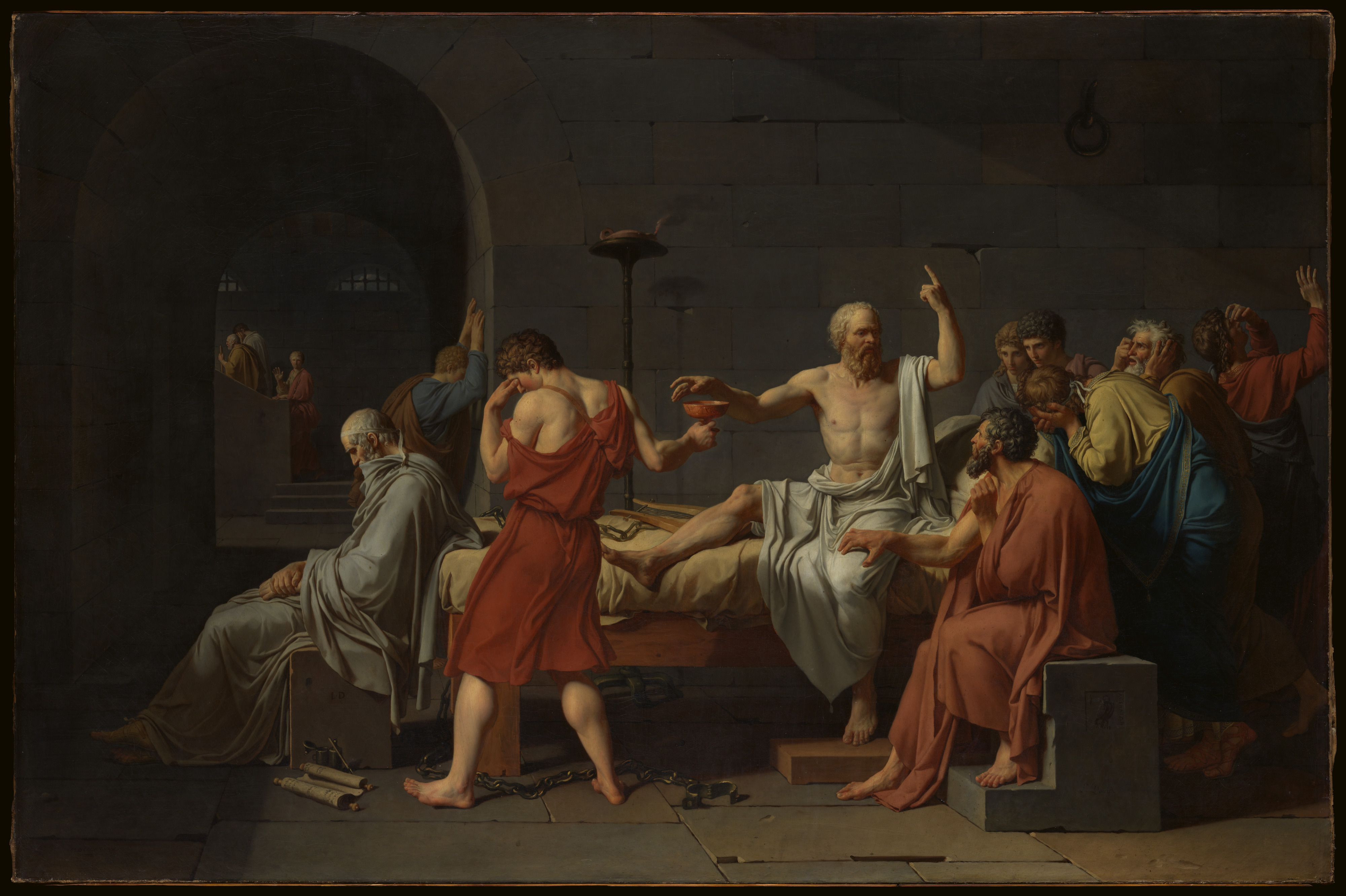
David — "The Death of Socrates" (1787), public domain
Dressed to Scandalize Athens
A woman in a rough cloak, hair uncovered, strides through Athens. Hipparchia looks like a beggar—or a man. She starts arguments in the street and refuses to step aside for anyone. Even the philosophers stare.
Philosophy Without Apology
Born rich, Hipparchia walked away from comfort to join the Cynics—publicly living by reason, not custom. She debated men in the agora, laughed at insults, and called out hypocrisy wherever she found it. Her marriage to Crates became a living argument: virtue matters, not gender or silk.
Echoes Beyond Athens
Centuries later, only fragments of her words remain, but her example lingers—proof that in a world of boundaries, you can choose which ones to cross.
Hipparchia abandoned a wealthy home and married Crates the Cynic—choosing a life of poverty, public debate, and total disregard for gender rules. She debated in public, refused to be shamed for it, and lived by her own logic. In her world, the true test of virtue was not birth, but how bravely you lived.
