
Greek Temples Filled With Children’s Toys
At Greek temples, archaeologists dig up tiny dolls, spinning tops, and wooden wagons—not for play, but as sacred gifts from children.
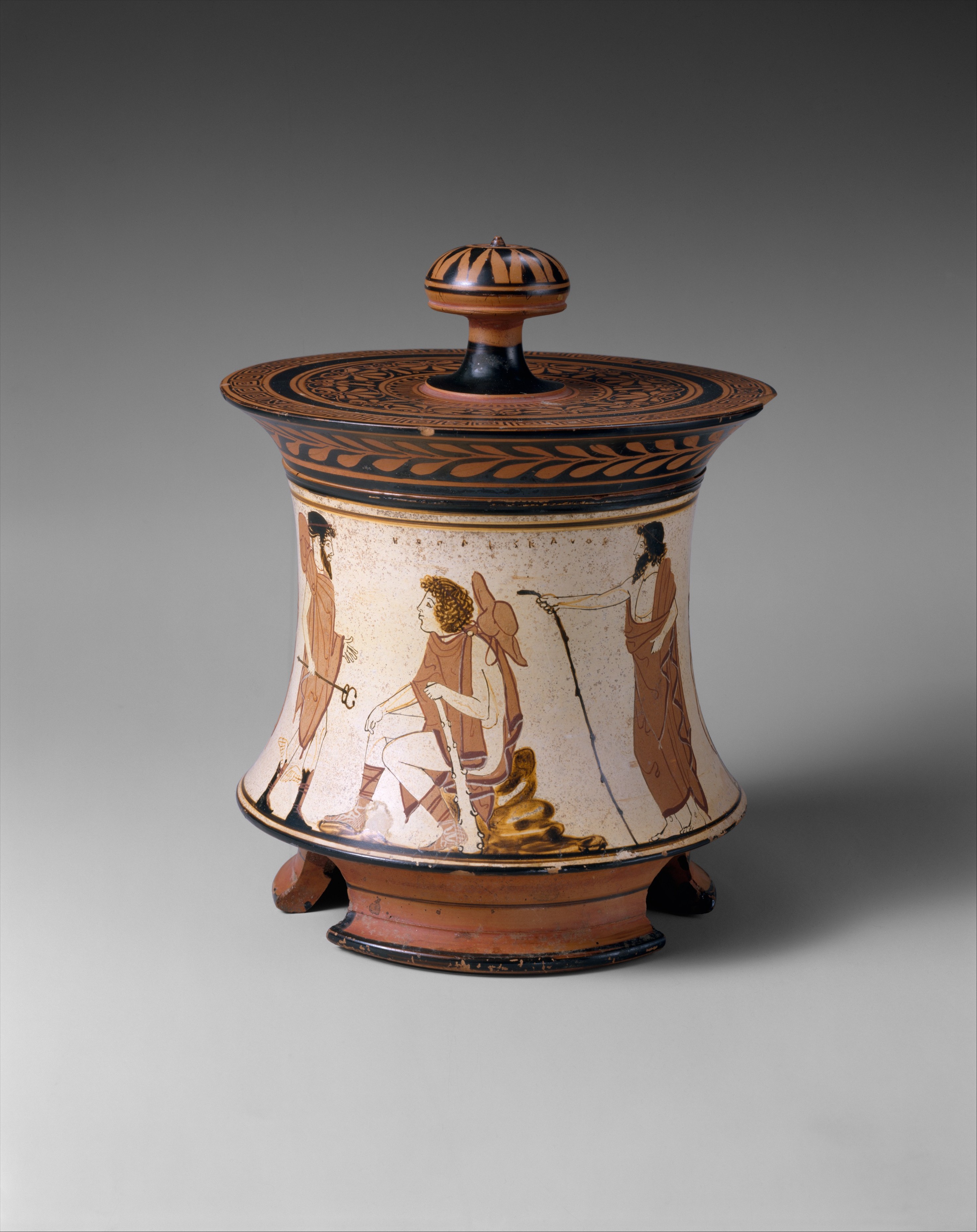
Penthesilea Painter — "Terracotta pyxis (box)" (ca. 465–460 BCE), public domain
Childhood Farewells at the Temple
At Greek temples, archaeologists dig up tiny dolls, spinning tops, and wooden wagons—not for play, but as sacred gifts from children. When a boy or girl was ready for adulthood, their toys were offered to Artemis or another deity.
A Rite of Passage, Etched in Clay
These toy offerings, often inscribed with a child’s name, marked a major life step. The miniature gifts stack up in temple ruins all across Greece—silent evidence of childhoods ending early in a world obsessed with growing up fast.
When a child in ancient Greece outgrew a beloved toy, it might be dedicated to a god or goddess—especially Artemis, protector of the young. These miniature treasures, found piled in temple ruins, weren’t just offerings. They marked a rite of passage: the farewell to childhood. Ancient childhoods ended early, but these toys—preserved in sanctuaries—make it real, and achingly human.
