
Greek Tragedy Masks: Not Just Happy and Sad
Think of Greek theater masks and you picture one smiling, one frowning—the classic comedy and tragedy duo. But that isn’t how Greeks saw the stage.
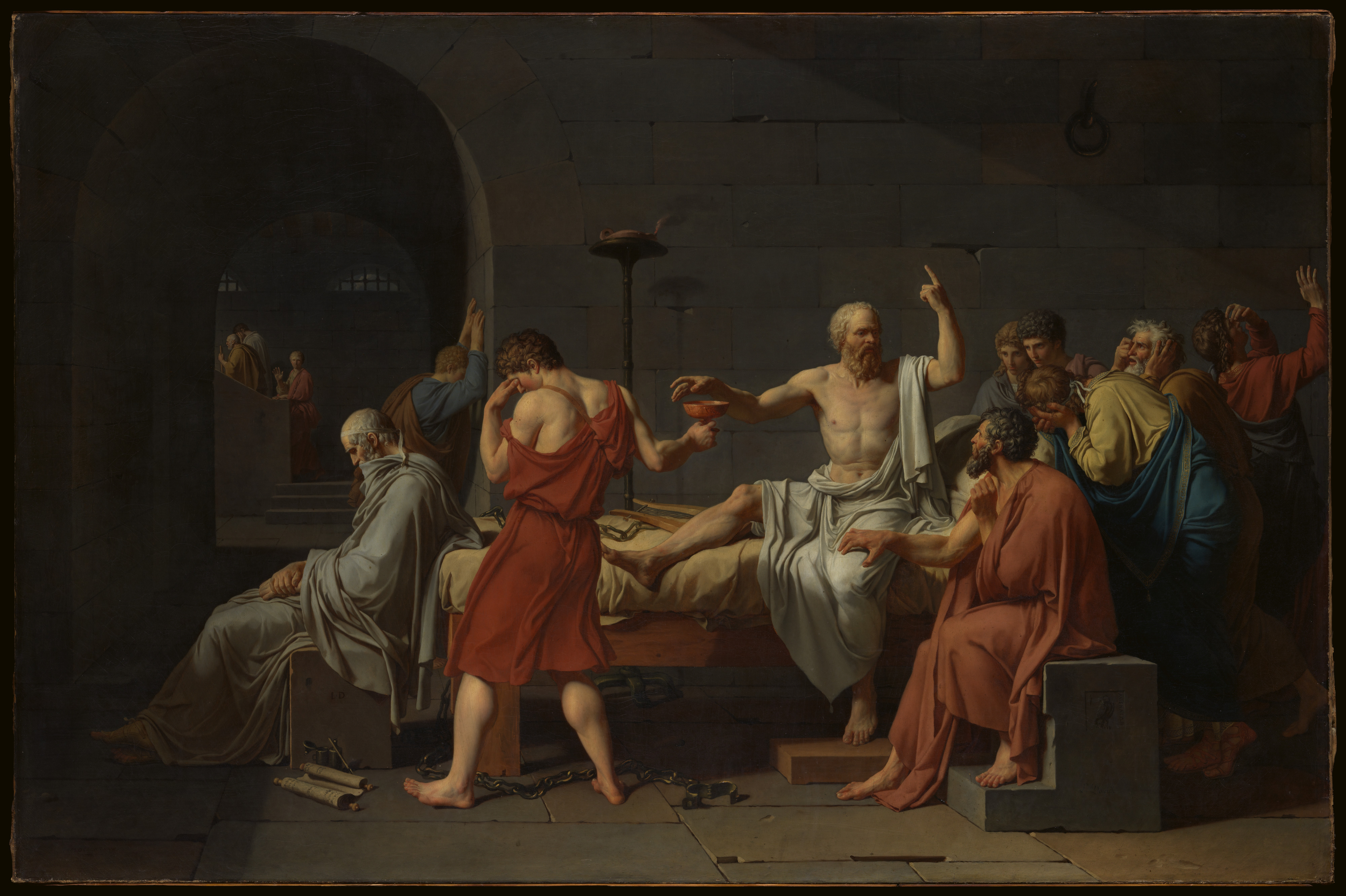
Jacques Louis David — "The Death of Socrates" (1787), public domain
The two masks: tragedy and comedy?
You’ve seen them everywhere: twin masks, one grinning, one weeping, stamped as the symbol of drama. Textbooks, theater programs, even emojis say ancient Greek actors wore just those expressions and nothing else.
The real mask collection: a wild parade
Ancient Greek theater used dozens of masks—old men, young women, slaves, gods, monsters, even mythic hybrids. These clay and linen faces let three actors play entire casts, changing roles in a heartbeat. Emotions ranged from rage to terror to lust, not just joy or despair.
How did the myth start?
The comedy-tragedy mask set didn’t appear until Roman times, and only much later became the universal drama symbol. The Greeks loved variety—the neat two-mask logo would have looked suspiciously dull to them.
Ancient Greek theater used masks for dozens of emotions, ages, and even supernatural beings—not just a happy face and a sad face. The two-mask icon is a much later invention.
