
Were Greek Temples Just Bare Stone?
We picture Greek temples as gleaming white marble, bare and austere. Not one speck of color in sight.
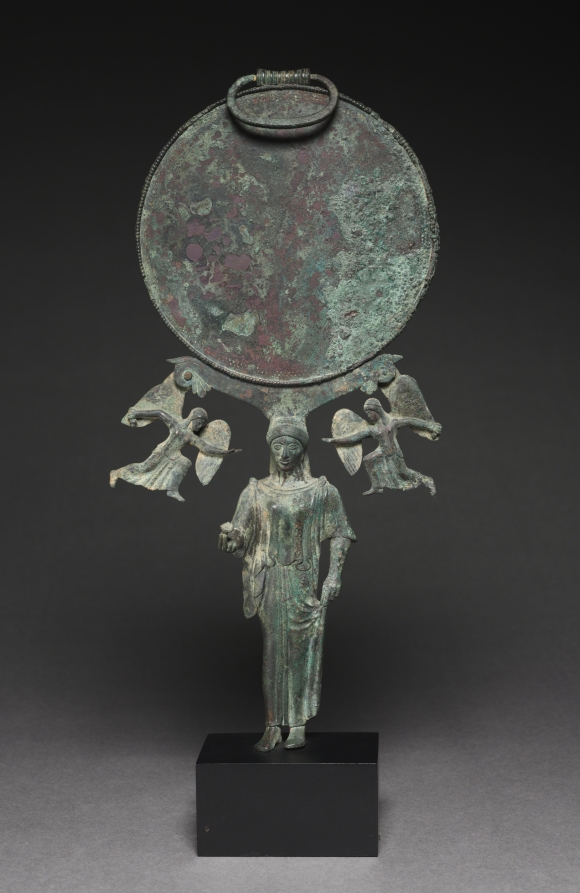
Unknown — "Mirror" (c. 470–460 BCE), CC0
The myth of pure white temples.
Every postcard and museum model shows the Parthenon blindingly white. You picture the Acropolis under a blue sky—columns glowing like polished bone. Surely that’s how the Greeks built it?
Temples were shockingly colorful.
Microscopic paint flakes on the Parthenon and other ruins reveal a riot of color—reds, blues, greens, even gold leaf. Statues wore painted garlands, gods had ruby lips, and pediments shimmered like a festival. The marble was just the canvas.
Why do we see only stone?
Centuries of sun, storms, and scrubbing by art restorers erased the paint. By the Renaissance, the stone skeletons inspired a myth of white purity. But if you walked Athens in 450 BCE, you’d get a faceful of color and gold.
Archaeologists have found traces of vivid blue, red, and gold paint on temple columns. Ancient temples were more like theme parks than minimalist masterpieces.
